Guide · Guides
Can press-on nails survive a shower?
Water is not the enemy. Hot water, long soaks and a bond that has not finished curing are.
Written by Janet H. · Owner, Janet Media Group
Published
Tip & Topcoat is reader-supported. Product links go through our affiliate resolver and we may earn a commission from qualifying purchases, at no extra cost to you. Prices come from Amazon's API, carry the date they were read, and change constantly — the button always opens the current price on Amazon.
Part of the guides hub.
What water actually does to the bond
Nail glue is cyanoacrylate — the same chemistry as superglue. It cures by reacting with trace moisture, which is why it sets in seconds on a fingertip and sits liquid in the bottle for a year. That same relationship with water is what makes it vulnerable later.
A fully cured cyanoacrylate bond is water-resistant. It is not waterproof, and it is not heat-resistant. Three things degrade it, and they are worth separating because the advice for each is different:
- Heat. Hot water softens the cured adhesive. This is the main mechanism, and it is why dish water does far more damage in ten minutes than a cold rinse does in an hour.
- Time under water. Moisture migrates into the bond line slowly. A three-minute shower is nothing; a forty-minute bath is a different exposure entirely.
- Surfactants. Dish soap and shampoo reduce surface tension, which helps water get into any gap at the sidewall. Soap does not dissolve glue, but it does help water find the weakness.
Put together, that gives a clear hierarchy: a normal shower is fine, washing up bare-handed is not, and swimming sits somewhere in between depending on how long you are in and how warm the water is.
The first 24 hours decide everything
A press-on bond reaches most of its strength in seconds and full strength over roughly a day. The sets people lose in the shower are almost always sets that were applied in the evening and showered on the following morning, which sounds like plenty of time and is not.
The practical rule: apply a set when you have a dry 24 hours ahead of you. Apply after your shower, not before. If you must get them wet inside that window, keep it brief and cold, and dry the fingertips thoroughly afterwards rather than letting water sit at the cuticle line.
Applying to a nail that is still damp from a shower is the same mistake from the other direction. The nail plate holds surface moisture and oil for some minutes after washing, and the adhesive bonds to that film rather than to the nail. The prep wipe in the box exists for exactly this — the sequence is shower, wait, wipe, apply.
Showers, baths, swimming and dishes, separately
| Activity | Risk to the bond | What to do |
|---|---|---|
| Short shower, cured set | Low | Nothing. Dry fingertips afterwards. |
| Long hot shower | Moderate | Keep hands out of the direct stream where you can. |
| Bath or hot tub | High | Keep hands out of the water, or expect to re-glue. |
| Washing up by hand | Highest of all | Gloves, every time. This is the single biggest cause of loss. |
| Swimming pool | Moderate | Fine for a cured set; rinse and dry fully afterwards. |
| Sea water | Moderate | Same, plus rinse the salt off — dried salt at the edge wicks moisture. |
| Sauna or steam room | High | Heat and moisture at once, which is the worst combination. |
Washing up is worth singling out. It combines hot water, surfactants and prolonged immersion, and it is something people do daily without thinking of it as an exposure. A pair of gloves is the single highest-return change anyone wearing press-ons can make, and it also protects the natural nail underneath — the AAD recommends gloves for wet work regardless of what is on top of your nails.
Sealing the edge, and why a good fit is waterproofing
Water does not attack the middle of a bond. It gets in at the perimeter — the sidewalls and the free edge — and works inward. That makes the perimeter the whole game.
A nail that is slightly too narrow leaves bare nail plate showing on both sides, and each of those strips is an open channel. This is why the size ladder on a set matters for water resistance as much as for comfort: the sets with 15 to 21 sizes let you close the perimeter properly, and the ones with ten do not. The picks and the fit logic are in press-ons for beginners.
Technique matters as much. A nozzle-tip glue lets you run a controlled line down the center of the nail bed and press the adhesive out to the edges, which seals the perimeter from the inside. A wide brush floods the cuticle, and glue on skin is not a seal — it is a hinge. Glue both surfaces, press, and hold for a full thirty seconds: pressure during the set is what closes the sidewall gap.
What to do when water has already got in
A lifted edge after a shower is a repair, not a write-off, if you catch it the same day. Left for two days it becomes a problem you cannot fix, because the gap holds water against the nail plate and that is where the white, soft patch people find under a lost nail comes from.
- Dry the hand completely. A hairdryer on cool for a minute is not excessive here.
- Lift the loose edge just enough to get a drop of glue underneath — a nozzle tip, not a brush.
- Press down and hold for thirty seconds. Keep it dry for the rest of the day.
- If the nail is loose across more than about a third of the bed, take it off and reapply from clean rather than gluing over a wet bond.
If a whole set is coming away, the ranked causes are in why press-ons keep popping off, and the full life-extension routine is in how to make press-ons last longer.
Tabs and water are a different relationship
Adhesive tabs are not cyanoacrylate. They are a pressure-sensitive adhesive, and water affects them differently: they do not soften with heat so much as lose grip once moisture reaches the adhesive face, and when they fail they fail suddenly rather than lifting at one edge.
Glamnetic publishes up to five days for its tabs, and that figure assumes ordinary life rather than a week of swimming. If you are going to be in and out of water, tabs are the wrong choice — not because they are weaker in general, but because the failure mode is a nail that leaves without warning. Use glue, or accept that you will be re-tabbing.
Static Nails is the interesting middle option: the brand states its 30-day wear figure assumes a heavy glue layer, and a thin layer gets you a few days instead. If you want a set that survives a beach weekend and then comes off easily, that is a glue-thickness decision rather than a different purchase.
Picks
What to buy if water is the problem
A nozzle-tip glue for a sealed edge, the set whose wear time you control with glue thickness, and the tabs to use when you know the set is coming off in a few days anyway.
A strong hold on sets that came without glue
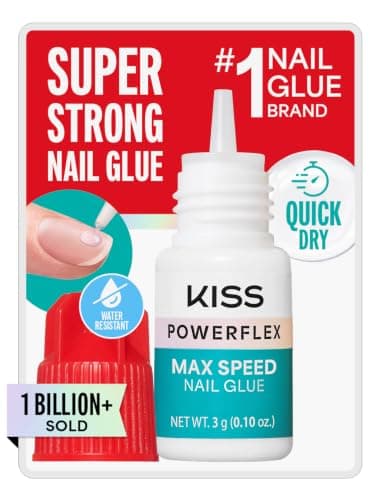
KISS PowerFlex Maximum Speed Nail Glue
A three-second bond and a nozzle tip, which is the combination that stops glue flooding your cuticle.
- Size
- 0.10 oz (3 g)
- Brand bond claim
- Sets in about 3 seconds
Skip ifSkip this if you are new to press-ons. A slower brush-on glue gives you time to slide a nail into place.
Working out the cheapest possible cost per wear
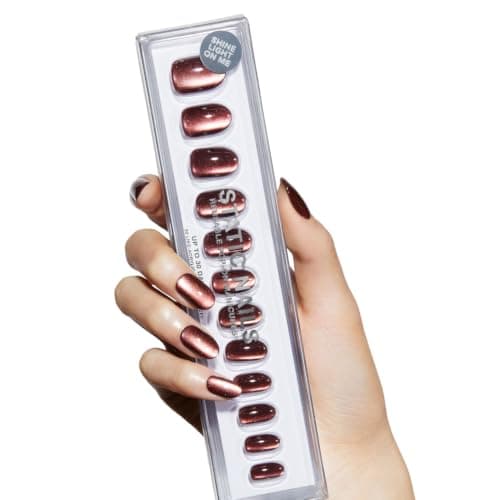
Static Nails Reusable Pop-On Manicures
The longest wear claim and the only set we found that publishes a reuse count, which is what makes the math work.
- Nails per set
- 30 in 15 sizes per hand
- Brand wear claim
- Up to 30 days
Skip ifSkip this if you want the thinnest, most invisible edge at the cuticle — a flexible soft-gel set reads more natural there.
A set you want off again in a few days
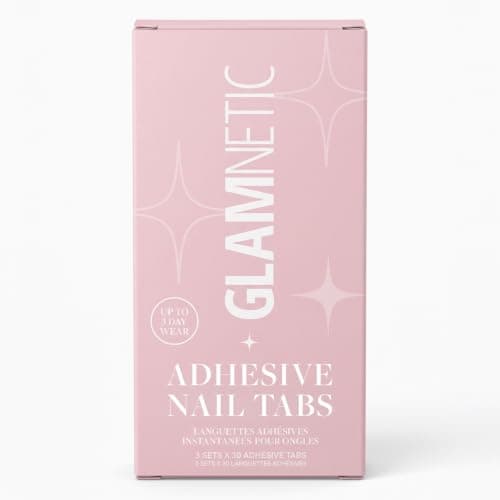
Glamnetic Adhesive Nail Tabs
Tabs with a published wear figure, which is the honest way to sell a short-wear adhesive.
- Brand wear claim
- Up to 5 days
- Type
- Pre-cut adhesive tabs
Skip ifSkip this if your nails are strongly curved. A flat tab cannot bridge a curve, and the set will lift at the edges.
FAQ
Frequently asked questions
Can you shower with press-on nails?
Yes, once the adhesive has cured for 24 hours. A normal shower is a short, mostly warm exposure and a cured bond handles it. Dry your fingertips properly afterwards rather than letting water sit at the cuticle line.
Should you apply press-on nails before or after a shower?
After, and then wait. The nail plate holds surface moisture and oil for several minutes after washing, and adhesive bonded to that film lets go. Shower, wait, wipe with the prep pad, then apply — and keep the set dry for the following 24 hours.
Can you swim with press-on nails?
With a cured glue set, yes. Rinse and dry thoroughly afterwards, and rinse salt off if you have been in the sea, because dried salt at the perimeter wicks moisture into the bond line. Avoid hot tubs and saunas, which combine heat and moisture.
Why do my press-on nails fall off in the shower?
Usually one of two things: the bond had not cured for a full day, or there is a gap at the sidewall from a size that was slightly too narrow. Water finds the gap, heat softens the adhesive around it, and the nail lifts. A longer size ladder and a dry first day fix both.
Does washing dishes ruin press-on nails?
It is the worst single thing you can do to them — hot water, dish soap and prolonged immersion at once. Wear gloves. It is also better for the natural nail underneath.
Keep reading
Related guides
- Make press-ons last longer →
The full routine.
- Why press-ons pop off →
Six causes, ranked.
- Best nail glue →
Nozzle tips and bond claims.
- Press-ons for beginners →
Fit is waterproofing.
Sources
- —AAD — Healthy nail tips · aad.org
- —AAD — Reduce artificial nail damage · aad.org
- —Clutch Nails — How long can you wear press-on nails · clutchnails.com
- —KISS — PowerFlex Maximum Speed Nail Glue · kissusa.com
- —Static Nails — Reusable Pop-On Manicures · staticnails.com
- —Glamnetic — Adhesive Nail Tabs · glamnetic.com