Guide · Guides
Why your press-on nails keep popping off
Six causes, ranked by how often they are actually to blame. The glue is fifth.
Written by Janet H. · Owner, Janet Media Group
Published
Tip & Topcoat is reader-supported. Product links go through our affiliate resolver and we may earn a commission from qualifying purchases, at no extra cost to you. Prices come from Amazon's API, carry the date they were read, and change constantly — the button always opens the current price on Amazon.
Part of the guides hub.
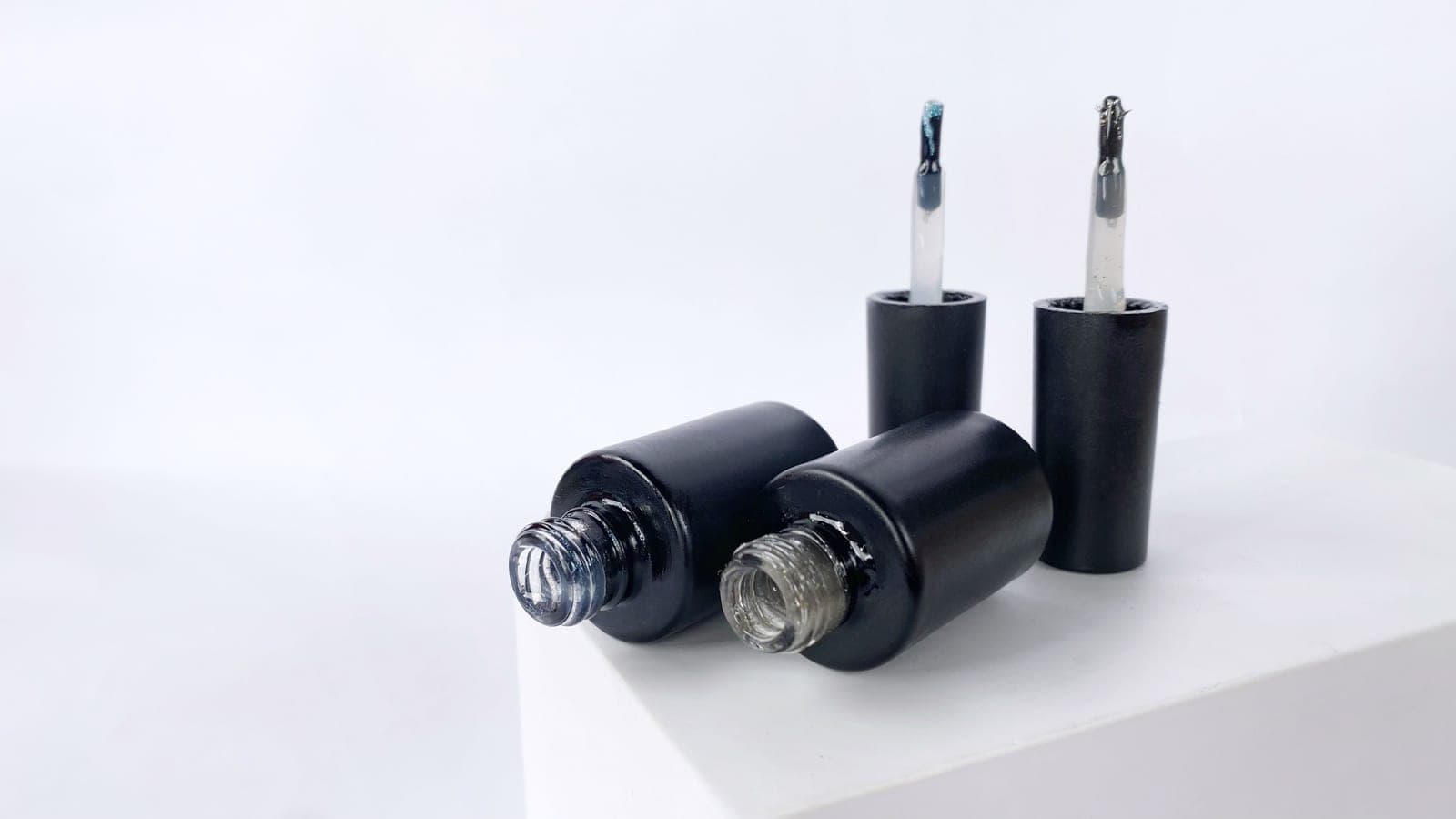
Look at the nail that came off before you buy anything
The nail itself tells you which of the six causes you have, and it takes ten seconds to read. Pick it up and look at the underside.
| What you see | What it means | Go to |
|---|---|---|
| Glue intact, clean and glossy | The bond never formed — oil or moisture | Cause 2 |
| Glue cloudy or white | Water got into the bond | Cause 3 |
| Glue only in the middle, bare at the sides | Width mismatch at the sidewall | Cause 1 |
| Glue thick and lumpy, nail sat proud | Too much glue, or glue on the cuticle | Cause 4 |
| Almost no glue transferred at all | Not enough glue or no pressure during set | Cause 5 |
| Nail cracked across the apex | Mechanical — leverage or an impact | Cause 6 |
Most people find the third row, which is why fit leads the list below. If you find the first row on several nails, your prep is the problem and no amount of glue will fix it.
Cause 1: the tip is the wrong width (most common by a distance)
Your nail bed is a curve, not a flat surface. A press-on tip is also a curve, molded to a particular width. When the two curves match, the tip sits flat against the plate across its whole width and the glue layer is thin and even. When the tip is narrower than your bed, it cannot reach the sidewalls — so it rests on the high middle of your nail and leaves a wedge-shaped gap at each side.
That gap is where every failure starts. It fills with water in the shower, the glue goes cloudy, and the bond peels inward from both edges until the nail lifts off looking perfectly fine.
The fix. Size up, not down. A tip slightly too wide overhangs the sidewall by a fraction of a millimeter, which you file off after it is on — a tip too narrow cannot be fixed at all. Then file the sidewalls of the tip back to follow your own nail shape before you glue anything. Three minutes per hand, and it is the single highest-return habit in this whole category.
If your nails sit at the extremes of the ladder, buy for the ladder rather than the design: the widest published size ranges on this site are covered in press-ons for wide nail beds and for small nail beds.
Cause 2: surface oil on the nail plate
Cyanoacrylate glue bonds to a clean, dry, slightly porous surface. Your nail plate is none of those things by default — it carries sebum from your skin, residue from hand cream, and whatever cuticle oil you applied last night.
The tell is a nail that comes off after a few hours with the glue layer perfectly intact and glossy on the underside. The glue cured; it just never gripped.
The fix. Wipe every nail with acetone or polish remover and let it air-dry completely, even if the nail looks bare. Then do not touch your nails with your fingertips again before the tips go on. Skip cuticle oil the night before a set — and go back to it the day after, because oil is otherwise the best thing you can do for your nails.
Cause 3: water in the first 24 hours
A fresh cyanoacrylate bond keeps curing for hours after it feels set, and hot water plus detergent is the worst thing you can put it in during that window. Hot water also expands the nail plate slightly, which flexes the bond line.
The tell is a white or cloudy glue layer, and lifting that starts at the cuticle end rather than the tip.
The fix. Apply a set in the evening, not before a shower. Wash up in gloves for the first day. After that, normal washing is fine — it is specifically the first twenty-four hours that decide whether a set reaches one week or two.
Cause 4: glue on the cuticle, or the nail sat proud
Two placement errors with the same outcome. If glue floods onto the skin at the cuticle, the nail is partly bonded to skin — which sheds. If the tip is placed too far down and rests against the cuticle wall, it cannot sit flush, so it sits proud and catches on everything.
The fix. Push your cuticles back with a wooden stick first, so there is clean plate to bond to. Place the tip against the cuticle line at a 45-degree angle, then rock it down flat — do not drop it straight on. Press and hold for thirty seconds; the pressure is what closes the sidewall gap while the glue sets.
A nozzle-tip glue makes this far easier than a wide brush, because you can put a controlled line down the center of the plate rather than a puddle. The full application sequence is in how to apply press-on nails.
Cause 5: the glue (yes, it is fifth)
Glue is genuinely the problem sometimes, and in three specific ways rather than as a general weakness.
- Not enough of it. A thin line on your nail only. The reliable method is glue on both surfaces — a line on the plate and a line inside the tip — which is what fills the sidewall gap.
- It is old. Cyanoacrylate thickens and loses strength once the bottle has been opened for a few months. If it is stringy coming out of the nozzle, replace it.
- It is a tab, not a glue. Adhesive tabs are published at around five days of wear. If you are expecting two weeks from tabs, the product is working as sold and the expectation is the problem. The honest comparison is in glue versus sticky tabs.
What glue cannot do is compensate for a width mismatch. Pouring more adhesive into a sidewall gap gives you a thick, brittle glue wedge, and a thick bond line is weaker than a thin one — which is why upgrading the glue is the most popular fix and one of the least effective.
Cause 6: you are using them as tools
The last cause is not a product fault at all. Every time you open a can, scrape a label, pry a lid or dig in a bag, the force lands at the stress point just past your free edge. On a long set this is the usual cause of failure and no adhesive on the market resists it.
The tell is a crack across the apex of the nail, or one specific nail — nearly always a thumb or index finger — failing repeatedly while the other eight hold fine.
The fix. Shorter and flatter. A shorter nail has less leverage, and a coffin or squoval tip spreads impact across an edge rather than a point. Then use the pads of your fingers rather than the tips for everything that used to need a nail. The full set of habits is in making press-ons last longer, and a shorter set is the structural answer — see extra short press-ons.
When it is only one nail
If nine nails hold for two weeks and one lifts every time, it is not your technique. It is that nail. Thumbs and index fingers have the widest, flattest beds and do the most work, and the size that fits your other fingers frequently does not fit them.
Buy for the awkward nail. If the box has twenty-one widths, your thumb is probably two sizes up from where you have been putting it. Mark the correct size for each finger on a card the first time you get a set right, and keep the card — it turns a one-hour job into a twenty-minute one forever.
Mid-week repair is also legitimate: one lifted nail does not mean removing the set. Clean the old glue off the plate and the tip, wipe both with remover, re-glue that nail and hold it for thirty seconds. A set rescued on day five often reaches day fourteen.
Picks
What actually fixes it
A glue with a controllable nozzle, a set with enough widths to fit properly, and the file that shapes a sidewall without shredding it.
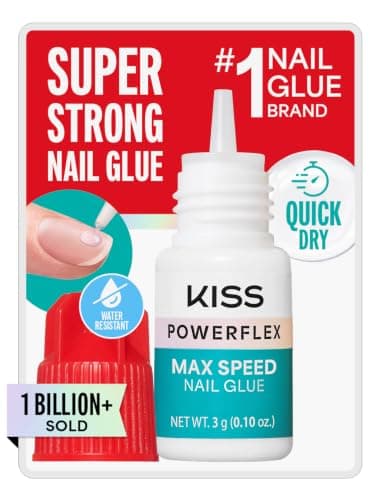
A strong hold on sets that came without glue
KISS PowerFlex Maximum Speed Nail Glue
A three-second bond and a nozzle tip, which is the combination that stops glue flooding your cuticle.
- Size
- 0.10 oz (3 g)
- Brand bond claim
- Sets in about 3 seconds
Skip ifSkip this if you are new to press-ons. A slower brush-on glue gives you time to slide a nail into place.
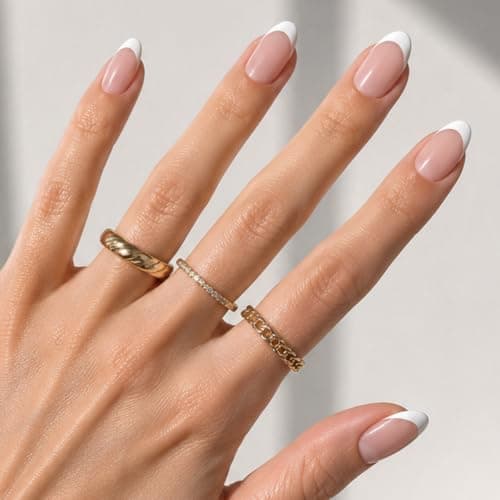
Anyone who has had sets lift because nothing fit properly
Olive & June Press-On Manis
The widest published size range of any set we found, which is the single thing that decides whether press-ons last.
- Nails per set
- 42 in 21 sizes
- Brand wear claim
- Up to 14 days
Skip ifSkip this if you want something you can take off the same evening. Glue sets are not built for that; tabs are.
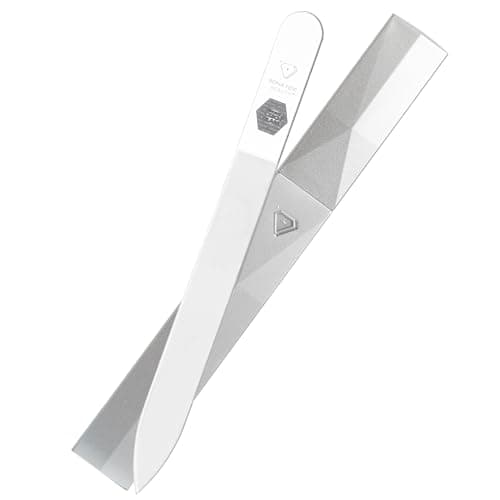
Anyone whose nails split or peel at the tip
Bona Fide Beauty Czech Glass Nail File
The one tool swap that changes peeling nails: an etched glass surface that seals the free edge instead of shredding it.
- Material
- Tempered Bohemian Czech glass, handmade
- Grit
- Etched into the glass, not sprayed on
Skip ifSkip this if you need to remove a lot of length regularly. A file is for shaping; a clipper takes the length.
FAQ
Frequently asked questions
Why do my press-on nails keep popping off?
Most often the tip is too narrow for your nail bed, so it bridges the curve and leaves a gap at each sidewall that fills with water. Size up one width and file the sidewalls back before gluing. The glue is rarely the real cause.
How do I make press-on nails stick better?
Wipe each nail with acetone and let it dry, push the cuticles back, glue both the nail and the inside of the tip, place at a 45-degree angle and press for thirty seconds. Then keep them out of hot water for twenty-four hours.
Should I file my nails before applying press-ons?
Shape and shorten your own nail, yes. Buff the surface to roughen it, no — the AAD notes that filing the nail surface thins it, and a remover wipe gives you the same adhesion without removing any nail.
Why does only one of my press-on nails fall off?
Because that nail is a different width from the rest. Thumbs and index fingers have the widest, flattest beds and take the most impact, and they usually need a size or two up from what fits the other fingers.
Can I re-glue a press-on nail that fell off?
Yes, and it is worth doing. Clean the old glue off both your nail and the tip, wipe both with remover, re-glue and hold for thirty seconds. A set repaired on day five frequently reaches the end of its second week.
Does more glue make press-ons last longer?
No. A thick glue layer is more brittle than a thin one, and extra adhesive cannot fill a sidewall gap caused by a bad fit. Glue both surfaces thinly and fix the width instead.
Keep reading
Related guides
- How to apply press-ons →
The sequence done right.
- Making press-ons last longer →
Habits, not products.
- The best nail glue →
When the glue is the problem.
- Press-ons for wide nail beds →
Where the fit fix lives.
- Extra short press-ons →
Less leverage, fewer failures.
Sources
- —AAD — Reducing artificial nail damage · aad.org
- —Clutch Nails — how long you can wear press-ons · clutchnails.com
- —KISS — PowerFlex Maximum Speed Nail Glue · kissusa.com
- —Olive & June — Press-On System · oliveandjune.com
- —Bona Fide Beauty — Czech Glass Nail File in Hard Case · bonafidebeauty.com