Guide · Guides
Gel polish on toes
A gel pedicure outlasts a gel manicure by weeks. That is exactly why people leave it on too long.
Written by Janet H. · Owner, Janet Media Group
Published
Tip & Topcoat is reader-supported. Product links go through our affiliate resolver and we may earn a commission from qualifying purchases, at no extra cost to you. Prices come from Amazon's API, carry the date they were read, and change constantly — the button always opens the current price on Amazon.
Part of the guides hub.
Why gel lasts so much longer on toes
Two reasons, and both are structural rather than anything to do with the product.
Toenails grow slowly. Fingernails manage roughly 3 millimeters a month; toenails run at around half that rate. Since regrowth at the cuticle is the thing that usually ends a gel manicure, halving the growth rate roughly doubles the usable life of the set.
Toes do almost nothing. Your hands open jars, pick at labels, go in and out of hot water and get scrubbed. Toenails sit in a shoe. There is barely any flexing, almost no impact and no solvent exposure, which means the three mechanical failure modes that end a manicure mostly do not apply.
The same two reasons are why the no-lamp alternative is more viable on feet than on hands: press-on toenails ranks the sets built for a foot, on sizes per box and published hold.
The practical result is four to six weeks of a gel pedicure looking essentially unchanged. That is genuinely good value, and it is also the trap.
The one thing to actually watch for
A continuously covered toenail is a toenail you cannot inspect. Discoloration, thickening, crumbling at the free edge or separation from the bed are all things you would notice on a bare nail within days, and will not notice at all under an opaque gel for a season.
The APMA's pedicure guidance is worth reading for the hygiene side, and the AAD's general position on artificial nails and coatings applies here too: the coating itself is rarely the problem, and the practice around it — leaving it indefinitely, peeling it off, reapplying over a lifted edge — usually is.
The habit worth building is simple. Take the gel off completely every six weeks, look at all ten toenails in daylight, and leave them bare for at least a few days before you reapply. If anything looks discolored or thickened, see a podiatrist rather than painting over it.
What changes in the application
Most of the method is identical to a gel manicure, which is covered step by step in how to do gel nails at home. Four things differ.
- Cut straight across, not curved. This is the one genuinely important difference. The AAD's guidance on trimming nails is specific that toenails should be cut straight across to avoid ingrowns, and a curved cut under a rigid gel shell is a worse version of the same mistake. A flat-bladed clipper makes this easy; Tweezerman publishes flat blades and a jaw rated for thickened toenails up to 0.10 in for exactly this.
- Separate the toes properly. A foam separator, not folded tissue. Toes that touch during curing will bond together at the sidewalls.
- Watch the lamp geometry. Most nail lamps are built around a hand. Getting all five toes evenly under the LEDs usually means curing in two batches — big toe alone, then the other four — and an unevenly cured toenail is the one that lifts.
- Thinner coats than you think. A thick gel shell on a toenail inside a shoe is a pressure point, and pressure under a rigid coating is how a nail bruises.
Removal, which is the part people get wrong
Gel on toes comes off exactly the way gel on fingers comes off: break the shine, wrap in acetone, wait, push gently. The difference is that it takes longer, because the layer has usually been on for six weeks instead of two and toenail plates are thicker.
Budget 20 to 25 minutes of soak, and re-wrap rather than scrape if the gel resists. Pre-attached cotton foil wraps make a ten-toe removal manageable; food wrap and cotton pads do the same job for free, which that product's own honest caveat acknowledges.
What you must not do is peel. The AAD's advice on removing gel polish applies to toes without modification, and the consequence of peeling a six-week gel off a toenail is a visibly thinned plate that takes the better part of a year to grow out at toenail speed.
The full method, and the kit that speeds it up, are in removing gel polish at home and the best gel removers.
When not to use gel on toes
Three cases where something else is the better answer.
- You want to change color often. Gel's advantage on toes is longevity. If you repaint monthly anyway, a long-wear regular polish gives you the same result with a five-minute removal — see the longest-lasting polish.
- Your toenails are already thick or discolored. Get that looked at before you cover it. The toenail tools page covers the mechanical side; the medical side is a podiatrist's.
- You will not commit to removing it. The failure mode of a gel pedicure is neglect, not chipping. If the realistic outcome is that it stays on until it grows out, use polish.
Picks
What a gel pedicure actually needs
A complete gel system with a published wear claim, the wraps that make removal on ten toes bearable, and the clipper that prepares a toenail without setting up an ingrown.
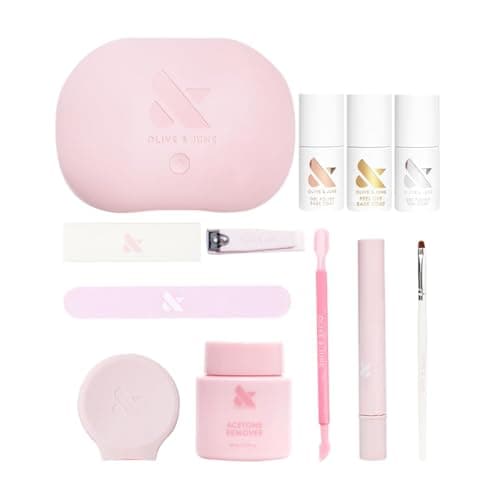
A first gel manicure you want to get right on the first attempt
Olive & June Gel Mani System
The most complete box here, and the only one that ships a peel-off base coat so removal does not have to mean acetone.
- Cure time
- 2 minutes per coat
- Brand wear claim
- Up to 21 days
Skip ifSkip this if you are impatient. Four coats at two minutes each is eight minutes of sitting still per hand.
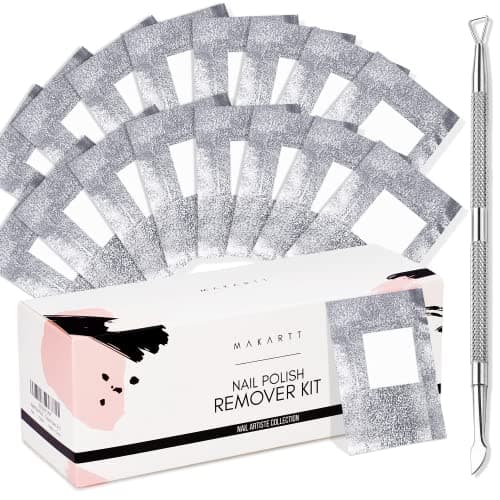
Taking gel off without soaking your whole hand in acetone
Makartt Soak-Off Gel Remover Foil Wraps
Pre-attached cotton on a heavy foil wrap, which is the difference between a ten-minute removal and a thirty-minute mess.
- Count
- 200 wraps with cotton attached
- Foil size
- 9 × 6.5 cm
Skip ifSkip this if you already have plastic food wrap and cotton at home. That combination is what dermatologists actually recommend, and it is free.
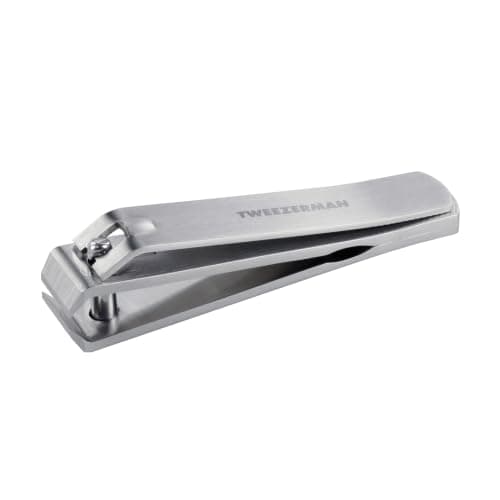
Thick toenails that a drugstore clipper crushes instead of cutting
Tweezerman Extra Strength Toenail Clipper
Flat blades and a wide jaw: the one clipper here whose cutting edge is shaped to prevent an ingrown rather than carve one.
- Jaw opening
- Thickened toenails up to 0.10 in
- Blade shape
- Flat, to prevent splitting and ingrowns
Skip ifSkip this if the problem is a nail corner already buried in the skin. A clipper cannot reach it; a nipper or a file can.
FAQ
Frequently asked questions
How long does gel polish last on toes?
Typically four to six weeks, roughly double a gel manicure. Toenails grow at about half the rate of fingernails and take far less mechanical abuse, so the regrowth line and the chipping that end a manicure both arrive much later.
Is gel polish bad for your toenails?
The coating itself is not the problem; the practice usually is. Leaving a gel pedicure on indefinitely means you cannot inspect the nail, and peeling it off takes plate with it. Remove it completely every six weeks, check all ten nails in daylight, and leave them bare for a few days.
How do you remove gel polish from toenails at home?
The same way as fingers, with more patience: file the shine off, wrap each toe in an acetone-soaked pad and foil, wait 20 to 25 minutes, then push the softened gel off with a wooden stick. Re-wrap if it resists. Never peel it.
Can you use the same gel polish on fingers and toes?
Yes. It is the same product and the same cure. What changes is the application: cut toenails straight across, separate the toes before curing, cure in two batches so every nail gets even light, and keep the coats thinner because a thick shell inside a shoe becomes a pressure point.
Why does gel last longer on toes than fingers?
Toenails grow at roughly half the rate of fingernails, so the regrowth line that normally ends a set takes twice as long to appear. Toes also avoid the flexing, impact, hot water and detergent that break down a manicure on the hands.
Keep reading
Related guides
- Gel nails at home →
The base method, step by step.
- Removing gel at home →
Allow longer on toes.
- Tools for toenails →
Cutting straight across, properly.
- How long gel lasts →
The fingernail version.
Sources
- —AAD — How to trim your nails · aad.org
- —AAD — Reduce artificial nail damage · aad.org
- —AAD — Removing gel polish safely · aad.org
- —APMA — pedicure guidance · apma.org
- —BioNumbers (Harvard) — human nail growth rate · bionumbers.hms.harvard.edu
- —Tweezerman — Extra Strength Toenail Clipper · tweezerman.com
- —Makartt — remover foil wraps · makartt.com
- —Olive & June — Gel Mani System · oliveandjune.com