Roundup · Nail Care
The best nail tools, bought one at a time
A twenty-piece case costs more than the five tools that do the whole job. Here are the five, in the order worth buying them.
Written by Janet H. · Owner, Janet Media Group
Published
Tip & Topcoat is reader-supported. Product links go through our affiliate resolver and we may earn a commission from qualifying purchases, at no extra cost to you. Prices come from Amazon's API, carry the date they were read, and change constantly — the button always opens the current price on Amazon.
Part of the nail care hub.
The picks, compared
Row 1 is our pick · click any row for the full review
| # | Pick | Best for | Cost basis | Price |
|---|---|---|---|---|
| 01 | 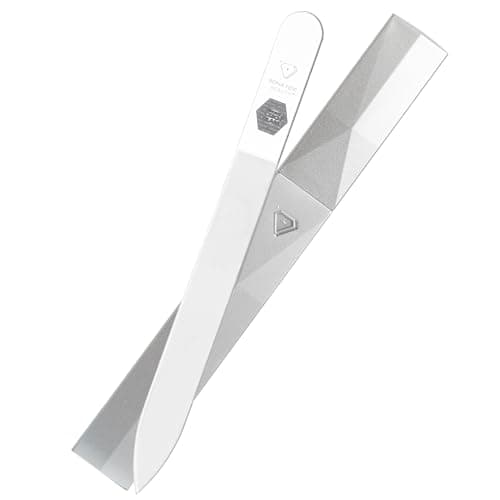 Bona Fide Beauty Czech Glass Nail File The one tool swap that changes peeling nails: an etched glass surface that seals the free edge instead of shredding it. Tempered Bohemian Czech glass, handmade | Anyone whose nails split or peel at the tip | One-off, washable and reusable for years | |
| 02 | 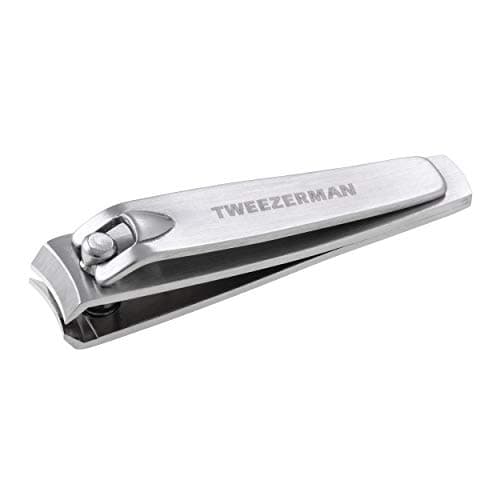 Tweezerman Stainless Steel Fingernail Clipper A curved, genuinely sharp blade for the price of a drugstore clipper that crushes the nail instead of cutting it. #3085-R, stainless steel | Replacing the blunt clipper in your bathroom drawer | One-off, sharpness lasts years | |
| 03 | 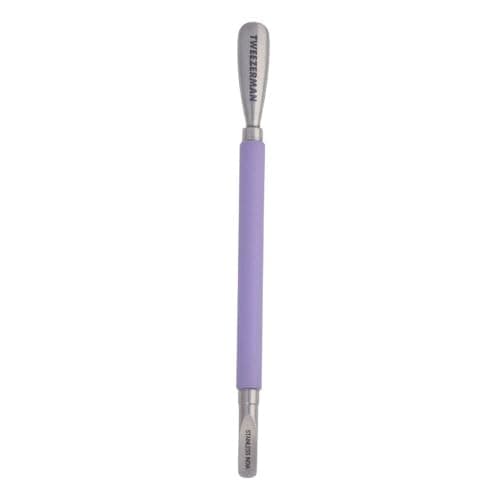 Tweezerman Dual-Sided Pushy A pusher, not a nipper — which is the distinction dermatologists actually care about, in a tool that is comfortable to hold. #3322-R, stainless steel with soft-touch body | Tidying the cuticle line without cutting anything | One-off, tools last years | |
| 04 | 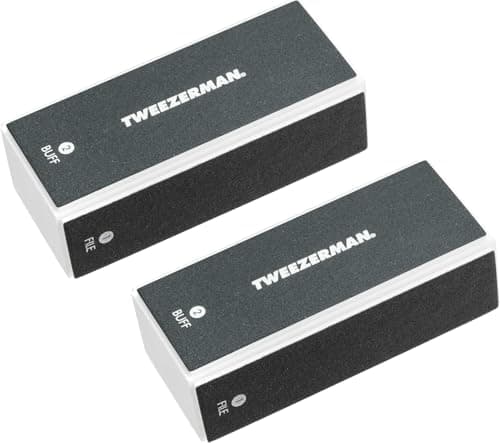 Tweezerman Nail Buffer Blocks Four labeled sides in the right order, which is the only reason a four-way block is better than guessing. #3491-MR, 2 blocks per pack | Smoothing ridges and raising shine without polish | Consumable, pads replaced when worn | |
| 05 | 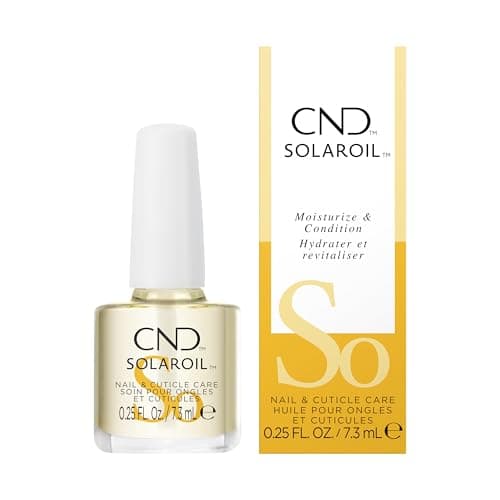 CND SolarOil Nail & Cuticle Care Jojoba-led, which is the reason it sinks in rather than sitting on top — and the reason it is the salon default. Jojoba, vitamin E, rice bran, sweet almond | The one product to buy if you buy only one | Per day, months of daily use per bottle | |
| 06 | 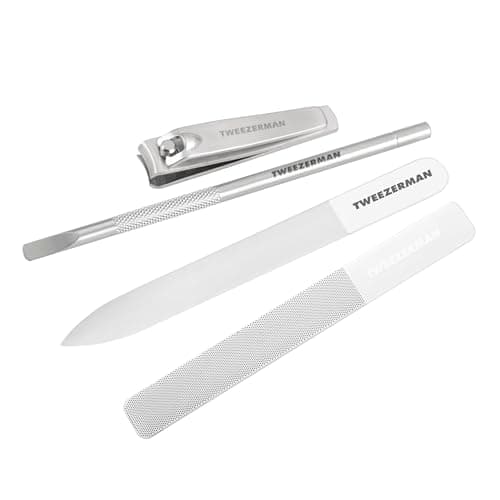 Tweezerman Glass Manicure Set A glass file and buffer plus a clipper and pusher — and the glass file is the part that matters for weak nails. Clipper, steel pusher, glass file, glass buffer | Filing without tearing the nail's free edge | One-off, tools last years |
Ranked on a published rubric from each brand's own specs and the pattern of what buyers consistently report. We have not tested these products and do not claim to have.
What makes a nail tool worth paying for
Almost every nail tool has a version that costs two dollars. A clipper is a clipper, a file is a file, and a drugstore set will technically cut and shape a nail. So the question is not whether a cheap tool works — it is whether the better one does something the cheap one measurably does not.
There are only four things that answer that, and they are the four we score on this page.
- What it does to the nail. A blunt clipper crushes the free edge instead of cutting it, and a crushed edge starts a split a week later. A coarse emery board tears the keratin layers apart at the tip. Both of those are damage you pay for twice — once at the till, once in a peeling nail. This carries the most weight here.
- Build and cutting quality. Whether the cutting surface is part of the tool or glued to it. Etched glass and ground steel keep working; sprayed grit and stamped steel do not.
- Whether it can be cleaned. A tool that touches the cuticle line should be disinfectable. Steel and glass wipe down with alcohol. A foam block cannot be cleaned at all, which is why it is a consumable and priced like one.
- Value. Not the sticker price — the price across the years it survives. A glass file at eight dollars that lasts five years beats a dollar emery board replaced monthly, and it is not close.
Notice what is not on that list: how many pieces come in the case. Piece count is the one number every kit advertises and the one number that predicts nothing. Full scoring method on how we pick.
The order to buy them in
If you bought one tool a month for five months, this is the order that would improve your nails fastest. It is deliberately not the order the kits are packed in.
| Buy | Tool | What it fixes | Replace when |
|---|---|---|---|
| First | Glass file | Peeling and splitting at the tip | You drop it |
| Second | Sharp steel clipper | Splits that start at the corner | Years, if ever |
| Third | Cuticle pusher | A ragged cuticle line you are tempted to cut | Never |
| Fourth | Cuticle oil | Brittle nails that snap rather than bend | Every few months |
| Fifth | Four-way buffer | Ridges, and shine without polish | Pads wear out |
Cuticle oil sits fourth and not fifth for a reason: it is the only item on this list that is not a tool, and it is the one that does the most for a nail that is already weak. If your nails snap rather than peel, move it to first and read the cuticle oil roundup before you buy any steel at all.
Why the file comes before the clipper
This is the one piece of ordering advice on the page that surprises people, so it is worth being specific about the mechanism.
A nail is layered keratin. At the free edge those layers are exposed, and whether they stay bonded together or come apart is decided almost entirely by what you drag across them. A coarse emery board — the standard board in every kit — works by abrasion in one direction, and it lifts the layers at the very tip as it cuts. That lifted tip is what peeling is. You can watch it happen under a phone camera.
An etched glass file cuts with a much finer, harder surface that is part of the glass rather than glued on. Bona Fide Beauty states the grit is etched into the file and not sprayed on, and that the file strengthens nails by smoothing and sealing the keratin layers as it works. That sealing claim is the brand's own wording, but the effect is consistent with what the structure predicts and with what people report after switching: the same nails stop peeling without anything else changing.
The clipper comes second because a clipper only matters at the moment you shorten a nail, which is every few weeks. The file touches your nails every time you tidy them. More contact, more consequence. If the clipper is the thing you are replacing, the best nail clippers compares six of them on published jaw width, jaw opening and blade shape.
Glass, emery and metal files compared
Three file types turn up in home kits, and they are not interchangeable.
| File | Cutting surface | Effect at the tip | Lifespan |
|---|---|---|---|
| Etched glass | Etched into the glass | Seals the edge as it cuts | Years, washable |
| Emery board | Grit glued to card | Lifts and frays the layers | Weeks |
| Metal file | Stamped steel teeth | Tears — the harshest of the three | Years |
| Glass buffer | Very fine etched glass | Smooths, skips over ridges | Years, washable |
The metal file is the one to throw away. It is in a lot of cheap kits because it is cheap to stamp, and its teeth are far too aggressive for a fingernail — it is a tool designed for a toenail at best. If your kit came with one, it has done more harm than the emery board next to it. Toenails need their own tools for a different reason — jaw shape, not grit — and those are ranked in tools for ingrown and thick toenails.
A glass file will not take real length off quickly, and that is a fair criticism rather than a defense. Fine-to-medium grit is for shaping. Take the length off with the clipper first, then shape with the file. Trying to file a quarter-inch away is how people decide glass files are useless.
A glass file in a hard case is also the one nail tool worth packing for a trip, since it cannot leak and TSA publishes no restriction on it. The rest of the travel rules — polish, remover, clippers, lamps — are in can you bring nail polish on a plane.
The tool to leave out: the cuticle nipper
Almost every multi-piece kit sold contains a cuticle nipper, and almost every dermatology body advises against using one. The American Academy of Dermatology's guidance on reducing artificial nail damage is explicit: it tells you to skip the cuticle-trimming step, because cuticles seal the gap between the nail and the skin and removing them opens the nail to infection.
A pusher does the job the nipper appears to do. It moves the cuticle back so the nail looks clean to the base, without removing the seal. Tweezerman's own instruction for the Dual-Sided Pushy is the part most people skip: soften first with moisturizer or cuticle cream, then clean under and around the nail with the fine end, then push the cuticle back with the curved end. In that order a pusher is painless. Used dry on a tight cuticle it hurts, it tears, and it is worse than doing nothing.
If you have a nipper and you are going to keep using it, confine it to genuinely loose dead skin that is already detached — never living tissue, never the seal itself, and never on a nail that is already damaged or wearing an enhancement.
The buffer, and why it is ranked fourth and not first
A four-way buffer is the most satisfying tool in the set and the easiest to overuse. The last side raises a real shine on a bare nail, which is genuinely useful on the weeks you want nothing on your hands — and it is also why people reach for it weekly.
Buffing removes material. Every pass takes a very thin layer off the nail plate, and the plate does not grow back any faster because you have thinned it. Doing the full four-step sequence every week produces exactly the bendy, over-flexible nail the buffer was bought to improve. The honest cadence is the shine side whenever you like, and the first two sides rarely — once a month at the outside, and not at all if your nails are already thin.
Tweezerman color-codes and labels all four sides, which is the feature worth paying for here: black to file the edges, dark gray to buff, light gray to smooth, white to shine. A generic unlabeled block leaves you guessing which face is which, and guessing wrong means starting with the coarsest grit.
If your nails are soft and peeling, the buffer is not your tool — a protein treatment is, and buffing works directly against it.
Every pick in detail
The picks, reviewed
Bona Fide Beauty Czech Glass Nail File
Anyone whose nails split or peel at the tipThe one tool swap that changes peeling nails: an etched glass surface that seals the free edge instead of shredding it.
- Material
- Tempered Bohemian Czech glass, handmade
- Grit
- Etched into the glass, not sprayed on
- Care
- Washable under cool water, towel dry
First because it is the only tool on this page that changes how your nails behave rather than just doing a job more comfortably. Etched Czech glass, washable, fine-to-medium grit, and a hard case included — which matters, because the one way these fail is a tile floor. If you buy nothing else from this page, buy this.
What is good
- The grit is etched into the glass rather than glued to a board, so it cannot shed mid-file or wear smooth the way an emery board does
- Brand states the file seals the keratin layers as it cuts — which is the mechanism behind the difference people notice on peeling nails
- Files in both directions, so you are not fighting a one-way stroke to get a clean edge
- Washable, which means it can actually be disinfected between uses rather than replaced monthly
- Comes in a hard case, which is the only thing standing between a glass file and a tile floor
What is not
- It is glass: dropped on a hard floor it breaks, and it breaks completely
- Fine-to-medium grit only, so it is slow at taking real length off — clip first, file second
Skip this ifSkip this if you need to remove a lot of length regularly. A file is for shaping; a clipper takes the length.
Product photo from Amazon, refreshed daily.
- What it does to the nail(30%)
- 10
- Build and cutting quality(30%)
- 9
- Cleanable and long-lived(20%)
- 10
- Value(20%)
- 9
Specs from Bona Fide Beauty — Czech Glass Nail File in Hard Case.
Tweezerman Stainless Steel Fingernail Clipper
Replacing the blunt clipper in your bathroom drawerA curved, genuinely sharp blade for the price of a drugstore clipper that crushes the nail instead of cutting it.
- Model
- #3085-R, stainless steel
- Blade
- Curved, follows the natural curve of the nail
- Hygiene
- Wipe with alcohol; autoclave or barbicide safe
Second, and the best value here by a wide margin. A curved blade that follows the nail's own curve, sharp enough to cut in one squeeze, and steel throughout so it can be wiped with alcohol — Tweezerman states it survives an autoclave. It costs about what a blunt drugstore clipper costs, which removes the last argument for keeping the blunt one.
What is good
- Brand specifies sharp cutting edges and a curved blade that follows the nail's own curve, so one squeeze does the job instead of three
- Steel throughout, so it can be wiped with alcohol after every use — the brand states it can go in an autoclave or barbicide
- Tweezerman's own instruction is to clip from the corners toward the center, which it says applies less stress on the natural nail and helps prevent splitting
- Cheap enough that there is no argument for keeping a blunt one
What is not
- Sized for fingernails — toenails need the bigger toenail clipper, not this
- No catcher, so clippings go wherever they go
Skip this ifSkip this if you only ever file your nails down. A clipper you never use is still clutter.
Product photo from Amazon, refreshed daily.
- What it does to the nail(30%)
- 9
- Build and cutting quality(30%)
- 9
- Cleanable and long-lived(20%)
- 10
- Value(20%)
- 10
Specs from Tweezerman — Stainless Steel Fingernail Clipper (#3085-R).
Tweezerman Dual-Sided Pushy
Tidying the cuticle line without cutting anythingA pusher, not a nipper — which is the distinction dermatologists actually care about, in a tool that is comfortable to hold.
- Model
- #3322-R, stainless steel with soft-touch body
- Scoop end
- Gently push back cuticle
- Flat end
- Push back and clean up corners of nail
Third. It is the tool that replaces the nipper, and the two ends genuinely do different jobs: the scoop pushes the cuticle back, the thin flat end reaches the sidewall corners. Marked down only on value — a bare steel pusher does the same two jobs for a third of the price, less comfortably.
What is good
- Pushes rather than cuts, which is what the AAD's guidance supports — the cuticle is a seal against infection, not a trim
- Two working ends: a scoop for pushing the cuticle back and a thin flat end for the sidewall corners a scoop cannot reach
- Brand's own sequence is to soften with cuticle cream or moisturizer FIRST, which is the step that stops a pusher hurting
- Soft-touch body means you can hold it with enough control to use light pressure
- Cleans with isopropyl alcohol or peroxide after each use, per the brand's directions
What is not
- Costs more than a bare steel pusher that does the same two jobs less comfortably
- A metal tool on a dry cuticle will hurt and can tear the seal — this is a tool that requires the prep step
Skip this ifSkip this if you will not soften the cuticle first. A pusher used dry does more harm than skipping the step entirely.
Product photo from Amazon, refreshed daily.
- What it does to the nail(30%)
- 9
- Build and cutting quality(30%)
- 9
- Cleanable and long-lived(20%)
- 10
- Value(20%)
- 6
Specs from Tweezerman — Dual Sided Pushy (#3322-R).
Tweezerman Nail Buffer Blocks
Smoothing ridges and raising shine without polishFour labeled sides in the right order, which is the only reason a four-way block is better than guessing.
- Model
- #3491-MR, 2 blocks per pack
- Sides
- Four, color-coded: file, buff, smooth, shine
- Sequence
- Black, dark gray, light gray, white
Fourth, with a caveat built into the score. The labeled four-side sequence is the right design and the shine side is the best thing about it, but it is a consumable with foam pads, it cannot be disinfected, and the thing it makes easy — buffing often — is the thing you should do least. Two blocks per pack.
What is good
- Each side is color-coded and labeled with its job, so the sequence is printed on the tool instead of remembered wrong
- The final white side raises a genuine shine on a bare nail — useful on the weeks you want nothing on your nails
- Two blocks per pack, and the pads can be replaced when they wear out
- A soft block is kinder on a ridged nail than a glass buffer, which skips across high spots
What is not
- Foam pads wear out, so unlike glass this is a consumable rather than a lifetime tool
- Buffing thins the nail plate, and the brand's four-step sequence makes it very easy to do all four steps every week when you should not
Skip this ifSkip this if your nails are already thin or peeling. Buffing takes material off a nail that has none to spare.
Product photo from Amazon, refreshed daily.
- What it does to the nail(30%)
- 7
- Build and cutting quality(30%)
- 9
- Cleanable and long-lived(20%)
- 5
- Value(20%)
- 9
Specs from Tweezerman — Nail Buffer Blocks (#3491-MR).
CND SolarOil Nail & Cuticle Care
The one product to buy if you buy only oneJojoba-led, which is the reason it sinks in rather than sitting on top — and the reason it is the salon default.
- Oils
- Jojoba, vitamin E, rice bran, sweet almond
- Use
- Daily, top and underside of the nail
- Safe over
- Natural nails, gel polish, extensions, acrylics
Not a tool, and on the list anyway, because for a weak or brittle nail it outperforms every piece of steel above it. Jojoba-led, which is why it penetrates rather than sitting on top. Applied daily it is the highest-return thing on this page; left in a drawer it is the lowest. Full context in the cuticle oil roundup.
What is good
- Jojoba has a small enough molecular structure to penetrate the nail plate rather than sit on the surface — that is the whole mechanism
- Safe over gel, extensions and acrylics, so you do not need a second product while wearing enhancements
- The brand's direction to apply after every hand wash and before bed is the frequency that actually changes anything
- Sold in sizes from a 0.25 oz pocket bottle to a full salon bottle
What is not
- It is an oil — it will transfer to anything you touch for a few minutes after applying
- Daily use is not optional; applied once a week it does very little
Skip this ifSkip this if you will not use it daily. A cuticle oil in a drawer is money spent on nothing.
Product photo from Amazon, refreshed daily.
- Absorption(30%)
- 10
- Ingredients(25%)
- 9
- Applicator(25%)
- 7
- Value per ml(20%)
- 8
Specs from CND — SolarOil.
Tweezerman Glass Manicure Set
Filing without tearing the nail's free edgeA glass file and buffer plus a clipper and pusher — and the glass file is the part that matters for weak nails.
- Contents
- Clipper, steel pusher, glass file, glass buffer
- File
- Glass, one pointed and one rounded end
- Cuticles
- Pusher, not a nipper
Last, and the right answer for one specific reader: someone who wants to stop thinking about it and buy the set. Clipper, steel pusher, glass file and glass buffer in one case, with a pusher instead of a nipper. You pay a small premium over buying the four individually and you give up the choice of file, which is the choice that matters most here.
What is good
- A glass file seals the free edge as it cuts instead of shredding it, which is the single best change you can make for peeling nails
- Glass washes clean and never wears out, unlike an emery board you replace monthly
- Ships a cuticle PUSHER rather than a nipper, which is what dermatologists actually recommend
- The pointed end reaches into the sidewall where a flat board cannot
What is not
- Glass files break if dropped on a tile floor, and they break completely
- A glass buffer is slower than a foam block on heavy ridges
Skip this ifSkip this if your kit lives loose in a handbag. Glass and handbags do not mix for long.
Product photo from Amazon, refreshed daily.
- Tool quality(30%)
- 9
- What is actually useful(30%)
- 10
- Hygiene / cleanability(20%)
- 10
- Value(20%)
- 7
Specs from Tweezerman — Glass Manicure Set.
Cleaning tools, which almost nobody does
Every tool on this page touches the cuticle line, which is a break in the skin barrier waiting to happen. The brands are unusually clear about this and the instruction is unusually easy to follow.
Tweezerman directs cleaning the clipper blades after each use and wiping them with an alcohol wipe, and states the clipper can be sanitized in an autoclave or barbicide. For the pusher, its direction is isopropyl alcohol or peroxide after each use. The glass file washes under cool water and goes back in its sleeve once towel-dried. That is the whole routine: a cotton pad of rubbing alcohol for the steel, water for the glass.
The buffer is the exception, and it is the reason it scores lowest on this metric. A foam block cannot be disinfected — it absorbs. Which is fine, as long as you treat it as a consumable and as long as it never gets shared.
What is in the twenty-piece case that you will never use
Buying individually is mostly an exercise in not buying things. Here is what the big cases pad themselves out with, and what each one is actually for.
- The metal file. Too aggressive for a fingernail. See above.
- The cuticle nipper. The one tool dermatology guidance tells you to skip.
- Four differently-shaped steel picks. Two of them are pushers of slightly different widths; the others are for lifting things you should not be lifting.
- The second and third emery board. Identical grit to the first. Replaced by one glass file.
- Tiny curved scissors. Intended for cuticles, which brings us back to the nipper problem.
- The pumice stone and the foot rasp. Real tools, for feet. They are in a nail kit to raise the piece count.
Strip those out and a twenty-piece case is a five-piece kit with fifteen pieces of packing. The honest comparison, if you prefer buying one box, is in the nail care kit roundup — which ranks kits on what is in them rather than how many things are in them.
What five tools cost against replacing boards forever
We do not print prices in the prose on this site, because a number typed into a sentence is wrong within a month — every figure you see here comes from the live buy links instead. But the shape of the arithmetic is stable and it is the whole argument for buying tools individually.
Four of the five items above are one-off purchases. The glass file, the clipper and the pusher are in the bracket where a single salon manicure costs more than all three together, and they do not need replacing on any schedule — the file until you drop it, the steel essentially never. Only the buffer pads and the oil recur, and the oil recurs because you are using it, which is the point.
Against that, an emery board is a dollar and lasts a few weeks, which reads cheap and is not: a board a month for five years costs more than the glass file and spends the whole time fraying your nail tips. The full salon-versus-home arithmetic, with sourced market figures, is in nail salon versus doing it at home.
One honest caveat on buying individually: it is not always cheaper than a set. A good four-piece glass set can land below the four tools bought separately. What you buy with the premium is the choice of file — and on this page the file is the thing worth choosing.
How we scored individual nail tools
We do not test these products, and we will not pretend we do. There is no lab here, no stopwatch and no drawer of samples. What we do instead is read every brand's published specification, compare the figures that actually decide an outcome, and weigh them for one specific reader: someone trying to get salon results at home without the salon bill.
So when a wear figure appears on this site it is the brand's claim, attributed to the brand. When a product has no published figure, we say that too rather than filling the gap. The scores below are our editorial judgment applied to those published specs — useful for ranking like against like, and not a measurement of anything. The full method is here.
The weights
- What it does to the nail
- 30%
- Build and cutting quality
- 30%
- Cleanable and long-lived
- 20%
- Value
- 20%
FAQ
Frequently asked questions
What nail tools do I actually need?
Five: a glass file, a sharp clipper, a cuticle pusher, cuticle oil and a buffer. That covers shortening, shaping, tidying the cuticle line, conditioning and shine. Everything else in a twenty-piece case is padding.
Are glass nail files better than emery boards?
For a nail that peels, yes, and it is the single biggest change you can make. The grit is etched into the glass rather than glued to card, so it cuts finely and seals the free edge instead of lifting the keratin layers the way a coarse board does. It is also washable and lasts years.
Should I buy nail tools individually or as a kit?
Individually if you care which file you get — the file is the tool that matters most and the one kits compromise on. As a kit if you want to buy once and stop thinking about it, in which case choose a glass set with a pusher rather than a nipper.
Why should you not cut your cuticles?
Because the cuticle seals the gap between nail and skin. The American Academy of Dermatology advises skipping cuticle trimming for exactly that reason — removing it opens a route to infection. A pusher achieves the tidy look without breaking the seal.
How often should you buff your nails?
The shine side as often as you like; the coarser sides rarely, and not at all on thin or peeling nails. Buffing removes a thin layer of nail plate each time, and doing the full four-step sequence weekly produces the over-flexible nail you were trying to fix.
How do you clean nail tools at home?
Steel with isopropyl alcohol or peroxide after each use — Tweezerman specifies both, and says its clipper can go in an autoclave or barbicide. Glass files wash under cool water and towel dry. Foam buffers cannot be disinfected at all, so never share one.
Keep reading
Related guides
- Tools for ingrown and thick toenails →
Why jaw shape decides the next ingrown.
- The best nail care kits →
If you would rather buy one box.
- The best cuticle oils →
The highest-return item on the list.
- Why nails peel and split →
Usually the file, usually fixable.
- A nail care routine →
When to use which tool.
- The best manicure for weak nails →
If tools alone are not enough.
- Nail strengtheners →
For soft, peeling nails.
Sources
- —AAD — 11 tips for healthy nails · aad.org
- —AAD — Reducing artificial nail damage · aad.org
- —Bona Fide Beauty — Czech Glass Nail File in Hard Case · bonafidebeauty.com
- —Tweezerman — Stainless Steel Fingernail Clipper (#3085-R) · tweezerman.com
- —Tweezerman — Dual Sided Pushy (#3322-R) · tweezerman.com
- —Tweezerman — Nail Buffer Blocks (#3491-MR) · tweezerman.com
- —CND — SolarOil · lovecnd.com
- —Tweezerman — Glass Manicure Set · tweezerman.com