Guide · Guides
The best manicure for weak nails
Every manicure type ranked by what it asks of a thin nail — and by how much damage taking it off will do.
Written by Janet H. · Owner, Janet Media Group
Published
Tip & Topcoat is reader-supported. Product links go through our affiliate resolver and we may earn a commission from qualifying purchases, at no extra cost to you. Prices come from Amazon's API, carry the date they were read, and change constantly — the button always opens the current price on Amazon.
Part of the guides hub.
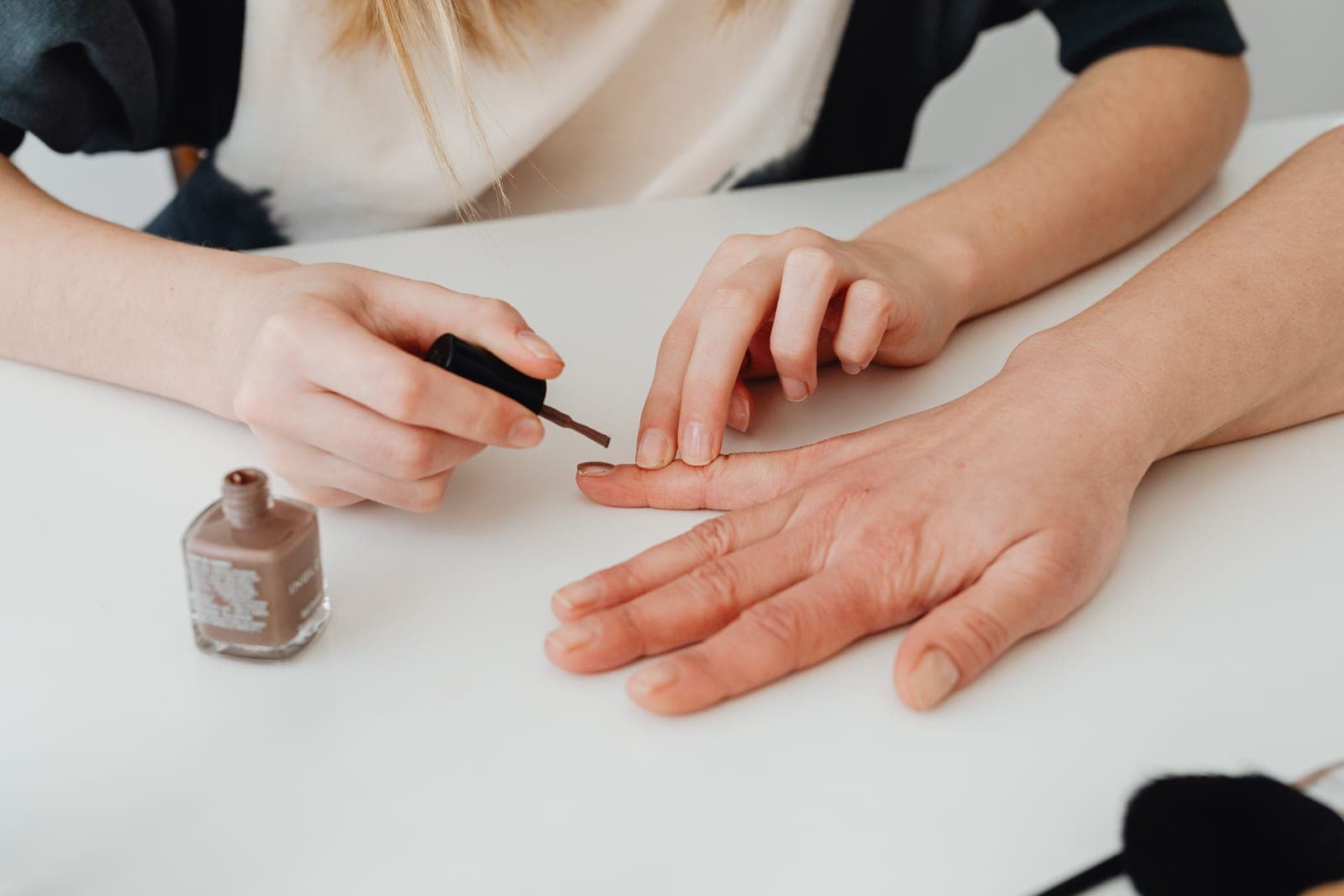
Weak nails come in two kinds, and they want opposite things
Before choosing a manicure, work out which nail you actually have, because the two problems people both call "weak" want opposite treatment.
Press gently against the free edge of a nail with your thumb.
It bends easily and the tip separates into layers. That is soft and peeling. The nail plate is too flexible and the keratin layers have come apart at the tip. It wants protein and a gentler file.
It resists, then snaps cleanly. That is brittle — dry, not weak. It wants oil and flexibility, and a hardener will make it worse by making a rigid nail more rigid. The full version of this test, and what to buy for each answer, is in the strengthener roundup.
Why it matters for this page: a soft peeling nail is poorly suited to anything you have to file off, because filing is what thins it further. A brittle nail actually tolerates an overlay reasonably well — the overlay adds the flexibility it is missing — but it is the nail most likely to snap during a careless removal. Different problem, same conclusion. Removal is the decision.
Every manicure type, ranked for a weak nail
Ranked on one criterion above all others: what getting it off does to the nail underneath. That is where the damage happens in every single one of these systems, and it is the question the salon menu never answers.
| Manicure | Comes off by | Thins the nail? | For a weak nail |
|---|---|---|---|
| Long-wear polish + bonding base | Non-acetone remover | No | Best answer |
| Press-ons (tabs) | Peeling the tab off | No | Best for length |
| Press-ons (glue) | Acetone soak | Slightly, via acetone | Good, with patience |
| Regular polish | Any remover | No | Fine, chips fast |
| Soft gel polish | Acetone soak, file the shine | Yes, a little | Only with perfect removal |
| Builder gel (soak-off) | File most off, then soak | Yes | Rarely worth it |
| Dip powder | File the top, long acetone soak | Yes | Avoid |
| Hard gel | Filed off entirely | Yes, substantially | Avoid |
| Acrylic | Filed off or long soak | Yes, substantially | Avoid |
The default answer: long-wear polish over a bonding base coat
This is the manicure a weak nail should be wearing, and it is boring, which is why it loses to gel in every salon conversation.
A long-wear system — the gel-effect polishes that cure in air rather than under a lamp — gives roughly a week to ten days of wear with no lamp, no filing and no acetone. That matters because acetone is drying and filing is subtractive, and a thin nail has nothing to give up in either direction. You remove it with a non-acetone remover, and the nail underneath is exactly the nail you started with.
The base coat is the part people skip and the part that does the work on a weak nail. A rubberized bonding base grips the plate and gives the color something to hold onto, which is most of the difference between a manicure that chips on day two and one that lasts the week. On a peeling nail it does a second job: it holds the lifted layers at the tip flat instead of letting them catch on things. See the base coat roundup for the honest comparison, and the easiest nails to maintain if upkeep rather than strength is the real problem, and polish for weak nails for the shade-level picks.
You can also wear a treatment underneath, which is the genuinely useful trick in this category. Both of the protein and layer-building treatments we rate work as base coats, so the repair happens while you are wearing color rather than instead of it. A treatment you have to choose over a manicure is a treatment you abandon by week two.
Gel on weak nails: the removal is the whole problem
Gel polish is not inherently bad for nails. Badly removed gel polish is, and badly removed is the normal case.
The AAD's published method is unambiguous and it is also unglamorous: file the shine off the surface, soak cotton in acetone, wrap each nail in foil, and wait ten to fifteen minutes rather than prying. The failure mode is impatience — the moment you lever a half-dissolved gel off, it leaves with a layer of your nail plate attached. On an already-thin nail you can see the difference afterward.
The AAD also notes that if you wear gel regularly, taking a break of a week or more between manicures gives the nails time to recover, and that keratin granulation — the white chalky patches people mistake for a fungal infection — is a sign of exactly this kind of surface damage.
So: gel is defensible on a weak nail only if you are honest about doing a patient fifteen-minute soak-off every time, never reaching for a drill, and oiling daily afterwards. If any of those three will not happen, choose from the top two rows of the table instead. The method in full is in how to remove gel polish at home, and the aftermath in repairing nails after gel.
Builder gel, dip and acrylic: what each one asks of the nail
These three get recommended for weak nails constantly, on the logic that a weak nail wants reinforcing. The logic is not wrong. The problem is what reinforcement costs.
Builder gel is the most defensible of the three, because the soak-off versions genuinely do come off in acetone. But read the manufacturers' own removal routines: Gelish directs filing roughly 80% of the product away and then soaking for about 25 minutes. That is a lot of filing on a thin nail, repeated every three weeks. It is a reasonable product badly matched to this reader — and if you want it anyway, buy the one that publishes its specs, in the builder gel roundup.
Dip powder is the one to avoid most firmly. It bonds hard, it is thick, and the standard removal is filing the top layer off followed by a long acetone soak — longer than gel polish. The communal-jar hygiene problem is a separate issue, and a real one. The comparison is in dip powder versus gel.
Acrylic and hard gel do not dissolve meaningfully. They are filed off, and that is the single largest source of nail damage in this entire hobby. On a nail that is already thin there is no version of this that ends well. The honest comparison, including why a home user should pick neither, is in builder gel versus acrylic.
One real exception. If your nails are brittle and snapping at a length you need for work, a thin builder gel overlay — no extension, no length added, just a reinforcing layer — is a legitimate choice, because it stops the snapping that is causing the damage. Keep it thin, keep the length short, and accept the filing at removal as the price.
Press-ons: the only system that adds nothing to the nail plate
If what you want is length on a weak nail, press-ons are the answer, and it is not a consolation prize. Nothing is cured onto the plate, nothing is filed off, and the set comes off tonight if you want it to.
The distinction that matters is the adhesive. Adhesive tabs are the gentlest option on this entire page: they peel away, they need no acetone, and they do not bond to the nail surface. The trade is wear — a few days rather than a couple of weeks. Glue bonds properly and lasts longer, and it comes off with an acetone soak, which puts it roughly level with gel polish on the drying question but with none of the filing.Glue versus sticky tabs works through both.
Two rules specific to weak nails. First, do not file the natural nail to help a set grip — buff the shine off lightly at most, and skip even that if your nails are peeling. Second, never pull a set off. The AAD's guidance on artificial nails is to never pull off or forcibly remove them; the method is in removing press-ons safely.
Fit matters more than usual here too, because a set that is too wide levers at the sidewall every time you use your hands, and that leverage is exactly what a weak nail cannot take. Sizing by nail bed is covered in the press-on roundup.
The six-week plan that changes the nail, not the manicure
The uncomfortable truth underneath this whole page: no manicure fixes a weak nail. The plate you are painting grew out of the matrix weeks ago and nothing applied on top reaches the matrix. What you can do is stop damaging it and grow out a better one, which takes about six weeks to become visible.
- Weeks one and two — nothing bonded. Bare nails or long-wear polish over a treatment base. No gel, no enhancement, no filing anything off.
- Swap the file. Emery board and metal file out, etched glass file in, filing sidewall-to-center. This is the single change most likely to stop peeling on its own — the tool roundup explains the mechanism.
- Oil, twice a day, every day. After every hand wash and before bed, top and underside. This is the whole intervention for brittle nails and half of it for soft ones.
- Keep them short. A short nail has less leverage on it and snaps far less. The AAD's shaping advice is to cut straight across and round the nails slightly at the tips for maximum strength.
- Treatment, matched to the problem. Protein for soft and peeling; oil and flexibility for brittle. Using the wrong one is why people conclude treatments do not work.
- Reassess at week six. By then you are looking at nail that grew while you were being kind to it. If it still splits, discolors or lifts from the bed, that is a dermatologist question, not a product question.
Then, if you want gel or builder gel back, you are making the choice with a nail that can take it — which is a very different decision from making it now. The full week-by-week version is in a nail care routine you will actually keep up.
Picks
What a weak-nail manicure needs
A treatment, an oil, a bonding base coat, a polish that does not need acetone, a set of press-ons for the weeks you want length, and the file that stops the peeling in the first place.
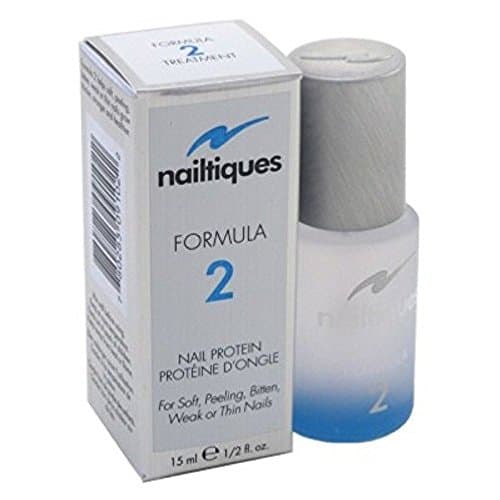
Nails that peel in layers rather than snapping
Nailtiques Nail Protein Formula 2
Protein and calcium aimed specifically at soft, peeling, bitten nails — a different problem from brittle ones.
- Formula
- Protein + calcium
- For
- Soft, peeling, bitten, weak or thin nails
Skip ifSkip this if your nails are already hard and snapping. Formula 2 is for soft nails, and using it on hard ones makes things worse.
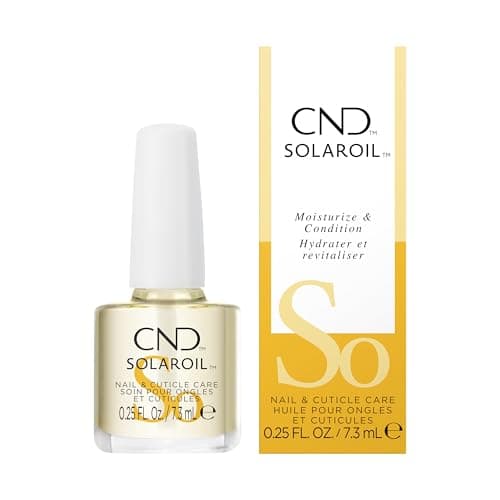
The one product to buy if you buy only one
CND SolarOil Nail & Cuticle Care
Jojoba-led, which is the reason it sinks in rather than sitting on top — and the reason it is the salon default.
- Oils
- Jojoba, vitamin E, rice bran, sweet almond
- Use
- Daily, top and underside of the nail
Skip ifSkip this if you will not use it daily. A cuticle oil in a drawer is money spent on nothing.
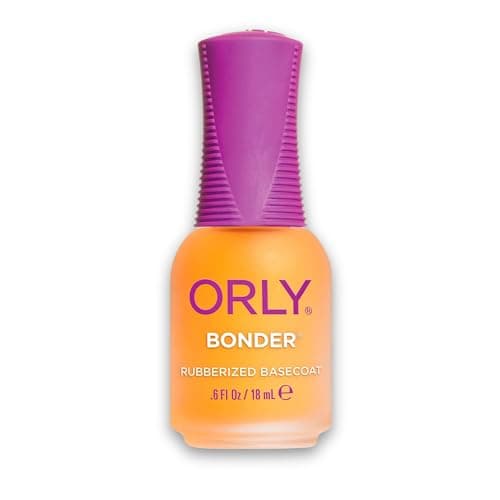
Polish that peels off in sheets by day three
ORLY Bonder Rubberized Basecoat
A rubberized resin base that grips color the way double-sided tape grips paper — the brand's own analogy, and an accurate one.
- Type
- Rubberized resin base coat
- Brand adhesion claim
- Up to two weeks
Skip ifSkip this if your problem is ridges rather than peeling. A smoothing base coat is the right tool for that.
Salon-grade shine you can remove in five minutes
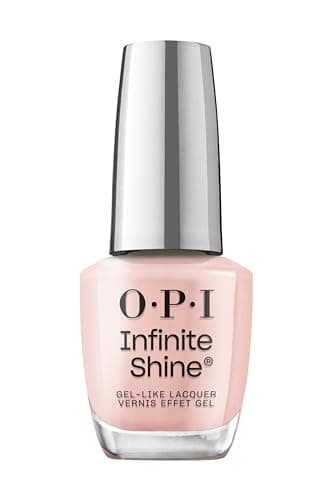
OPI Infinite Shine
A three-step, pre-cured gel system that locks on like gel and comes off with ordinary remover.
- Steps
- 3 (base, lacquer, gloss top)
- Brand wear claim
- Up to 11 days
Skip ifSkip this if you want to be done in ten minutes. Twenty minutes to fully dry is twenty minutes of careful hands.
Anyone who has had sets lift because nothing fit properly
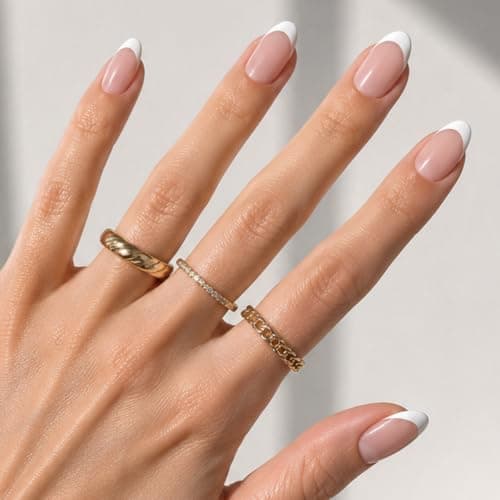
Olive & June Press-On Manis
The widest published size range of any set we found, which is the single thing that decides whether press-ons last.
- Nails per set
- 42 in 21 sizes
- Brand wear claim
- Up to 14 days
Skip ifSkip this if you want something you can take off the same evening. Glue sets are not built for that; tabs are.
Anyone whose nails split or peel at the tip
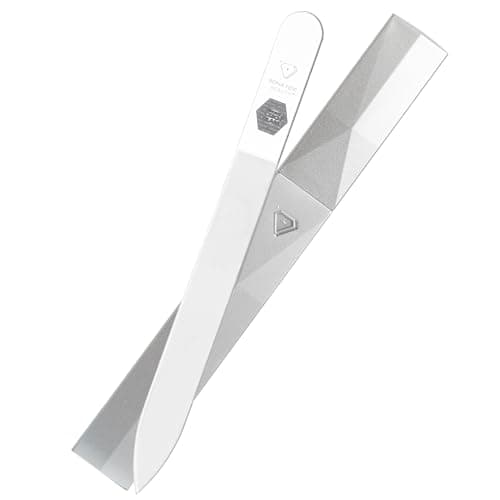
Bona Fide Beauty Czech Glass Nail File
The one tool swap that changes peeling nails: an etched glass surface that seals the free edge instead of shredding it.
- Material
- Tempered Bohemian Czech glass, handmade
- Grit
- Etched into the glass, not sprayed on
Skip ifSkip this if you need to remove a lot of length regularly. A file is for shaping; a clipper takes the length.
FAQ
Frequently asked questions
What is the best type of manicure for weak nails?
Long-wear regular polish over a bonding base coat. It needs no lamp, no filing and no acetone, so the nail you remove it from is the nail you started with. For length, press-ons on adhesive tabs are the gentlest option.
Is gel or acrylic better for weak nails?
Gel, clearly — but mainly because it dissolves. Acrylic has to be filed off, and filing an enhancement off a thin nail is the biggest single source of damage in this hobby. If you choose gel, the patient fifteen-minute acetone soak-off is not optional.
Can you get a gel manicure on thin nails?
Yes, if the removal is done properly every time and you oil daily afterwards. The AAD also suggests a break of a week or more between gel manicures. If a patient soak-off is not realistic for you, choose long-wear polish instead.
Does builder gel strengthen weak nails?
It reinforces them while it is on, which genuinely stops a brittle nail snapping. It does not change how the nail grows, and the filing its removal requires works against a thin nail. A thin overlay at short length is the defensible version.
Are press-on nails bad for weak nails?
Not in themselves — nothing is cured or filed onto the plate. The risks are filing the natural nail to help them grip and pulling a set off. Use tabs rather than glue where you can, and soak glue off rather than levering.
How long does it take for weak nails to get stronger?
About six weeks before you are looking at nail that grew under better conditions. Changes to the existing plate — a treatment, oil, a gentler file — show up within days; changes to how the nail grows take months.
Keep reading
Related guides
- Polish for weak nails →
The shade-level picks.
- Nail strengtheners →
Soft or brittle: the test.
- The best nail tools →
The file swap that stops peeling.
- The best builder gels →
If you want reinforcement anyway.
- Why nails peel and split →
Diagnosis before treatment.
- Repairing nails after gel →
If damage is already done.
Sources
- —AAD — 11 tips for healthy nails · aad.org
- —AAD — Removing gel polish at home · aad.org
- —AAD — Reducing artificial nail damage · aad.org
- —Nailtiques Formula 2 — directions for use · imagebeauty.com
- —CND — SolarOil · lovecnd.com
- —ORLY — Bonder Rubberized Basecoat · orlybeauty.com
- —OPI — Infinite Shine education · opi.com
- —Olive & June — Press-On System · oliveandjune.com
- —Bona Fide Beauty — Czech Glass Nail File in Hard Case · bonafidebeauty.com