Roundup · Nail Drills
The best nail drill for beginners
A beginner drill is not a weak one. It is one you can run slowly and stop instantly.
Written by Janet H. · Owner, Janet Media Group
Published
Tip & Topcoat is reader-supported. Product links go through our affiliate resolver and we may earn a commission from qualifying purchases, at no extra cost to you. Prices belong to the retailer and change constantly, so every button opens the live price on Amazon rather than showing you a number that may already be wrong.
Part of the nail drills hub.
The picks, compared
Row 1 is our pick · click any row for the full review
| # | Pick | Best for | Cost basis | Price |
|---|---|---|---|---|
| 01 | 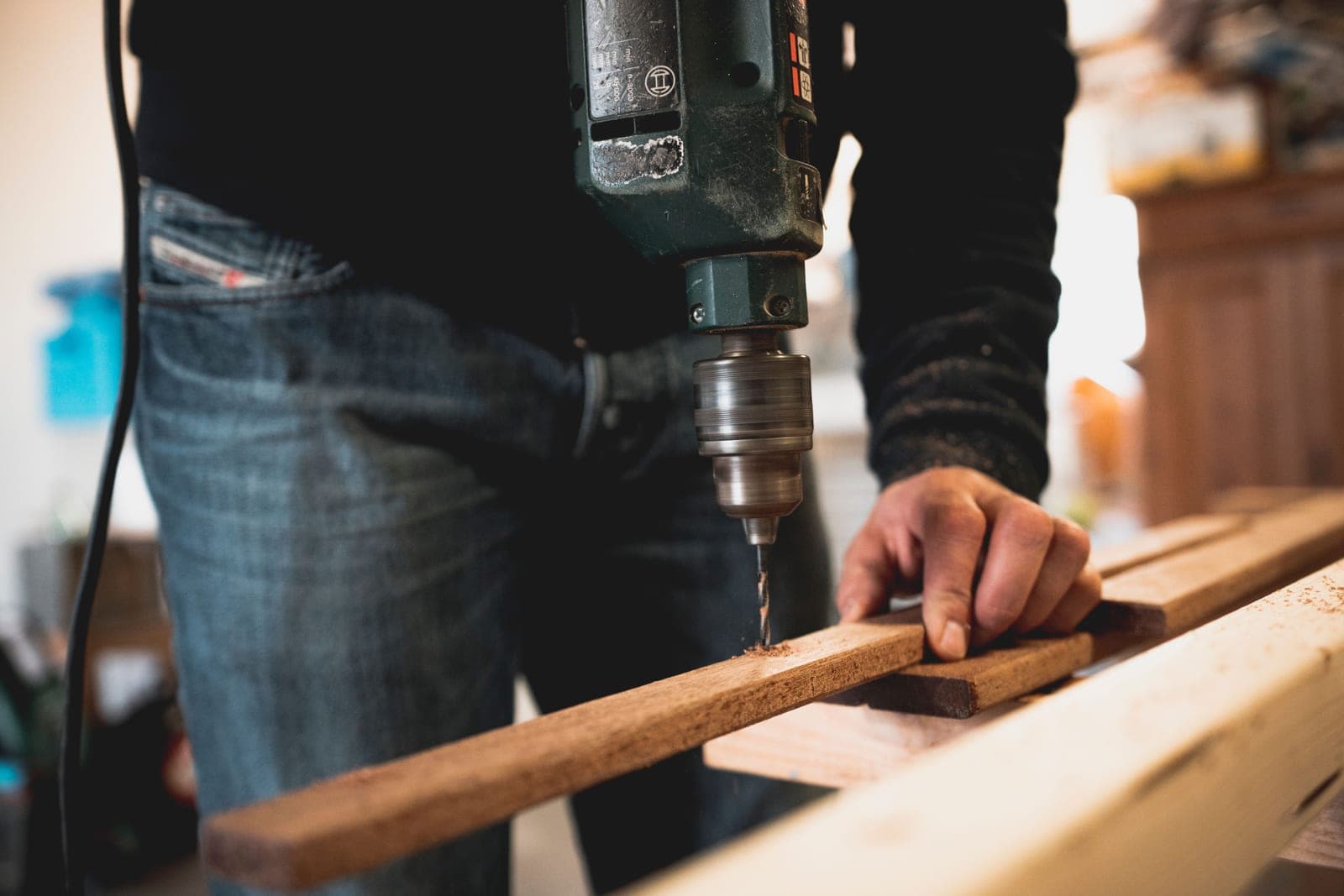 MelodySusie SC320G Rechargeable Nail Drill Cordless, one-button forward/reverse, and a dial that genuinely starts near zero — the combination beginners need. 0–30,000 RPM, dial | A first drill you will not immediately hurt yourself with | One-off, then per removal across years | |
| 02 |  MelodySusie Scarlet SC320I The corded sibling, with a foot pedal — which frees a hand and is why this is the one to learn on. 0–30,000 RPM, variable | Learning technique with both hands free to steady the work | One-off, then per removal across years | |
| 03 | 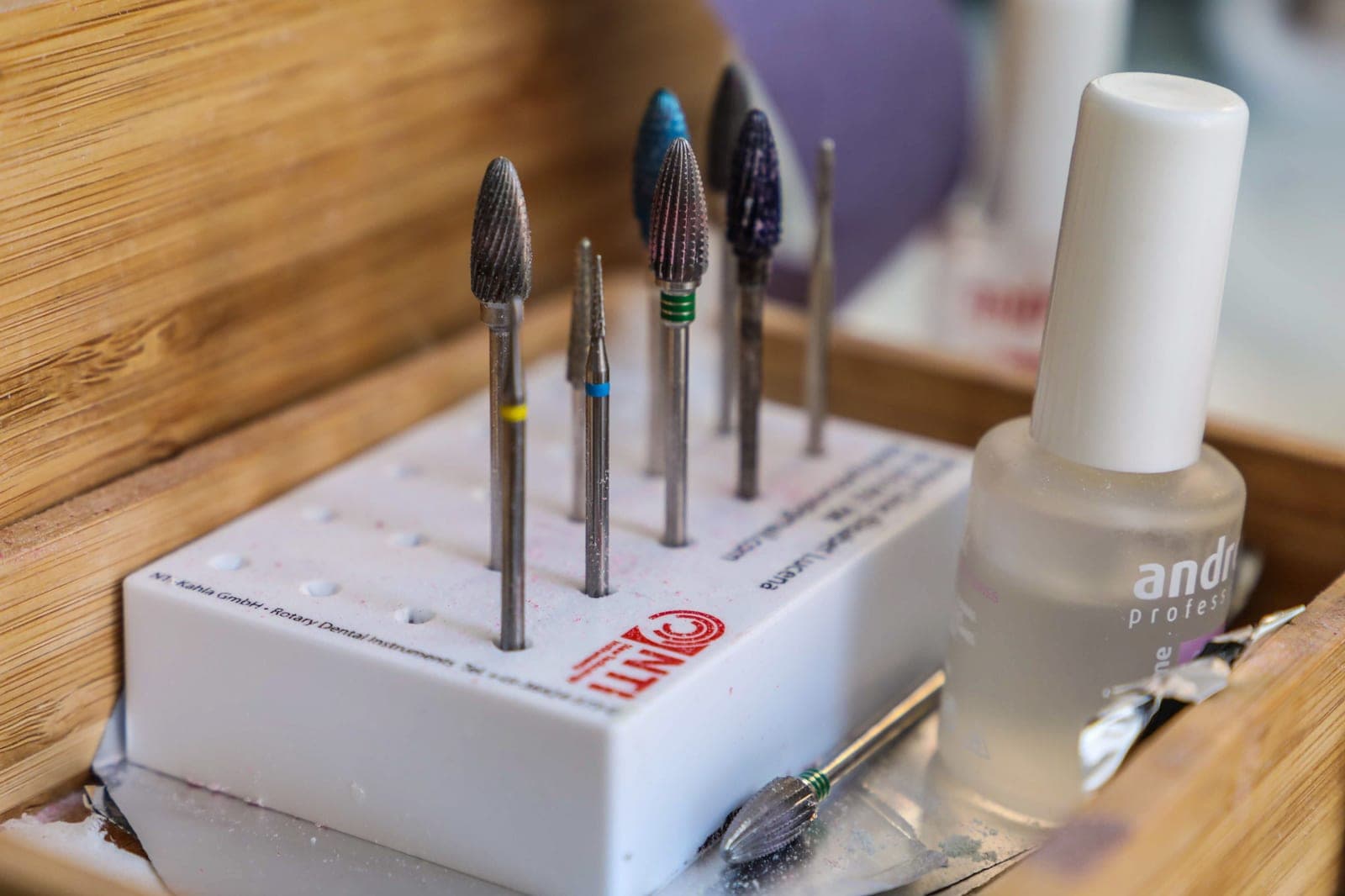 Makartt Ceramic Safety Nail Drill Bit Set Ceramic safety bits in the standard 3/32 in shank — the rounded top is what keeps the bit off your cuticle. 3/32 in (standard) | Taking gel and dip off without touching the skin | Per removal, a set lasts many removals | |
| 04 | Medicool Pro Power 20K A professional belt-clip machine with real torque figures published — and a model name that misleads on speed. 30,000 RPM (the name is not the speed) | Buying once, at professional build quality | One-off, built for years of daily use | |
| 05 | Makartt Nouvella Professional Nail Drill A 60W coreless motor with an LCD readout, so you can see the speed instead of guessing at a dial position. Up to 35,000 RPM | Heavy removal work — acrylic, dip powder, builder gel | One-off, then per removal across years |
Ranked on a published rubric from each brand's own specs and the pattern of what buyers consistently report. We have not tested these products and do not claim to have.

Five rules that prevent almost all beginner damage
- Low speed, always. NAILS Magazine's guidance on e-files is direct: an RPM that is too fast risks nicks, slips and rings of fire. Start at the bottom of the dial and only go up if the bit is not cutting.
- Keep the bit moving. Heat and grooves come from dwelling in one spot. Sweep continuously; never hold still.
- Almost no pressure. The bit cuts; your hand guides. If you are pressing, the bit is wrong or blunt.
- Never on the natural nail plate at the start. Use the drill on product — gel, acrylic, dip — and leave a thin layer for acetone to finish. Going down to bare nail with a drill is how beginners thin their nails.
- Stop when it feels warm. Warmth is friction and friction is damage in progress. Lift off, let it cool, resume.
What makes a drill beginner-friendly
A dial that starts at zero. Some drills start at a preset low speed that is still too fast for a nervous first attempt. A continuous dial from zero lets you creep up to the speed you want.
A foot pedal, if you have desk space. The MelodySusie Scarlet includes one, and it is the single biggest safety improvement available: you start and stop without moving a hand, so both hands stay on the work.
Low vibration. A buzzing handpiece cannot be placed accurately, and accuracy is the whole game. Makartt publishes its bearing count — four Japanese precision bearings on the Genesie — which is an unusually honest specification for predicting this.
Forward and reverse. Non-negotiable, especially if you are left-handed.
What a home user actually does with a drill
Realistically, three jobs — and it is worth knowing them, because it tells you what to practice.
- Taking the shiny top layer off gel before an acetone soak. This is the most valuable use and the safest, because you are working on product rather than nail.
- Tidying the cuticle area with a safety bit. Useful and the easiest to overdo.
- Shaping the free edge. Honestly, a hand file does this better and with no risk. Many people buy a drill for shaping and go back to a file.
What a home user should not do at first is remove a full set of acrylic. That is a real skill and the consequences of getting it wrong are what this hub keeps warning about.
Every pick in detail
The picks, reviewed
MelodySusie SC320G Rechargeable Nail Drill
A first drill you will not immediately hurt yourself withCordless, one-button forward/reverse, and a dial that genuinely starts near zero — the combination beginners need.
- Speed
- 0–30,000 RPM, dial
- Power
- 4000 mAh, 8–12 h per charge
- Controls
- One-button power / forward-reverse / pause
What is good
- A dial that starts at zero rather than at a preset low speed is the single most important beginner feature — you can creep up on the right speed
- Forward/reverse on the same button matters because left-handed and right-handed use need opposite rotation to avoid catching the skin
- Type-C charging with 8–12 hours of stated runtime means it is never tethered to a socket while you work
- No cord dragging across the desk, which is where most wobble comes from
What is not
- A battery is one more thing to fail; a corded machine has no such failure mode
- No foot pedal, so both hands are occupied while you work
Skip this ifSkip this if you want a pedal so your free hand can steady the finger. The corded Scarlet has one.
Illustrative category photo, not a photo of this product.
- Control at low RPM(30%)
- 9
- Heat + vibration(25%)
- 8
- Forward/reverse + handling(20%)
- 10
- Bit compatibility(15%)
- 8
- Value(10%)
- 8
Specs from MelodySusie — SC320G.
MelodySusie Scarlet SC320I
Learning technique with both hands free to steady the workThe corded sibling, with a foot pedal — which frees a hand and is why this is the one to learn on.
- Speed
- 0–30,000 RPM, variable
- Power
- Corded, UL-standard adapter
- Extra
- Foot pedal included
What is good
- A foot pedal means you start and stop without taking a hand off the work — the biggest single safety improvement on a home drill
- Corded power means the speed does not sag as a battery drains, which is what causes a bit to grab
- CE certified with a UL-standard adapter, which is more than most budget drills can say
- Low vibration matters more than top speed; a drill that buzzes is a drill you cannot place precisely
What is not
- The cord is genuinely in the way at a small desk
- No cordless option for doing your nails on the sofa
Skip this ifSkip this if your work surface is a coffee table. A pedal and a cord need a proper desk.
Illustrative category photo, not a photo of this product.
- Control at low RPM(30%)
- 9
- Heat + vibration(25%)
- 9
- Forward/reverse + handling(20%)
- 8
- Bit compatibility(15%)
- 8
- Value(10%)
- 9
Specs from MelodySusie — Scarlet SC320I.
Makartt Ceramic Safety Nail Drill Bit Set
Taking gel and dip off without touching the skinCeramic safety bits in the standard 3/32 in shank — the rounded top is what keeps the bit off your cuticle.
- Shank
- 3/32 in (standard)
- Type
- Ceramic, safety (rounded) top
- Rated for
- Gel polish, extension gel, dip powder
What is good
- A safety bit has a smooth rounded top, so the moment it touches skin it skates instead of cutting — the single most useful feature on a home bit
- Ceramic runs cooler than carbide at the same speed and does not clog the way metal does on gel
- 3/32 in is the universal home and salon shank size, so these fit essentially any drill here
- Sold in sets that span coarse to fine, which is the grit ladder you actually need
What is not
- Ceramic chips if you drop it on a hard floor — carbide survives that, ceramic often does not
- Bit sets vary between listings from the same brand, so check the grits included before buying
Skip this ifSkip this if you are removing thick acrylic every week. Carbide cuts bulk faster and survives more abuse.
Illustrative category photo, not a photo of this product.
- Grit range covered(30%)
- 8
- Safety bit included(25%)
- 10
- Shank fit(20%)
- 10
- Material + lifespan(15%)
- 7
- Value(10%)
- 8
Specs from Makartt — nail drill bits.
Medicool Pro Power 20K
Buying once, at professional build qualityA professional belt-clip machine with real torque figures published — and a model name that misleads on speed.
- Speed
- 30,000 RPM (the name is not the speed)
- Torque
- 4.5 Ncm, 4.3 oz handpiece
- Battery
- Up to 10 hours
What is good
- Publishing torque in Ncm at all puts this ahead of every consumer drill here — torque, not RPM, is what stops a bit stalling in acrylic
- A 4.3 oz handpiece is light enough to hold like a pen for a full session
- Belt clip and holster mean the body is off the desk entirely
- Takes any standard 3/32 in bit, so you are never locked into one brand's consumables
What is not
- The 20K in the name is marketing, not a spec — the machine runs to 30,000 RPM, and plenty of buyers get this wrong
- The most expensive drill here, and the extra is spent on durability rather than features
Skip this ifSkip this if you will use a drill a few times a year. The build quality is aimed at daily professional use.
Illustrative category photo, not a photo of this product.
- Control at low RPM(30%)
- 9
- Heat + vibration(25%)
- 9
- Forward/reverse + handling(20%)
- 9
- Bit compatibility(15%)
- 10
- Value(10%)
- 6
Specs from Medicool — Pro Power 20K.
Makartt Nouvella Professional Nail Drill
Heavy removal work — acrylic, dip powder, builder gelA 60W coreless motor with an LCD readout, so you can see the speed instead of guessing at a dial position.
- Speed
- Up to 35,000 RPM
- Motor
- 60W coreless
- Display
- LCD, forward/reverse
What is good
- A coreless motor holds its speed under load, which is exactly when a cheap drill bogs down and starts generating heat
- The LCD tells you the actual RPM, so you can repeat a setting that worked rather than eyeballing a dial
- Rechargeable and desk-or-portable, so it works either way
- 35,000 RPM is genuine headroom for taking down acrylic quickly
What is not
- 35,000 RPM is far more speed than natural-nail work needs, and speed is what causes rings of fire
- More machine, and more price, than someone only removing gel polish needs
Skip this ifSkip this if you only ever remove soak-off gel. You would be buying power you should not use on a natural nail.
Illustrative category photo, not a photo of this product.
- Control at low RPM(30%)
- 8
- Heat + vibration(25%)
- 9
- Forward/reverse + handling(20%)
- 9
- Bit compatibility(15%)
- 9
- Value(10%)
- 7
Specs from Makartt — Nouvella Professional.
How we scored nail drills
We do not test these products, and we will not pretend we do. There is no lab here, no stopwatch and no drawer of samples. What we do instead is read every brand's published specification, compare the figures that actually decide an outcome, and weigh them for one specific reader: someone trying to get salon results at home without the salon bill.
So when a wear figure appears on this site it is the brand's claim, attributed to the brand. When a product has no published figure, we say that too rather than filling the gap. The scores below are our editorial judgment applied to those published specs — useful for ranking like against like, and not a measurement of anything. The full method is here.
The weights
- Control at low RPM
- 30%
- Heat + vibration
- 25%
- Forward/reverse + handling
- 20%
- Bit compatibility
- 15%
- Value
- 10%
FAQ
Frequently asked questions
What is the best nail drill for a beginner?
One with a dial that starts at zero, a forward/reverse switch and low vibration. The MelodySusie SC320G covers all three cordless; the corded Scarlet adds a foot pedal.
What speed should a beginner use a nail drill at?
The lowest speed that cuts. Too high an RPM is specifically flagged by nail professionals as the cause of nicks, slips and rings of fire.
Can a nail drill ruin your nails?
Yes, if used with too much pressure, too high a speed, or held in one spot. The damage is called rings of fire, and prolonged improper use can affect the matrix and how the nail grows.
Do I need a nail drill to remove gel?
No. The acetone wrap method removes gel with no equipment and no risk of thinning the nail. A drill speeds it up by removing the shiny top layer first.
Should I get a corded or cordless drill as a beginner?
Either. Corded gives you a foot pedal and constant speed; cordless gives you no cord to fight. See the comparison.
Keep reading
Related guides
- How to use a nail drill →
Step by step, at the right speed.
- Are nail drills safe? →
The evidence on damage.
- The best drill bits →
Safety bits first.
- The best nail drills →
The full roundup.
- The bit grit guide →
What each color means.
Sources
- —NAILS Magazine — 5 things you should know about e-files · nailsmag.com
- —Scratch Magazine — rings of fire · scratchmagazine.co.uk
- —MelodySusie — SC320G · melodysusie.com
- —MelodySusie — Scarlet SC320I · melodysusie.com
- —Makartt — nail drill bits · makartt.com
- —Medicool — Pro Power 20K · medicool.com
- —Makartt — Nouvella Professional · makartt.com