Comparison · Press-On Nails
Press-on nails vs acrylic
Two ways to get a full set. One is a product you apply and remove yourself; the other is a service you book and then have to keep booking.
Written by Janet H. · Owner, Janet Media Group
Published
Tip & Topcoat is reader-supported. Product links go through our affiliate resolver and we may earn a commission from qualifying purchases, at no extra cost to you. Prices come from Amazon's API, carry the date they were read, and change constantly — the button always opens the current price on Amazon.
Part of the press-on nails hub.

What each one actually is
They get compared as if they were two products on a shelf. They are not the same kind of thing at all, and that is most of the answer.
Press-ons are finished nails — shaped, colored, sealed — that you attach to your own nail with glue or an adhesive tab. Nothing is applied in liquid form, nothing cures, and your own nail plate is untouched underneath except by the adhesive. You can be done in twenty minutes.
Acrylic is a liquid monomer mixed with a powder polymer, sculpted onto your nail (usually over a tip) as a paste, and left to harden in air. It is a chemical process performed on your nail, it needs the plate roughened first so it grips, and taking it off means dissolving or filing a hard polymer off the surface it bonded to.
The second difference is who does it. Press-ons are a home product by design. Acrylic is a service: the AAD's guidance on reducing artificial nail damage is written on the assumption that a trained technician is applying and removing it, and home acrylic has a materially worse damage record than home press-ons for exactly that reason.
Side by side on the four things that decide it
| Press-on nails | Acrylic | |
|---|---|---|
| Applied by | You, at home | A technician, usually |
| Time per set | 20-40 minutes | 60-120 minutes in a salon |
| Published wear | Up to 10-14 days with glue; Static Nails states up to 30 days | Weeks, with a fill every 2-3 weeks |
| Nail prep | Buff the shine, dehydrate | File the plate to roughen it |
| Removal | Acetone soak or warm water, 15-20 min | Soak or drill off the polymer |
| Reusable | Some sets, up to 5-6 wears per the brand | No |
| Running cost | Per set, sometimes split over several wears | Full set plus a fill every 2-3 weeks |
| Fix a broken nail | Replace that one nail | Salon repair visit |
The row that decides it for most people is the running cost. A salon gel or acrylic manicure runs $30 to $70 in 2026 US market data, and acrylic needs a fill every two to three weeks to stay wearable — so the honest comparison is not one set against one set, it is one set of press-ons against a monthly subscription.
The full cost-per-wear math for press-ons specifically, including what the cheap sets really cost once you count glue and replacements, is in what press-on nails actually cost and salon vs doing it at home.
Which one damages your nails more
Both can. Neither necessarily does. The mechanism is different and that is what should drive your choice.
Acrylic damages at two points. At application, because the nail plate is filed to give the acrylic something to key into — that material does not grow back for months. And at removal, because a cured acrylic has to be dissolved slowly or filed off, and most of the horror stories are people getting impatient and prying.
Press-ons damage at exactly one point: removal. Nothing in wearing them harms the nail. Pulling a glued tip off dry takes the top layers of your nail plate with it, every time. Soak it, and the plate underneath is untouched.
That asymmetry is why press-ons are the more forgiving choice for a thin or recovering nail, and why the sets that won't damage your nails are mostly the ones using tabs rather than permanent glue. If your nails are already damaged, read how to repair damaged nails before you put anything on them.
Which one is right for you
There is a third option most of these comparisons ignore. If what you like about acrylic is the structure and what you dislike is the removal, soft gel tips and builder gel both soak off: Gel-X vs acrylic and builder gel vs acrylic cover those head to head.
If you pick press-ons, this is what decides whether it works
Press-ons underperform for one reason far more often than any other, and it is not the brand. It is fit.
A tip narrower than your nail bed leaves bare nail at both sidewalls, which is where water gets in and lifting starts. A tip wider than your bed rides onto skin and breaks the seal from the other direction. This is why Olive & June's 42 nails in 21 sizes is the specification worth paying for, and why a 24-nail set in 12 sizes fits some people beautifully and nobody else at all. Both figures come from Olive & June's own press-on system page.
After fit, the order of importance is: oil-free prep, correct glue coverage, and not treating the first 24 hours like the set is permanent. All three, with the reasons, are in how to make press-ons last longer, and the troubleshooting version is why press-ons keep popping off.
Picks
The press-on sets worth comparing against a salon acrylic set
Four sets that get closest to an acrylic result for different reasons: the widest size ladder, the lowest cost per wear, the most natural edge, and the fastest application.
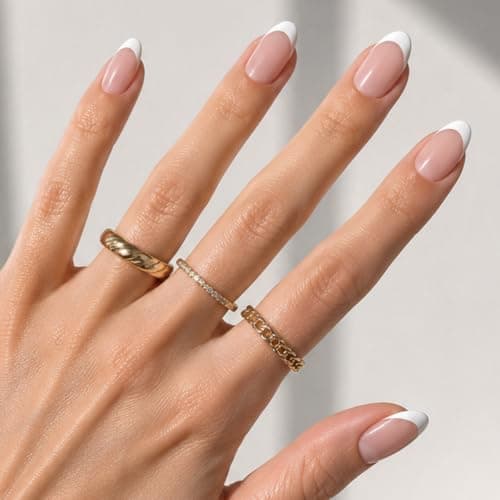
Anyone who has had sets lift because nothing fit properly
Olive & June Press-On Manis
The widest published size range of any set we found, which is the single thing that decides whether press-ons last.
- Nails per set
- 42 in 21 sizes
- Brand wear claim
- Up to 14 days
Skip ifSkip this if you want something you can take off the same evening. Glue sets are not built for that; tabs are.
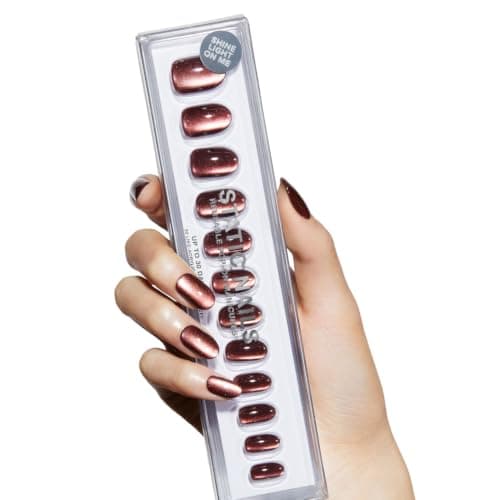
Working out the cheapest possible cost per wear
Static Nails Reusable Pop-On Manicures
The longest wear claim and the only set we found that publishes a reuse count, which is what makes the math work.
- Nails per set
- 30 in 15 sizes per hand
- Brand wear claim
- Up to 30 days
Skip ifSkip this if you want the thinnest, most invisible edge at the cuticle — a flexible soft-gel set reads more natural there.
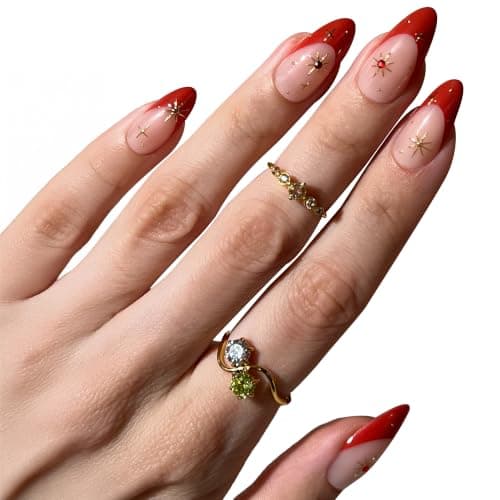
A natural-looking set that does not announce itself
PaintLab PaintLab Press-On Nails
Flexible soft-gel construction that sits thin at the cuticle, with a full kit in the box and a real editorial credential behind it.
- Nails per set
- 30 in 15 sizes (24 in 12 on some sets)
- Brand wear claim
- Up to 2 weeks
Skip ifSkip this if your nails take real punishment at work — a stiffer, acrylic-style set survives knocks better.
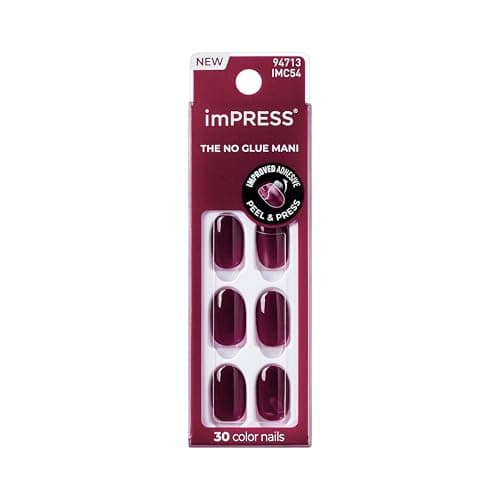
Getting a manicure on in ten minutes with nothing to dry
KISS imPRESS Press-On Manicure
No glue at all: the adhesive is pre-applied, you peel a tab and press. The fastest set here by a distance.
- Nails per set
- 30
- Brand wear claim
- Up to 10 days
Skip ifSkip this if you need a full two weeks out of one set. The adhesive is built for convenience, not maximum duration.
FAQ
Frequently asked questions
Are press-on nails better than acrylic?
Better for cost, speed and nail health; worse for maximum durability and extreme length. Press-ons sit on the nail and come off in a soak, where acrylic bonds to a filed nail plate and has to be dissolved or drilled off. If you want a look you can change every two weeks, press-ons are the better product.
Do press-on nails last as long as acrylic?
No. Brands publish up to 10 to 14 days for a glued set and Static Nails publishes up to 30 days for its reusable sets, where acrylic is worn continuously with a fill every two to three weeks. Acrylic wins on duration per application; press-ons win on what the whole year costs.
Are press-on nails cheaper than acrylic?
Substantially, once fills are counted. A salon gel or acrylic manicure runs $30 to $70 in 2026 US market data and needs a fill every two to three weeks. A press-on set is a one-off purchase and some sets are claimed reusable for five or six wears.
Do press-on nails damage your nails less than acrylic?
Generally yes, for one structural reason: acrylic requires the nail plate to be filed so the product grips, and press-ons do not. Press-ons damage nails only at removal, and only if you pull them off dry instead of soaking them.
Can you wear press-on nails over acrylic?
You can glue a tip onto an acrylic surface, but there is rarely a reason to — the acrylic is already a full set. The more common question is the reverse: after acrylic comes off, nails are usually thin and press-ons with adhesive tabs are a gentler way to keep length while the plate recovers.
Keep reading
Related guides
- Best press-on nails →
The full ranking by fit and wear.
- Gel-X vs acrylic →
The soak-off alternative to acrylic.
- What press-ons cost →
The per-wear math in full.
- Sets that won't damage nails →
If your nails are thin.
Sources
- —Olive & June — Press-On System · oliveandjune.com
- —Static Nails — Reusable Pop-On Manicures · staticnails.com
- —AAD — Reduce artificial nail damage · aad.org
- —AAD — Removing gel polish safely · aad.org
- —Airtasker — 2026 US manicure cost data · airtasker.com
- —PaintLab — FAQ and product listings · paintlabbeauty.com
- —KISS — imPRESS no-glue nails · kissusa.com