Guide · Guides
How long does nail polish take to dry?
Polish is touch-dry in minutes and genuinely hard hours later. Almost every ruined manicure happens in the gap between those two numbers.
Written by Janet H. · Owner, Janet Media Group
Published
Tip & Topcoat is reader-supported. Product links go through our affiliate resolver and we may earn a commission from qualifying purchases, at no extra cost to you. Prices come from Amazon's API, carry the date they were read, and change constantly — the button always opens the current price on Amazon.
Part of the guides hub.
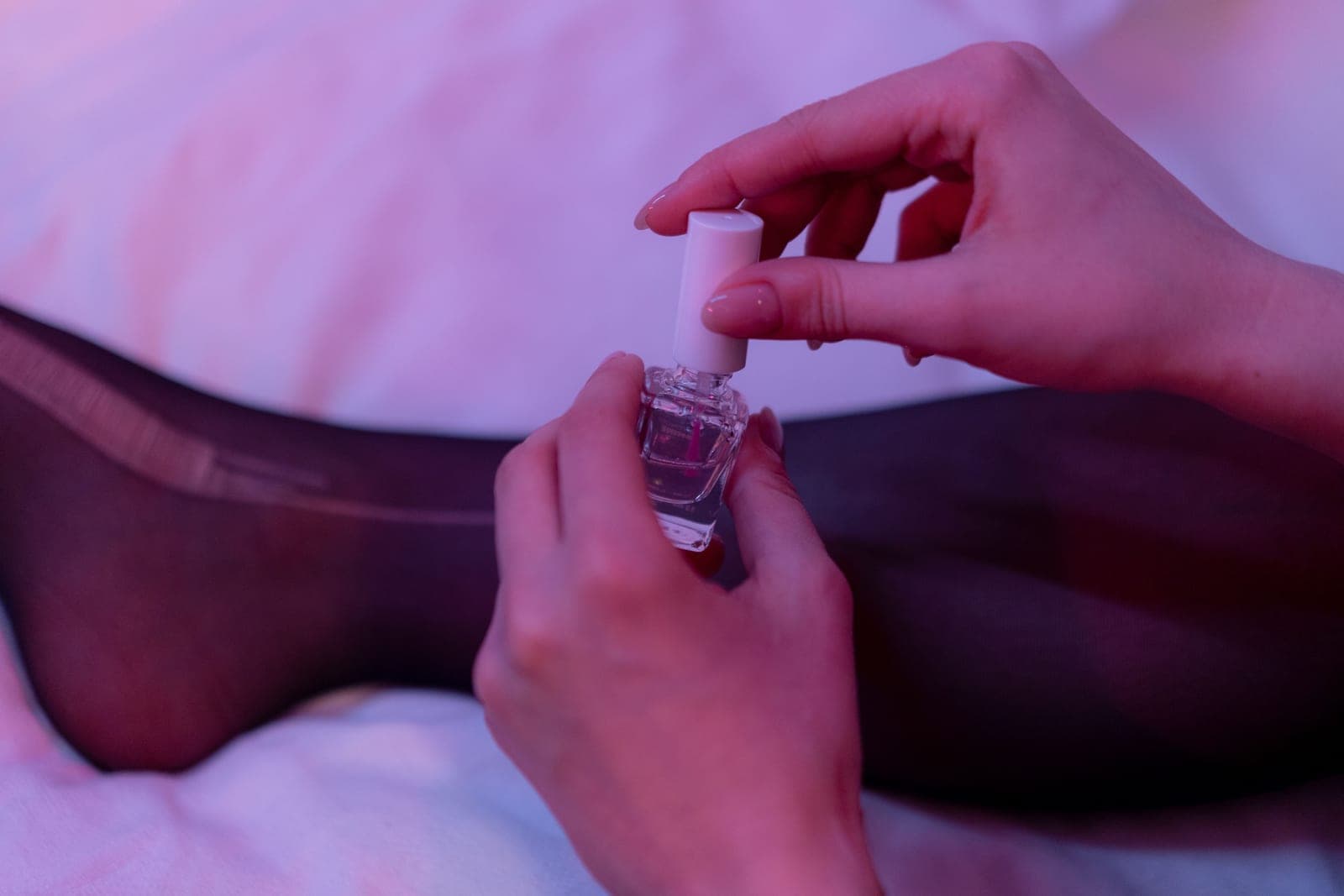
Drying is three stages, not one
Nail polish does not dry the way water dries. It is a resin dissolved in solvent, and what you call drying is really two processes happening at different speeds: the solvent evaporates, then the resin film continues to harden for hours afterward.
| Stage | Roughly how long | What you can do |
|---|---|---|
| Touch-dry | 2-5 minutes per coat | Light touch only. Still dents under pressure |
| Smudge-resistant | 15-20 minutes | Normal careful movement. Sheets will still print it |
| Fully hardened | Several hours | Everything, including sleep |
OPI publishes 5 minutes to touch-dry and 20 minutes to fully dry for Infinite Shine, which is a representative long-wear system. Sally Hansen publishes 5 minutes between coats for Miracle Gel. Those are the brands' own figures and they describe the second stage, not the third.
The gap between stage two and stage three is where almost every ruined manicure happens. Polish feels finished long before it is finished, and a bed sheet at hour two will press its weave into a nail that passed the fingertip test at minute twenty.
Why thin coats are not just advice
Solvent escapes from the surface of a film. A thick coat skins over on top while the layer underneath is still liquid, and now the solvent has to migrate through a hardened lid to get out.
That is why a single thick coat can still be soft an hour later while three thin coats are solid in twenty minutes — and why a thick manicure dents rather than smudges. The dent is the skin on top being pushed into the liquid underneath.
Two thin coats of color, each one just translucent enough that you can almost see the nail through it, beat one thick coat on every metric: dry time, finish, chip resistance and how long the whole manicure lasts. Everything else on this page is secondary to that one habit.
The four methods that work
- A fast-dry top coat. The one product that changes the chemistry rather than the conditions. Seche publishes a formula that penetrates through the lacquer to the base coat and forms a single durable layer, which is why it both speeds drying and adds wear. Worth knowing that essie's Gel Couture top coat is a long-wear system component rather than a fast-dry — buying one and expecting the other is the most common mismatch in the category, and the top coat roundup sorts them by job.
- Cold water, after about two minutes. Plunge your fingertips into a bowl of ice-cold water for two or three minutes once the surface has set. It does not evaporate solvent faster — it firms the film so it resists dents while the rest of the solvent leaves. The timing matters: too early and you will ripple the surface.
- Cool air, not warm. Moving air carries solvent vapor away from the surface, which does help. Warm air softens the resin at the same time, which does not. If your hair dryer has a cool setting, that is the setting.
- Drying drops or spray. Oil-based drops sit on top, firm the surface and lubricate it so things slide rather than stick. They buy you smudge resistance, not hardness — useful, and not a substitute for time.
What does not work
- Blowing on them. Your breath is warm and humid. Humidity is the enemy of a solvent film; you are adding water vapor to the surface you are trying to dry.
- A warm hair dryer. Softens the polish as fast as it evaporates the solvent, and on a thick coat it will skin the surface and trap liquid underneath.
- A UV or LED nail lamp. Regular polish contains no photo-initiator, so there is nothing in it for the lamp to react with. The lamp's gentle warmth may help marginally; the light does nothing at all. The full explanation is in UV vs LED nail lamps.
- Putting them in the freezer. Cold water works because it is cold and wet against the film. Freezing air is neither, and condensation on a drying nail is a cloudy finish.
A practical schedule
If you have twenty minutes and need to leave the house, do it in this order and it will survive.
- Base coat, thin. Two minutes.
- First color coat, thin. Three minutes.
- Second color coat, thin. Three minutes.
- Fast-dry top coat, generous but even. Two minutes.
- Cold water for three minutes.
- Seven minutes of doing nothing with your hands.
What you cannot do in twenty minutes is sleep on it. Painting your nails right before bed is the single most reliable way to wake up with sheet marks, and no product on the market fully solves it. Paint two hours before bed, or paint in the morning.
If the problem you are actually solving is that your manicure does not last rather than that it dries slowly, the fix is a different one — start with how to make nail polish last longer and the base coat rankings, because adhesion is a prep problem, not a drying one.
Picks
What actually shortens the danger window
A fast-dry top coat is the only product on this list that changes the physics. The other two are long-wear systems whose published dry behavior is worth knowing before you buy into one.
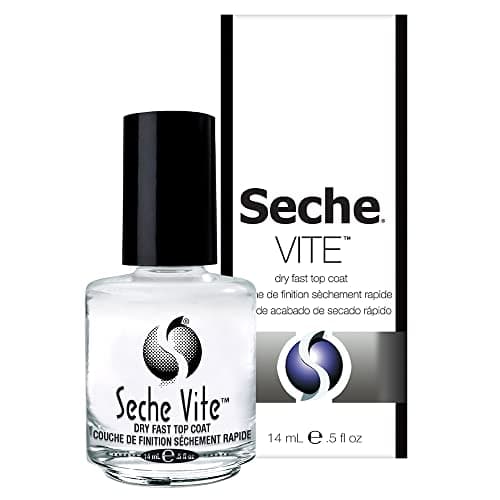
Making an ordinary polish manicure survive the week
Seche Seche Vite Dry Fast Top Coat
The one top coat that bonds through the color to the base coat, turning three separate layers into a single shell.
- Size
- 0.5 fl oz
- Method
- Applied over WET polish
Skip ifSkip this if you like to paint one nail at a time over an evening. This has to go on while the color is still wet.
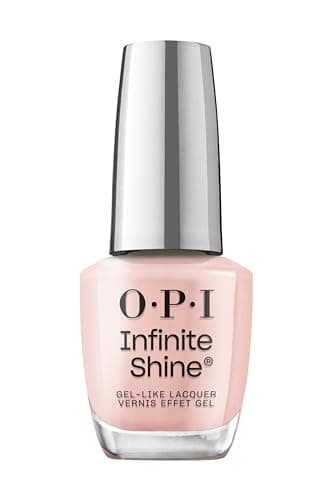
Salon-grade shine you can remove in five minutes
OPI Infinite Shine
A three-step, pre-cured gel system that locks on like gel and comes off with ordinary remover.
- Steps
- 3 (base, lacquer, gloss top)
- Brand wear claim
- Up to 11 days
Skip ifSkip this if you want to be done in ten minutes. Twenty minutes to fully dry is twenty minutes of careful hands.
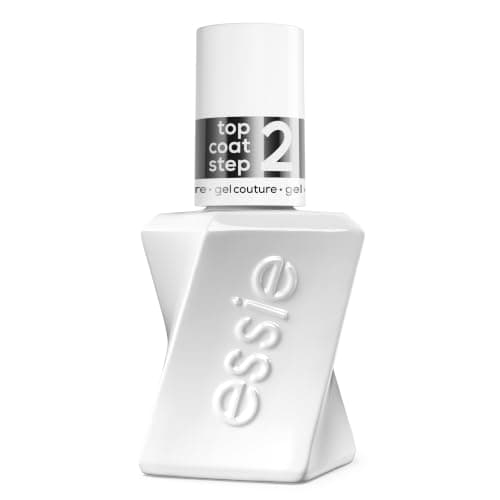
Anyone already using essie Gel Couture color
essie Gel Couture Shiny Top Coat
Step two of the essie longwear system, and the component the 15-day claim actually depends on.
- Role
- Step 2 of the 2-step system
- Lamp
- None required
Skip ifSkip this if you need your nails touch-dry in two minutes. Reach for a dedicated fast-dry top coat instead.
FAQ
Frequently asked questions
How long does nail polish take to dry completely?
Touch-dry in about 5 minutes per coat, smudge-resistant at 15 to 20 minutes, and fully hardened only after several hours. OPI publishes 5 minutes to touch-dry and 20 minutes to fully dry for Infinite Shine. The hours-long final stage is why polish still dents under a bed sheet long after it feels dry.
How can I make nail polish dry faster?
Thin coats first — it is the biggest single factor. Then a fast-dry top coat, then a two to three minute plunge in ice-cold water once the surface has set, then cool moving air. Warm air, breath and UV lamps do not help regular polish.
Does cold water really dry nail polish?
It firms the film rather than evaporating the solvent, which is enough to stop dents and smudges while the rest of the drying happens. Wait about two minutes after the last coat before you plunge, or you will ripple the surface.
Can you dry regular nail polish under a UV lamp?
Not meaningfully. Regular polish has no photo-initiator, so there is nothing for UV or LED light to cure. Any small benefit comes from the lamp's warmth and airflow, not the light. Gel polish is the product designed to cure in a lamp.
How long before you can shower after painting your nails?
Give it at least an hour, and two is safer. Hot water softens a polish film that has not fully hardened and steam adds humidity, which is the condition polish dries slowest in. Shower first, then paint.
Keep reading
Related guides
- Best top coats →
Fast-dry vs long-wear vs gloss.
- Make polish last longer →
If wear, not drying, is the issue.
- Gel vs regular polish →
The real answer to dry time.
- Fixing thick polish →
Gloopy polish never dries properly.
Sources
- —OPI — Infinite Shine published dry times · opi.com
- —Seche — Vite Dry Fast Top Coat · seche.com
- —essie — Gel Couture Top Coat · essie.com