Guide · Guides
How to grow your nails faster
Growth rate is close to fixed. Length is not. The gap between those two facts is where every real gain lives.
Written by Janet H. · Owner, Janet Media Group
Published
Tip & Topcoat is reader-supported. Product links go through our affiliate resolver and we may earn a commission from qualifying purchases, at no extra cost to you. Prices come from Amazon's API, carry the date they were read, and change constantly — the button always opens the current price on Amazon.
Part of the guides hub.
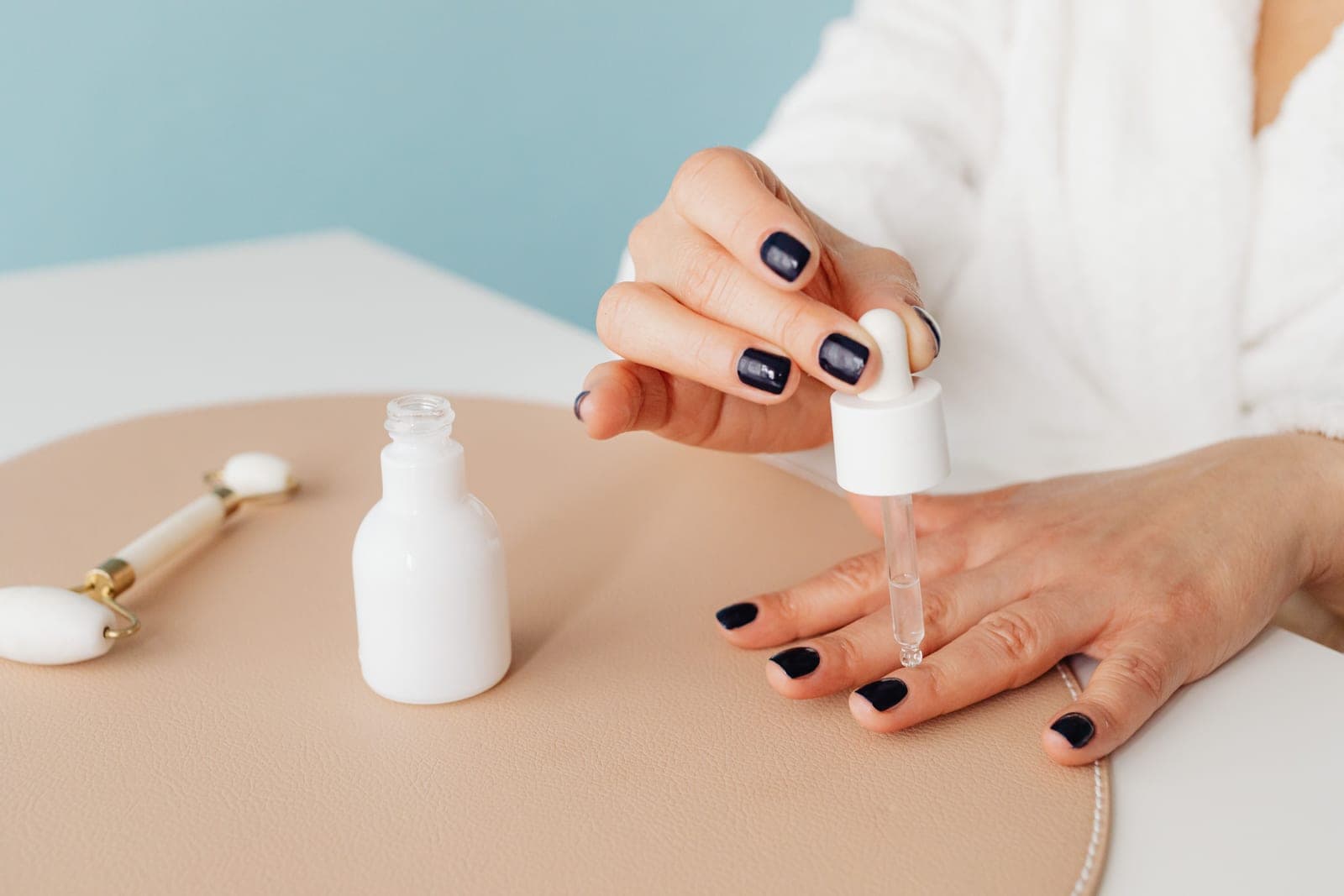
The number, and why it matters
A measured study of healthy young American adults put average fingernail growth at 3.47 mm per month, against 1.62 mm for toenails — fingernails growing over twice as fast as toenails. Dermatology references cluster in the same narrow band, roughly 3 to 3.5 mm a month.
Two things follow from that figure, and they reframe the whole question.
First, the nail at your free edge today was formed in the matrix roughly three months ago. Anything you change now shows up at the tip a long way down the line, which is why two weeks of a new routine tells you nothing.
Second, 3.5 mm a month is a lot of nail. Over six months that is more than two centimetres of growth. If your nails are not noticeably longer after six months, they are not growing slowly — they are breaking at the same rate they grow. That is a completely different problem, and it is the solvable one.
What cannot speed growth, and why
Growth happens in the nail matrix, the living tissue tucked under the skin behind your cuticle. The visible nail plate is dead, compacted keratin — a product, not a process. Nothing applied to a dead structure can change the rate at which the living one behind it produces more.
That rules out, by mechanism rather than by opinion:
- Growth serums applied to the plate. They can condition the plate and the surrounding skin, which makes nails look and behave better. They do not reach the matrix.
- Hardeners. A harder nail is not a faster-growing nail, and on a brittle nail extra rigidity means it snaps sooner — so a hardener can leave you with shorter nails. The distinction is in hardener versus strengthener.
- Cuticle oil, as a growth product. Oil is the most useful thing in this category and it still is not a growth accelerant. It keeps the plate flexible so it breaks less, which is how it produces length.
- Biotin, for most people. There is a real evidence base for diagnosed biotin deficiency and brittle nails. There is very little for supplementing a normal diet, and deficiency is uncommon.
None of that makes those products useless. It makes them products that reduce breakage rather than increase growth — which is the right goal, just not the advertised one.
What actually produces longer nails
Reframe the goal as "keep every millimeter that grows" and the list of effective interventions becomes short and concrete.
- Oil, twice a day. A flexible plate bends instead of snapping. A jojoba-led oil penetrates rather than sitting on top. Top and underside, after every hand wash and before bed.
- Go shorter before you go longer. Counter-intuitive and the most effective single move. A short nail has far less leverage on it, so it survives the knocks that were snapping it before — and then it grows from a stable base rather than from a damaged edge.
- Change the file, and the direction. An etched glass file worked sidewall to center seals the free edge instead of shredding it. Splitting at the tip is often purely mechanical.
- Cut straight across, round the corners. The AAD's shaping advice is to trim straight and round the nails slightly at the tips for maximum strength. Square corners catch and split.
- Gloves for wet work. Repeated wet-dry cycling is the most underrated cause of a weak free edge. Detergent makes it worse.
- Stop using them as tools. Every lid pried and label scraped is a direct load on the exact millimeter you are trying to keep.
- Treat the right problem. Protein for a soft peeling nail; oil and flexibility for a brittle one. The bend test is in why nails peel and split.
Does polish help or hurt?
A reasonable question with a genuinely two-sided answer.
Polish as armor: helps. A layer of polish over a nail that peels at the tip holds the lifted layers flat and stops them catching on things. For someone whose nails break at the free edge, wearing color is protective. A treatment that works as a base coat does both jobs at once, which is the useful trick in this category.
Removal: hurts, if done badly. Acetone is drying and peeling polish off takes the top layer of nail with it. Use a non-acetone remover where you can, and never peel.
Gel and enhancements: neutral while on, costly coming off. Nothing damages a nail while it is on. The damage is at removal — filing, or a half-dissolved gel levered off. If you want length while your own nails recover, press-ons are the gentlest route, because nothing is cured or filed onto the plate. See are press-ons worth it?
Diet, health and the honest caveats
Growth rate is not entirely fixed — it is just not something a product moves. The things that genuinely shift it are mostly not for sale.
Nails grow faster in warmer months than colder ones, faster on the dominant hand, faster on longer fingers, and faster in younger people than older ones. Growth slows with illness, with poor circulation, and with any significant systemic stress on the body. General nutrition matters in the sense that genuine deficiency affects nail formation; eating more of a nutrient you are not short of does not.
Which leaves the honest version: you cannot buy faster growth, you can support normal growth by being generally well, and you can keep almost all of what grows. The last part is the part you control, and over six months it is the difference between short nails and long ones.
Finally, the caveat worth stating plainly: nails that grow very slowly, change shape, thicken, discolor, or lift from the bed are a medical question rather than a cosmetic one. The AAD's healthy nail guidance is the place to start, and a dermatologist is the place to go.
Picks
What actually helps
An oil to keep the plate flexible, a protein treatment if your nails peel in layers, and the file that stops the splitting at the tip.
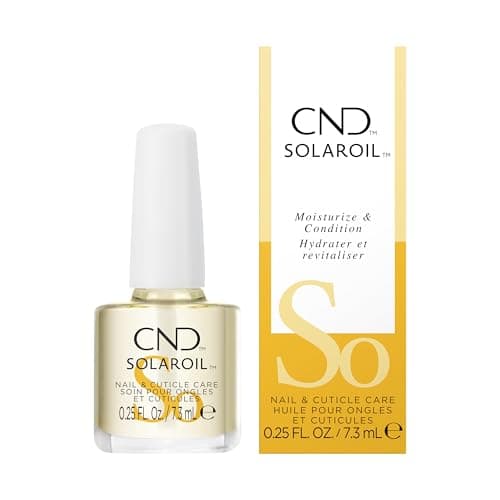
The one product to buy if you buy only one
CND SolarOil Nail & Cuticle Care
Jojoba-led, which is the reason it sinks in rather than sitting on top — and the reason it is the salon default.
- Oils
- Jojoba, vitamin E, rice bran, sweet almond
- Use
- Daily, top and underside of the nail
Skip ifSkip this if you will not use it daily. A cuticle oil in a drawer is money spent on nothing.
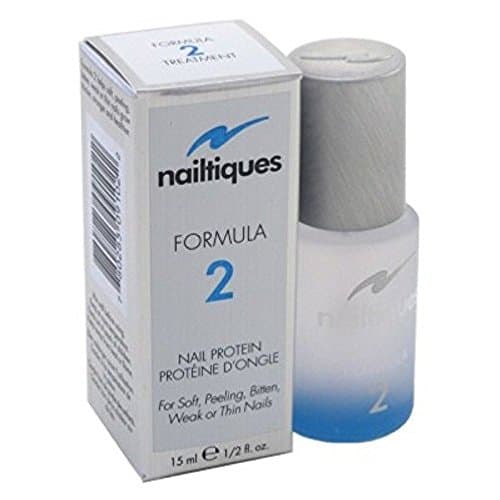
Nails that peel in layers rather than snapping
Nailtiques Nail Protein Formula 2
Protein and calcium aimed specifically at soft, peeling, bitten nails — a different problem from brittle ones.
- Formula
- Protein + calcium
- For
- Soft, peeling, bitten, weak or thin nails
Skip ifSkip this if your nails are already hard and snapping. Formula 2 is for soft nails, and using it on hard ones makes things worse.
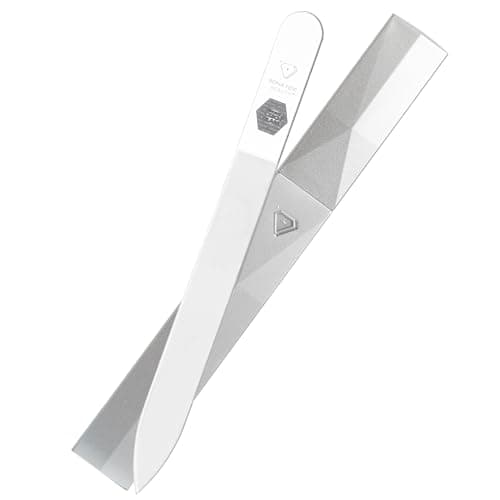
Anyone whose nails split or peel at the tip
Bona Fide Beauty Czech Glass Nail File
The one tool swap that changes peeling nails: an etched glass surface that seals the free edge instead of shredding it.
- Material
- Tempered Bohemian Czech glass, handmade
- Grit
- Etched into the glass, not sprayed on
Skip ifSkip this if you need to remove a lot of length regularly. A file is for shaping; a clipper takes the length.
FAQ
Frequently asked questions
How fast do fingernails grow?
About 3.5 mm per month on average — a measured study of healthy young adults found 3.47 mm for fingernails against 1.62 mm for toenails. That means the nail at your free edge today formed roughly three months ago.
Can you make your nails grow faster?
Not meaningfully. Growth happens in the matrix under your cuticle, and nothing applied to the dead nail plate reaches it. What you can change is how much of that growth you keep, which is where all the real gains are.
Does cuticle oil make nails grow faster?
No, but it is still the most useful product for getting longer nails. Oil keeps the plate flexible so it bends instead of snapping, and a nail that stops breaking gets longer at 3.5 mm a month.
Does biotin help nails grow?
There is a real evidence base for diagnosed biotin deficiency and brittle nails, and very little for supplementing an adequate diet. Deficiency is uncommon. Oil and gloves act faster and more reliably.
Should I cut my nails short to grow them longer?
Yes, counter-intuitively. A short nail has much less leverage on it and survives knocks that were snapping it, so it grows from a stable base rather than from a damaged edge. Short for a month usually beats trying to protect a long split nail.
Does nail polish stop nails growing?
No. Polish does not affect the matrix, and a layer of color can protect a peeling free edge. The damage comes from removal — acetone is drying, and peeling polish off takes nail with it.
Keep reading
Related guides
- Nail care basics →
The five habits in full.
- Why nails peel and split →
Diagnosing the breakage.
- Hardener vs strengthener →
Treating the right problem.
- The best cuticle oils →
The one product to buy.
- Repairing nails after gel →
If you are starting from damage.
Sources
- —Harvard BioNumbers — human fingernail and toenail growth rate · bionumbers.hms.harvard.edu
- —AAD — 11 tips for healthy nails · aad.org
- —CND — SolarOil · lovecnd.com
- —Nailtiques Formula 2 — directions for use · imagebeauty.com
- —Bona Fide Beauty — Czech Glass Nail File in Hard Case · bonafidebeauty.com