Comparison · Nail Care
Nail hardener vs nail strengthener
Two different products sold under interchangeable names. One rigidifies, one reinforces, and a brittle nail only tolerates one of them.
Written by Janet H. · Owner, Janet Media Group
Published
Tip & Topcoat is reader-supported. Product links go through our affiliate resolver and we may earn a commission from qualifying purchases, at no extra cost to you. Prices come from Amazon's API, carry the date they were read, and change constantly — the button always opens the current price on Amazon.
Part of the nail care hub.
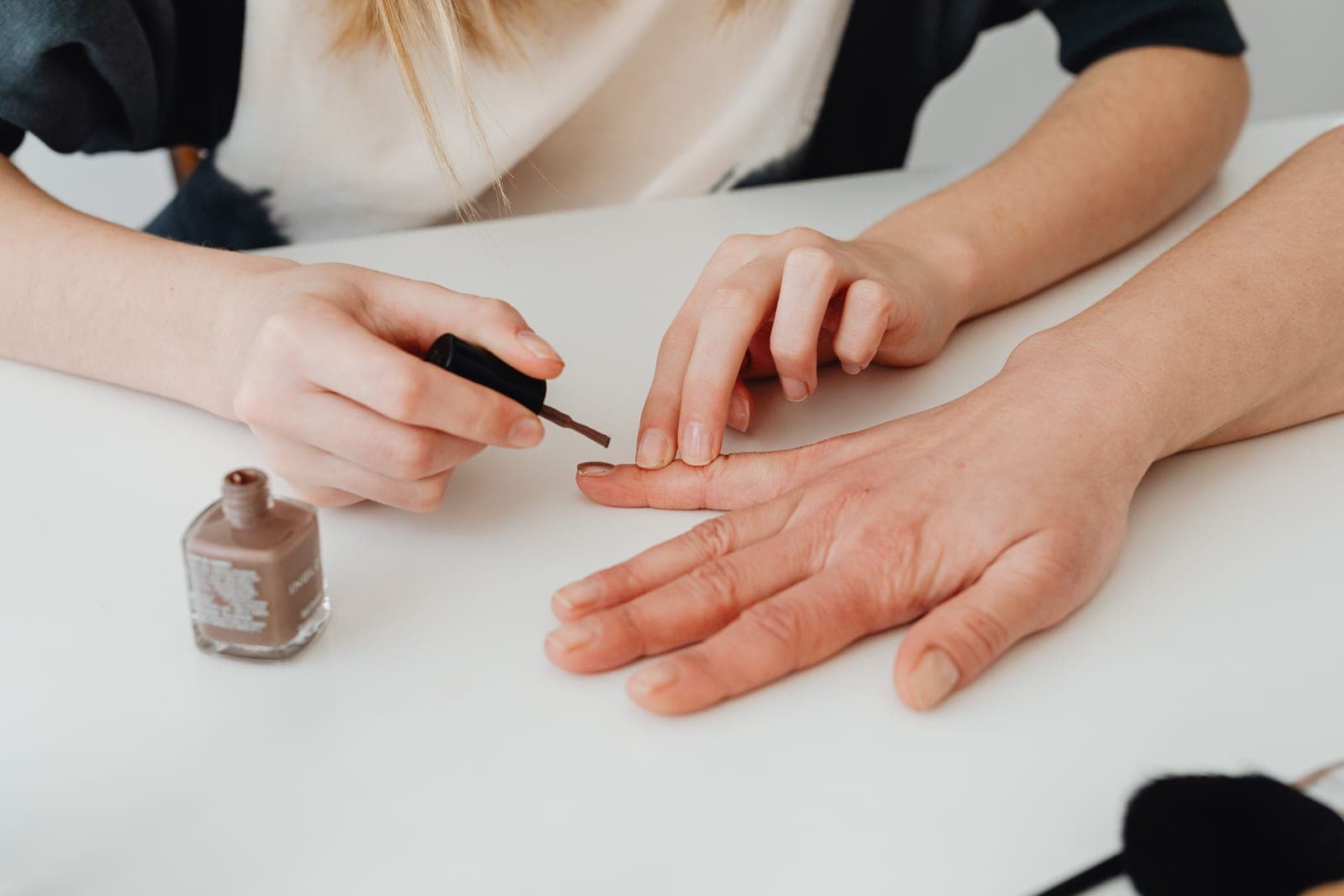
The bend test, before you buy anything
Both problems get called "weak nails" and they want opposite treatment, so start here. Press gently against the free edge of a nail with your thumb.
It bends easily and the tip separates into layers. That is a soft, peeling nail. The keratin layers at the tip have come apart and the plate is too flexible. It wants protein and a gentler file.
It resists, then snaps cleanly. That is a brittle nail — dry, not weak. It wants oil and flexibility. A hardener here will make a rigid nail more rigid, and more rigid means it snaps sooner.
Getting this backwards is the single most common reason people conclude nail treatments do not work. They do work; the wrong one works against you. The same diagnosis, applied to the choice of manicure rather than the choice of bottle, is in the best manicure for weak nails.
What each category of product actually does
| Hardener | Strengthener | |
|---|---|---|
| Mechanism | Crosslinks or rigidifies the plate | Adds protein, calcium or film layers |
| Right for | Soft nails that bend and tear | Soft, peeling, thin or flaking nails |
| Wrong for | Brittle nails that snap | Rarely harmful, but slow |
| Failure mode | Makes a brittle nail snap sooner | Does nothing fast |
| Usable under polish? | Usually, as a base coat | Usually, as a base coat |
| Timescale | Days to a week | Weeks |
The naming problem is that the marketing uses both words for both mechanisms. "Nail hardener", "nail strengthener", "nail fortifier" and "nail treatment" appear on bottles that work in completely different ways. So read the actives and the claimed effect rather than the product name.
Three of the bottles on this page tell you what they target if you read them properly: one is a layer-building treatment with a published week-long routine, one is explicitly protein and calcium aimed at soft, peeling, bitten nails, and one is a botanical surface treatment aimed at ridges, white spots and flaking. Those are three different jobs, and all three get shelved as "strengthener".
The formaldehyde question
The traditional hardener chemistry is a formaldehyde or formaldehyde-releasing resin, and it works by crosslinking keratin at the nail surface. It genuinely hardens a nail, quickly.
It also has a well-documented tendency to overshoot. Prolonged use makes the plate brittle rather than strong, and the usual trajectory is a few good weeks followed by nails that snap in a new and more annoying way. It is also a contact sensitizer for some people, which is why it is treated with caution in cosmetic regulation. The FDA makes the same point about formaldehyde in hardeners, and it is the main reason the free-from shelf exists at all — see the best non-toxic nail polish.
The practical conclusion is the same one that follows from the bend test: a true hardener is a short-term tool for a specifically soft, tearing nail, not a maintenance product. If you use one, use it for a defined period and then stop. The product on this page with a published routine makes that explicit — two coats on day one, one coat daily, remove on day seven — and that structure is a feature, not an inconvenience.
What each bottle publishes
These are the brands' own figures and actives, read from their own product pages. Brand strength claims are quoted as claims — nobody on this site has tested them.
| Bottle | Actives | Targets | Brand claim | Score |
|---|---|---|---|---|
| OPI Nail Envy | Tri-Flex, biotin, calcium, vitamins A/C/E | Chipping, splitting at the free edge | 95% stronger in 1 week | 8.5 |
| Nailtiques Formula 2 | Protein + calcium | Soft, peeling, bitten, thin nails | No figure published | 8.4 |
| Olive & June Strengthener | Celery seed extract, dimethyl urea | Ridges, white spots, flaking | 77% stronger nails | 7.9 |
| CND SolarOil | Jojoba, vitamin E, rice bran, almond | Brittle, dry nails and cuticles | No figure published | 8.7 |
How to use either one so it has a chance of working
Three rules apply regardless of which category of product you bought, and all three are commonly broken.
- Treat the nail you have, then wait for the one that grows. A treatment changes the existing plate within days — but the plate you are treating grew weeks ago. Real improvement shows up at six weeks, as nail that formed under better conditions reaches the free edge.
- Follow the published routine, including the stop. Where a brand publishes a cycle — coats on day one, daily coats, remove on day seven — the removal day exists for a reason. Indefinite layering is how a treatment becomes a thick brittle shell.
- Fix the file at the same time. Peeling at the tip is as often mechanical as nutritional: a coarse emery board tears the layers apart at the free edge. An etched glass file worked sidewall-to-center stops the damage happening. The reasoning is in the tool roundup.
And the honest limit: nothing applied topically changes how the nail grows out of the matrix. A treatment improves the plate it sits on. If nails split, discolor or lift from the bed, that is a dermatologist question — covered in why nails peel and split.
Picks
The four bottles, matched to the problem
A layer-building treatment, a protein treatment for soft nails, a surface treatment for ridges and flaking, and the oil that a brittle nail actually needs.
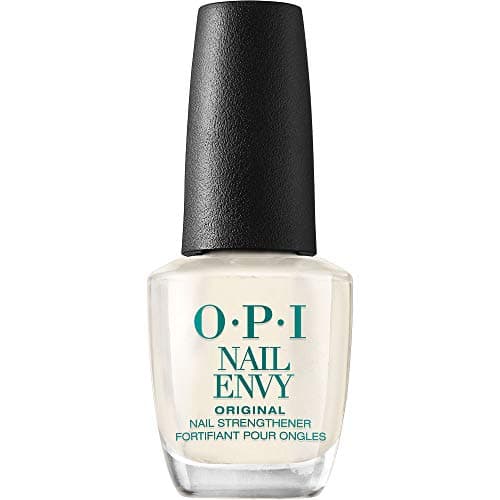
Nails that chip and split at the free edge
OPI Nail Envy Nail Strengthener
A layer-building treatment with a published routine, and the only one here that doubles cleanly as a base coat.
- Formula
- Tri-Flex Technology, biotin, calcium, vitamins A/C/E
- Routine
- 2 coats day 1, 1 coat daily, remove day 7
Skip ifSkip this if your nails are soft and peeling rather than brittle. A protein treatment targets that better.
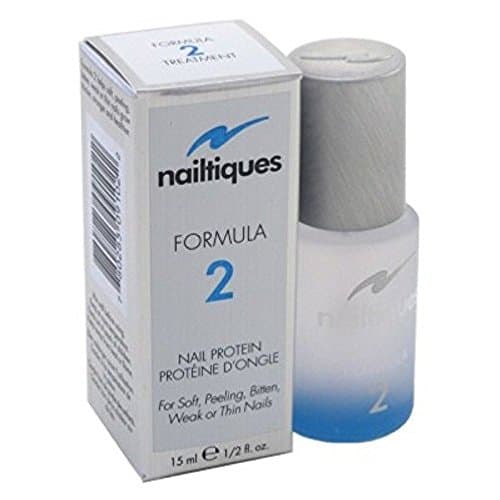
Nails that peel in layers rather than snapping
Nailtiques Nail Protein Formula 2
Protein and calcium aimed specifically at soft, peeling, bitten nails — a different problem from brittle ones.
- Formula
- Protein + calcium
- For
- Soft, peeling, bitten, weak or thin nails
Skip ifSkip this if your nails are already hard and snapping. Formula 2 is for soft nails, and using it on hard ones makes things worse.
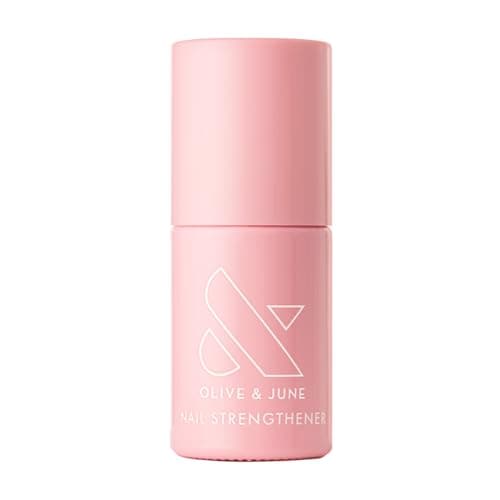
Surface problems — ridges, white spots, flaking
Olive & June Nail Strengthener
A botanical-led strengthener that targets peeling, ridges and white spots rather than raw hardness.
- Key actives
- Celery seed extract, dimethyl urea
- Also contains
- Rosemary and sage leaf extracts
Skip ifSkip this if you need a fast fix before an event. This is a slow, cosmetic-surface treatment.
The one product to buy if you buy only one
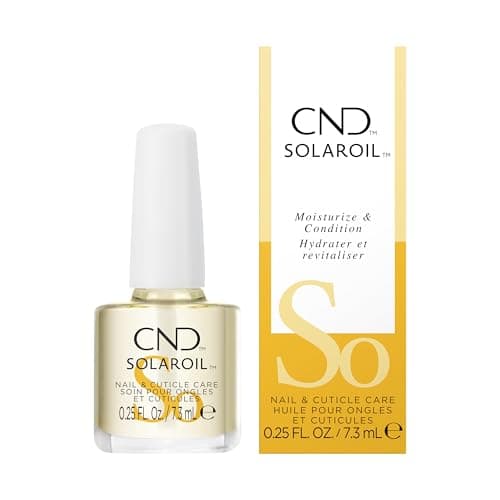
CND SolarOil Nail & Cuticle Care
Jojoba-led, which is the reason it sinks in rather than sitting on top — and the reason it is the salon default.
- Oils
- Jojoba, vitamin E, rice bran, sweet almond
- Use
- Daily, top and underside of the nail
Skip ifSkip this if you will not use it daily. A cuticle oil in a drawer is money spent on nothing.
FAQ
Frequently asked questions
What is the difference between a nail hardener and a nail strengthener?
A hardener makes the plate more rigid, usually by crosslinking keratin at the surface. A strengthener adds protein, calcium or film-forming layers to make a soft nail more resilient. The names are used interchangeably on packaging; the mechanisms are not.
Should I use a nail hardener on brittle nails?
No. A brittle nail is dry and already too rigid, and a hardener makes it snap sooner. Use a jojoba-led cuticle oil twice a day, keep the nails short, and round the tips slightly.
How do I know if my nails are soft or brittle?
Press the free edge with your thumb. If it bends easily and the tip separates into layers, it is soft and peeling — use protein. If it resists and then snaps cleanly, it is brittle — use oil.
Do nail hardeners with formaldehyde work?
They harden a nail quickly and they overshoot with prolonged use, leaving the plate brittle rather than strong. They are also a contact sensitizer for some people. Treat one as a short, defined course rather than a maintenance product.
How long do nail strengtheners take to work?
Changes to the existing plate show within days; real improvement takes about six weeks, because that is when nail that grew under better conditions reaches the free edge. Treatments abandoned at two weeks were abandoned too early.
Can you wear nail polish over a strengthener?
Yes, and it is the trick that makes people stick with treatment. Most of these bottles work as a base coat, so the repair happens while you are wearing color rather than instead of it.
Keep reading
Related guides
- The best nail strengtheners →
The full roundup.
- The best cuticle oils →
What brittle nails want.
- The best manicure for weak nails →
The same test, applied to manicures.
- Why nails peel and split →
Diagnosis before treatment.
- Polish for weak nails →
Color that treats.
Sources
- —AAD — 11 tips for healthy nails · aad.org
- —OPI — Nail Envy Nail Strengthener · opi.com
- —Nailtiques Formula 2 — directions for use · imagebeauty.com
- —Olive & June — Nail Strengthener · oliveandjune.com
- —CND — SolarOil · lovecnd.com