Guide · Guides
How to get nail glue off your skin
Never pull fingers apart. Everything else about this is slow, boring and completely fixable.
Written by Janet H. · Owner, Janet Media Group
Published
Tip & Topcoat is reader-supported. Product links go through our affiliate resolver and we may earn a commission from qualifying purchases, at no extra cost to you. Prices come from Amazon's API, carry the date they were read, and change constantly — the button always opens the current price on Amazon.
Part of the guides hub.
What nail glue is, and why that matters
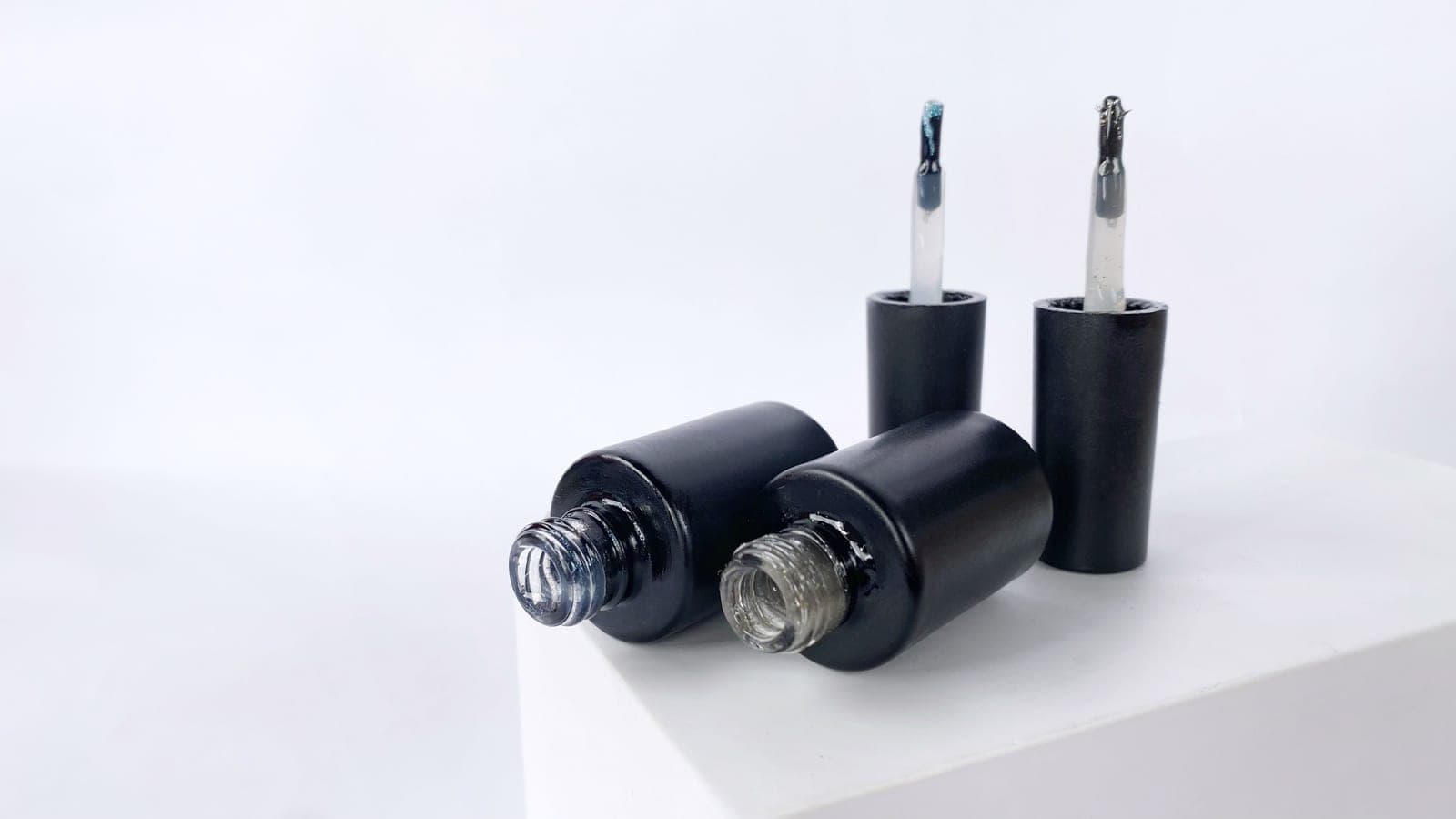
Nail glue is cyanoacrylate — the same chemistry as superglue. It cures on contact with moisture, which is why it bonds to skin almost instantly: your skin is damp, always.
Two consequences follow, and they are the whole method.
First, the bond is to the surface of your skin, not into it. The outermost layer of skin sheds constantly. Left completely alone, glue on skin falls off on its own within a few days as that layer turns over. Nothing you are about to do is strictly necessary — it is just faster.
Second, cyanoacrylate is brittle and softens with warmth, water and oil. It does not need a solvent, and solvent is the aggressive option rather than the default one.
The method, in order
- Soak in warm, soapy water for 10 to 15 minutes. As warm as is comfortable. Add a squirt of dish soap — the surfactant helps water get under the edges. This step does most of the work and most people cut it short.
- Work oil into the edge. Cuticle oil, olive oil, coconut oil — anything. Push it under the lifted edge with a thumbnail and keep massaging. Oil gets between the glue and the skin and breaks the bond mechanically.
- Roll, do not pull. Use the pad of your thumb to roll the softened glue off the way you would roll off a dried blob of PVA. If it resists, stop and soak again for five more minutes.
- Buff the last of it, gently. A fine buffer takes off the thin residual film on a nail plate. On skin, leave it — it will shed.
- Moisturize properly. Whatever you used stripped the area. Oil and hand cream, both.
Expect this to take two or three cycles for a decent-sized spill. That is normal and it is still faster than the damage route.
When acetone is the right call
Acetone dissolves cyanoacrylate, so it is genuinely faster. It also strips the lipids out of your skin and nail plate, which is why it is not the default.
Use it when the glue is thick, on a nail plate rather than skin, or when you have an actual press-on set to remove. Soak a cotton pad, hold it against the glue for a minute or two at a time, and check progress rather than leaving it on.
Do not use it on broken skin, around the eyes or mouth, or on a child. And do not use acetone on an ABS plastic press-on nail you intend to reuse — it will cloud and soften the tip.
The mistakes that turn a nuisance into an injury
- Pulling two stuck fingers straight apart. The glue is stronger than the skin layer holding it, so the skin tears first. Soak, then peel sideways, slowly — the way you would part two stuck sheets of paper.
- Picking at glue on the nail plate. You will take nail with it. The surface layers of the plate are no stronger than the skin and they do not grow back for months.
- Filing glue off skin. A file will reach skin before it reaches the last of the glue, and a filed patch of skin is an open wound in a place you use constantly.
- Reaching for acetone first. It is the harshest option and almost never the one you needed. Soak first.
How to not do it again
Spills are an application-technique problem, and three changes remove almost all of them.
Glue the nail, not your finger. Put a small bead on the press-on tip and a thin film on your nail plate, then press. Most spills come from squeezing glue directly onto a fingertip and missing.
Use less than you think. Excess glue squeezes out at the sidewalls, which is exactly where it ends up on skin — and glue on skin at the sidewall is also what makes a set lift there later. KISS publishes its PowerFlex glue as a maximum-speed formula, and a fast-setting glue punishes over-application more than a slow one does.
Or skip glue entirely. Adhesive tabs are a solid, so there is nothing to spill — Glamnetic publishes up to 5 days for tabs. A pre-glued set like imPRESS has no bottle at all. The trade-off, which is real, is in nail glue vs sticky tabs.
If glue is making your skin itch, blister or peel rather than just sticking to it, that is a different problem — see nail glue allergy.
Picks
What helps, and what stops it happening again
Oil is the gentle release agent and the thing to put on afterward. The other two are the adhesives that remove the problem entirely.
The one product to buy if you buy only one
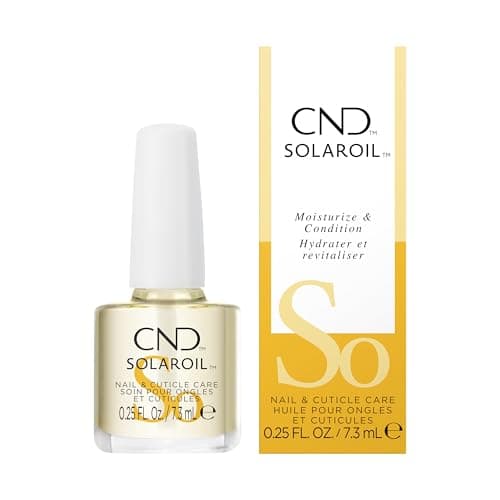
CND SolarOil Nail & Cuticle Care
Jojoba-led, which is the reason it sinks in rather than sitting on top — and the reason it is the salon default.
- Oils
- Jojoba, vitamin E, rice bran, sweet almond
- Use
- Daily, top and underside of the nail
Skip ifSkip this if you will not use it daily. A cuticle oil in a drawer is money spent on nothing.
A set you want off again in a few days
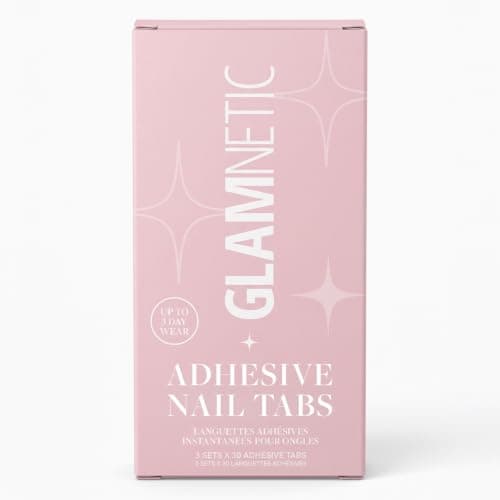
Glamnetic Adhesive Nail Tabs
Tabs with a published wear figure, which is the honest way to sell a short-wear adhesive.
- Brand wear claim
- Up to 5 days
- Type
- Pre-cut adhesive tabs
Skip ifSkip this if your nails are strongly curved. A flat tab cannot bridge a curve, and the set will lift at the edges.
Getting a manicure on in ten minutes with nothing to dry
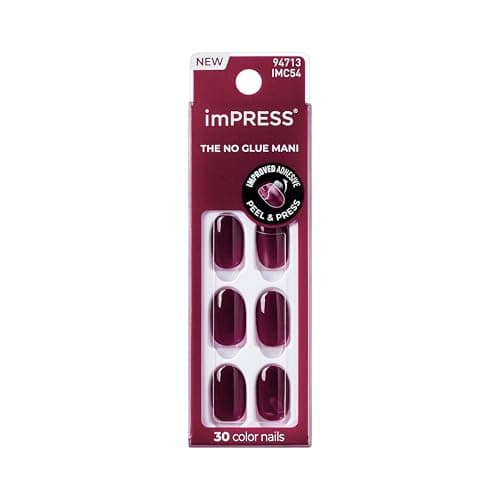
KISS imPRESS Press-On Manicure
No glue at all: the adhesive is pre-applied, you peel a tab and press. The fastest set here by a distance.
- Nails per set
- 30
- Brand wear claim
- Up to 10 days
Skip ifSkip this if you need a full two weeks out of one set. The adhesive is built for convenience, not maximum duration.
FAQ
Frequently asked questions
How do you get nail glue off skin?
Soak the area in warm soapy water for 10 to 15 minutes, work oil into the edge of the glue, then roll it off with the pad of your thumb. Repeat the soak rather than forcing it. Moisturize afterwards, because whatever you used will have stripped the skin.
How do you get nail glue off skin without acetone?
Warm soapy water and oil, repeated. Cyanoacrylate softens with warmth and moisture and releases when oil gets between it and the skin, so no solvent is needed — it just takes two or three cycles instead of one.
Will nail glue come off skin on its own?
Yes. It bonds to the outermost layer of skin, which sheds continuously, so glue left alone generally falls off within a few days. Everything else is just speeding that up.
What should you do if two fingers are glued together?
Do not pull them apart — the skin tears before the glue does. Soak both in warm soapy water for 10 to 15 minutes, work oil into the join, then peel them apart sideways and slowly, re-soaking if it resists.
Does nail glue damage your nails?
Wearing it does not. Removing it badly does: picking glue off the nail plate takes the top layers with it. Soak it off, and the plate underneath is untouched.
Keep reading
Related guides
- Best nail glue →
Including the ones that spill least.
- Glue vs sticky tabs →
The no-spill alternative.
- Nail glue allergy →
If it itches rather than sticks.
- Removing press-ons safely →
The full removal method.
Sources
- —KISS — PowerFlex Maximum Speed Nail Glue · kissusa.com
- —Glamnetic — press-ons and adhesive tabs · glamnetic.com
- —CND — SolarOil · lovecnd.com
- —AAD — 11 tips for healthy nails · aad.org
- —KISS — imPRESS no-glue nails · kissusa.com