Roundup · Nail Drills
The best nail drill for acrylic nails
Acrylic does not soften in acetone the way soak-off gel does. That one fact changes which drill you should buy.
Written by Janet H. · Owner, Janet Media Group
Published
Tip & Topcoat is reader-supported. Product links go through our affiliate resolver and we may earn a commission from qualifying purchases, at no extra cost to you. Prices come from Amazon's API, carry the date they were read, and change constantly — the button always opens the current price on Amazon.
Part of the nail drills hub.
The picks, compared
Row 1 is our pick · click any row for the full review
| # | Pick | Best for | Cost basis | Price |
|---|---|---|---|---|
| 01 |  Makartt Nouvella Professional Nail Drill A 60W coreless motor with an LCD readout, so you can see the speed instead of guessing at a dial position. Up to 35,000 RPM | Heavy removal work — acrylic, dip powder, builder gel | One-off, then per removal across years | |
| 02 | 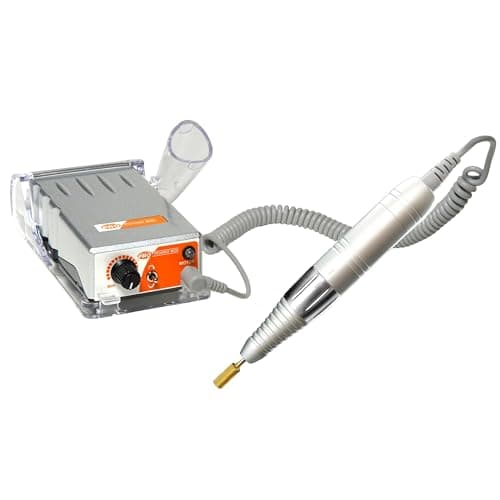 Medicool Pro Power 20K A professional belt-clip machine with real torque figures published — and a model name that misleads on speed. 30,000 RPM (the name is not the speed) | Buying once, at professional build quality | One-off, built for years of daily use | |
| 03 |  Makartt Genesie Nail Drill Four Japanese precision bearings, which is the specification that actually predicts low vibration and low heat. Adjustable to 35,000 RPM | Long sessions where heat build-up is the real problem | One-off, then per removal across years | |
| 04 | MelodySusie Scarlet SC320I The corded sibling, with a foot pedal — which frees a hand and is why this is the one to learn on. 0–30,000 RPM, variable | Learning technique with both hands free to steady the work | One-off, then per removal across years | |
| 05 | 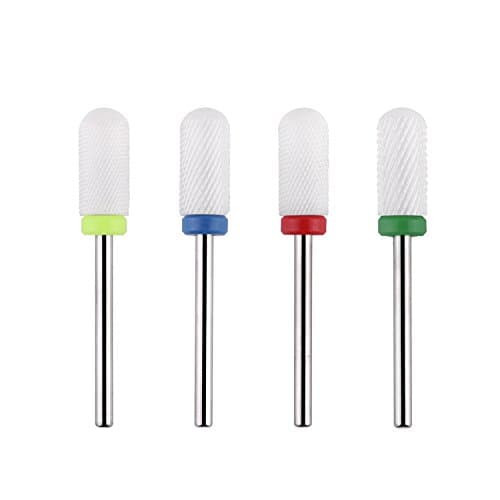 Makartt Ceramic Safety Nail Drill Bit Set Ceramic safety bits in the standard 3/32 in shank — the rounded top is what keeps the bit off your cuticle. 3/32 in (standard) | Taking gel and dip off without touching the skin | Per removal, a set lasts many removals |
Ranked on a published rubric from each brand's own specs and the pattern of what buyers consistently report. We have not tested these products and do not claim to have.
Why acrylic needs a different drill from gel
Soak-off gel polish is a solved problem. You break the top layer, wrap the nail in acetone, and the product dissolves — the drill is a shortcut, not a requirement. Our gel removal page says exactly that, and recommends the hybrid file-then-soak method over drilling anything off.
Acrylic does not do that. A cured acrylic enhancement is a polymer that acetone softens slowly and incompletely, so the realistic home routine is: reduce the bulk mechanically, then soak the thin remainder. That means a drill running against hard product for several continuous minutes per hand, which is a completely different demand from a thirty-second shine break.
Two specifications matter under that load, and headline RPM is neither of them.
- Torque. Rotational force. A low-torque machine will quote 30,000 RPM and then bog down the instant you press a bit into acrylic, which is when people instinctively press harder and generate the heat that burns a nail bed. Medicool is the only brand in this group that publishes a torque figure at all.
- Bearings and heat. Sustained cutting puts heat into the handpiece as well as the nail. Precision bearings are what keep a handpiece from vibrating and warming in your hand over a ten-minute session. The Makartt Genesie publishes four Japanese precision bearings, which is the most specific claim anybody here makes about it.
NAILS Magazine's primer on e-files makes the same point from the professional side: the machine's job is to hold a chosen speed steadily, and a machine that cannot do that under load is the one that damages nails.
The four machines, compared
| Machine | Published speed | The spec that matters | Form | Score |
|---|---|---|---|---|
| Makartt Nouvella | Up to 35,000 RPM | 60W coreless motor, LCD readout | Desktop | 8.5 |
| Medicool Pro Power 20K | 30,000 RPM | 4.5 Ncm torque, 4.3 oz handpiece | Belt-clip, portable | 8.7 |
| Makartt Genesie | To 35,000 RPM | 4 Japanese precision bearings | Desktop | 8.5 |
| MelodySusie Scarlet SC320I | 0-30,000 RPM | Foot pedal, corded | Desktop | 8.6 |
The Nouvella is first for a home user removing acrylic regularly. Sixty watts is meaningful headroom, and the LCD readout matters more than it sounds: on a dial-only machine you are guessing where 15,000 RPM is, and guessing high is how a beginner gets a ring of fire. The published spec is the clearest in this group after Medicool's.
Medicool is the buy-once answer and the only published torque figure. 4.5 Ncm at a 4.3-ounce handpiece on Medicool's own listing — a professional machine built for daily salon use, which also means you are paying for a duty cycle a home user will never reach. Note that the model name is not the speed; it runs 30,000 RPM.
The Genesie is the pick if heat is your specific problem. Four precision bearings is the specification that most directly predicts low vibration and a cool handpiece over a long session, and long sessions are exactly what acrylic removal is.
The Scarlet SC320I earns its place on the foot pedal. With a pedal, both hands are free — one holds the drill, one steadies the finger. For acrylic that is a real safety feature, because a finger that moves while a carbide bit is cutting is how skin gets caught.
The bit does the cutting, not the drill
This is the part people get wrong, and it costs more than the machine choice does.
| Bit | What it is for | On acrylic |
|---|---|---|
| Carbide barrel (coarse/medium) | Bulk reduction on hard product | This is the one. Cuts acrylic fast and survives it |
| Ceramic safety bit | Gel polish, extension gel, dip | Works, but dulls quickly on weekly acrylic |
| Diamond bit | Cuticle work, detailing, shaping | Too slow for bulk; clogs |
| Sanding band | Shaping the free edge, under-nail | Disposable, fine for finishing |
The Makartt ceramic safety set is on this page as the safe-around-skin finishing bit, and its own listing is honest about the limit: it is rated for gel polish, extension gel and dip powder. If you are taking thick acrylic off every two or three weeks, buy a carbide barrel bit alongside it — this registry does not carry one, and we would rather say that than point you at the wrong bit. The Makartt bit range sells both.
Shank size is the one compatibility rule: 3/32 inch is the standard every machine on this page takes, and it is what almost every bit sold for home use is cut to. The full explanation is in are nail drill bits universal, and the color-coded grit bands are decoded in the drill bit grit guide.
How to take acrylic off without wrecking the nail
The target is to remove product, stop, and let acetone finish. You are never trying to drill down to bare nail.
- Clip the length off first. Shorter enhancements mean less material to remove and far less leverage on the nail plate while you work.
- Carbide barrel, low to medium speed, bit flat to the nail. Keep the bit moving constantly in one direction. A stationary bit makes a trench and a burn.
- Stop at a thin, even film. When you can see the natural nail changing color through the acrylic, stop drilling. That film is where damage starts.
- Soak the rest off. Acetone-soaked pad, foil wrap, 15 to 20 minutes, then push gently with a wooden stick. If it resists, re-wrap for five more minutes — do not scrape.
- Oil immediately. Acetone strips the nail plate and the surrounding skin. Cuticle oil the same minute you finish.
Every pick in detail
The picks, reviewed
Makartt Nouvella Professional Nail Drill
Heavy removal work — acrylic, dip powder, builder gelA 60W coreless motor with an LCD readout, so you can see the speed instead of guessing at a dial position.
- Speed
- Up to 35,000 RPM
- Motor
- 60W coreless
- Display
- LCD, forward/reverse
What is good
- A coreless motor holds its speed under load, which is exactly when a cheap drill bogs down and starts generating heat
- The LCD tells you the actual RPM, so you can repeat a setting that worked rather than eyeballing a dial
- Rechargeable and desk-or-portable, so it works either way
- 35,000 RPM is genuine headroom for taking down acrylic quickly
What is not
- 35,000 RPM is far more speed than natural-nail work needs, and speed is what causes rings of fire
- More machine, and more price, than someone only removing gel polish needs
Skip this ifSkip this if you only ever remove soak-off gel. You would be buying power you should not use on a natural nail.
Illustrative category photo, not a photo of this product.
- Control at low RPM(30%)
- 8
- Heat + vibration(25%)
- 9
- Forward/reverse + handling(20%)
- 9
- Bit compatibility(15%)
- 9
- Value(10%)
- 7
Specs from Makartt — Nouvella Professional.
Medicool Pro Power 20K
Buying once, at professional build qualityA professional belt-clip machine with real torque figures published — and a model name that misleads on speed.
- Speed
- 30,000 RPM (the name is not the speed)
- Torque
- 4.5 Ncm, 4.3 oz handpiece
- Battery
- Up to 10 hours
What is good
- Publishing torque in Ncm at all puts this ahead of every consumer drill here — torque, not RPM, is what stops a bit stalling in acrylic
- A 4.3 oz handpiece is light enough to hold like a pen for a full session
- Belt clip and holster mean the body is off the desk entirely
- Takes any standard 3/32 in bit, so you are never locked into one brand's consumables
What is not
- The 20K in the name is marketing, not a spec — the machine runs to 30,000 RPM, and plenty of buyers get this wrong
- The most expensive drill here, and the extra is spent on durability rather than features
Skip this ifSkip this if you will use a drill a few times a year. The build quality is aimed at daily professional use.
Product photo from Amazon, refreshed daily.
- Control at low RPM(30%)
- 9
- Heat + vibration(25%)
- 9
- Forward/reverse + handling(20%)
- 9
- Bit compatibility(15%)
- 10
- Value(10%)
- 6
Specs from Medicool — Pro Power 20K.
Makartt Genesie Nail Drill
Long sessions where heat build-up is the real problemFour Japanese precision bearings, which is the specification that actually predicts low vibration and low heat.
- Speed
- Adjustable to 35,000 RPM
- Bearings
- 4 high-precision, Japanese
- Display
- LCD speed readout
What is good
- Bearing quality is the most honest predictor of heat and vibration in a handpiece, and Makartt publishes it here
- Rated by the brand for natural nails, cuticle work, acrylic, dip powder and poly gel — a genuinely general-purpose machine
- LCD speed display makes a repeatable low-speed setting easy to find again
What is not
- Same problem as the Nouvella: far more top speed than home natural-nail work calls for
- Full-size desktop machine, so it is not a travel drill
Skip this ifSkip this if you want something that lives in a drawer. It is a desktop unit and behaves like one.
Illustrative category photo, not a photo of this product.
- Control at low RPM(30%)
- 8
- Heat + vibration(25%)
- 10
- Forward/reverse + handling(20%)
- 8
- Bit compatibility(15%)
- 9
- Value(10%)
- 7
Specs from Makartt — nail drills.
MelodySusie Scarlet SC320I
Learning technique with both hands free to steady the workThe corded sibling, with a foot pedal — which frees a hand and is why this is the one to learn on.
- Speed
- 0–30,000 RPM, variable
- Power
- Corded, UL-standard adapter
- Extra
- Foot pedal included
What is good
- A foot pedal means you start and stop without taking a hand off the work — the biggest single safety improvement on a home drill
- Corded power means the speed does not sag as a battery drains, which is what causes a bit to grab
- CE certified with a UL-standard adapter, which is more than most budget drills can say
- Low vibration matters more than top speed; a drill that buzzes is a drill you cannot place precisely
What is not
- The cord is genuinely in the way at a small desk
- No cordless option for doing your nails on the sofa
Skip this ifSkip this if your work surface is a coffee table. A pedal and a cord need a proper desk.
Illustrative category photo, not a photo of this product.
- Control at low RPM(30%)
- 9
- Heat + vibration(25%)
- 9
- Forward/reverse + handling(20%)
- 8
- Bit compatibility(15%)
- 8
- Value(10%)
- 9
Specs from MelodySusie — Scarlet SC320I.
Makartt Ceramic Safety Nail Drill Bit Set
Taking gel and dip off without touching the skinCeramic safety bits in the standard 3/32 in shank — the rounded top is what keeps the bit off your cuticle.
- Shank
- 3/32 in (standard)
- Type
- Ceramic, safety (rounded) top
- Rated for
- Gel polish, extension gel, dip powder
What is good
- A safety bit has a smooth rounded top, so the moment it touches skin it skates instead of cutting — the single most useful feature on a home bit
- Ceramic runs cooler than carbide at the same speed and does not clog the way metal does on gel
- 3/32 in is the universal home and salon shank size, so these fit essentially any drill here
- Sold in sets that span coarse to fine, which is the grit ladder you actually need
What is not
- Ceramic chips if you drop it on a hard floor — carbide survives that, ceramic often does not
- Bit sets vary between listings from the same brand, so check the grits included before buying
Skip this ifSkip this if you are removing thick acrylic every week. Carbide cuts bulk faster and survives more abuse.
Product photo from Amazon, refreshed daily.
- Grit range covered(30%)
- 8
- Safety bit included(25%)
- 10
- Shank fit(20%)
- 10
- Material + lifespan(15%)
- 7
- Value(10%)
- 8
Specs from Makartt — nail drill bits.
Do you need a drill for this at all?
If you are taking acrylic off once, no. Clip short, file the top layer off by hand with a 100/180 file, and soak. It takes longer and your arm will complain, but it works and it costs nothing.
A drill earns its place at roughly the third removal, or immediately if you are maintaining your own acrylic with fills. At that point the time saved is an hour a month and the result is more even than hand-filing produces.
If what you actually want is to stop wearing acrylic, the switch most people make is to soft gel tips or a builder gel overlay, both of which soak off and neither of which needs a drill at all.
How we scored nail drills
We do not test these products, and we will not pretend we do. There is no lab here, no stopwatch and no drawer of samples. What we do instead is read every brand's published specification, compare the figures that actually decide an outcome, and weigh them for one specific reader: someone trying to get salon results at home without the salon bill.
So when a wear figure appears on this site it is the brand's claim, attributed to the brand. When a product has no published figure, we say that too rather than filling the gap. The scores below are our editorial judgment applied to those published specs — useful for ranking like against like, and not a measurement of anything. The full method is here.
The weights
- Control at low RPM
- 30%
- Heat + vibration
- 25%
- Forward/reverse + handling
- 20%
- Bit compatibility
- 15%
- Value
- 10%
FAQ
Frequently asked questions
What is the best nail drill for acrylic nails?
The Makartt Nouvella for home use — a 60W coreless motor with an LCD speed readout holds speed under the sustained load acrylic puts on a bit. The Medicool Pro Power 20K is the professional-grade alternative and the only machine here publishing a torque figure (4.5 Ncm).
What RPM should you use to remove acrylic?
Lower than most people expect. Bulk reduction with a carbide barrel is comfortable in the 10,000 to 20,000 RPM range for a home user, and the limit is your bit control, not the machine. Speed is not what removes acrylic — the bit's cut pattern is. Running faster mostly generates heat.
Which drill bit removes acrylic?
A carbide barrel bit in coarse or medium cut. Ceramic safety bits are rated for gel polish, extension gel and dip powder and will dull quickly on weekly acrylic work. Diamond bits are for detail and cuticle work, not bulk.
Can you remove acrylic nails with a drill only?
You can, and you should not. Drilling all the way to the nail plate is how the plate gets thinned and how friction burns happen. Reduce the bulk with the drill, stop at a thin even film, and soak the rest off in acetone.
Is a cheap nail drill good enough for acrylic?
For occasional use, maybe. The failure mode of a cheap machine is that it stalls under load, and a stalling drill tempts you to press harder, which is exactly what produces heat and damage. If you will remove acrylic more than a handful of times, torque is the thing worth paying for.
Keep reading
Related guides
- Best drill for gel removal →
A different, gentler job.
- Best nail drills →
The full ranking.
- Are nail drills safe? →
Heat, rings of fire and limits.
- Drill bit grit guide →
What each color band means.
Sources
- —Makartt — Nouvella Professional nail drill · makartt.com
- —Medicool — Pro Power 20K · medicool.com
- —Makartt — nail drill bits · makartt.com
- —NAILS Magazine — 5 things you should know about e-files · nailsmag.com
- —AAD — Reduce artificial nail damage · aad.org
- —Makartt — nail drills · makartt.com
- —MelodySusie — Scarlet SC320I · melodysusie.com