Roundup · Nail Polish
The best nail polish colors for pale skin
Pale and cool, pale and warm, and pale with redness are three different problems. The wrist test sorts them in ten seconds.
Written by Janet H. · Owner, Janet Media Group
Published
Tip & Topcoat is reader-supported. Product links go through our affiliate resolver and we may earn a commission from qualifying purchases, at no extra cost to you. Prices come from Amazon's API, carry the date they were read, and change constantly — the button always opens the current price on Amazon.
Part of the nail polish hub.
The picks, compared
Row 1 is our pick · click any row for the full review
| # | Pick | Best for | Cost basis | Price |
|---|---|---|---|---|
| 01 | 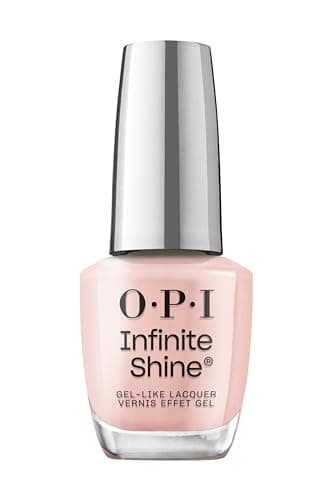 OPI Infinite Shine A three-step, pre-cured gel system that locks on like gel and comes off with ordinary remover. 3 (base, lacquer, gloss top) | Salon-grade shine you can remove in five minutes | Per manicure, three bottles cover many manicures | |
| 02 | 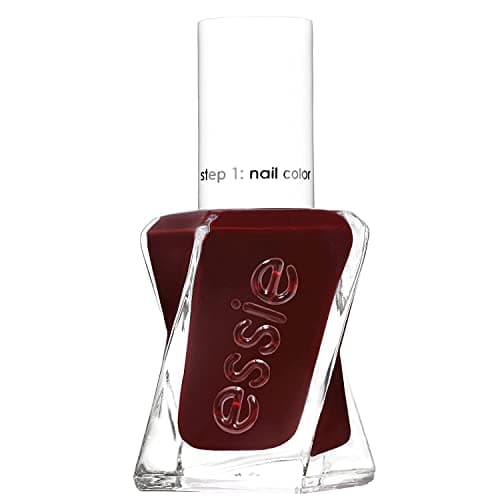 essie Gel Couture (Gel by essie) Two steps, no lamp, and the longest published wear claim of any lamp-free system here — with an honest asterisk attached. 2 (color + Shiny Top Coat) | Gel-length wear without owning a lamp | Per manicure, two bottles cover many manicures | |
| 03 | 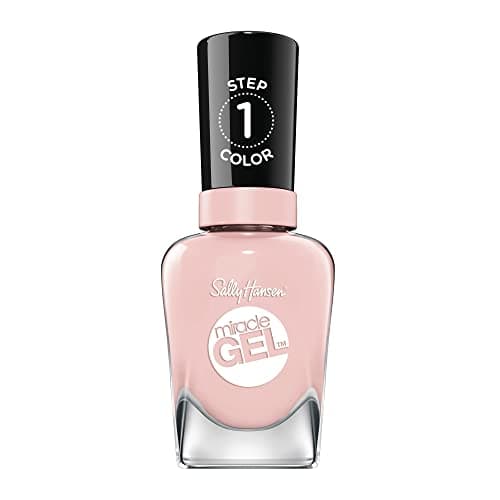 Sally Hansen Miracle Gel The drugstore route to a gel-look manicure with no lamp — three steps, widely stocked, and cheap to replace. 3 (prep, 2 color coats, top coat) | Longer wear on a drugstore budget | Per manicure, lowest cost per bottle here | |
| 04 | 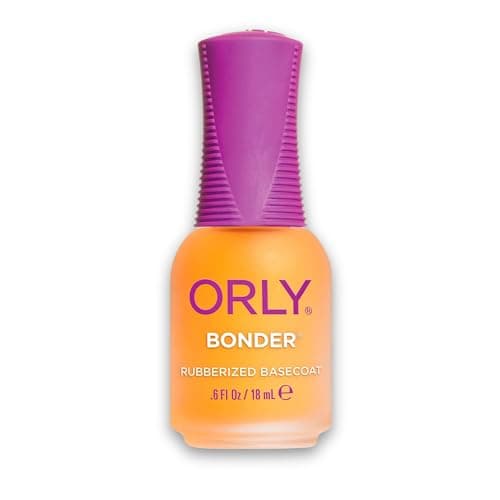 ORLY Bonder Rubberized Basecoat A rubberized resin base that grips color the way double-sided tape grips paper — the brand's own analogy, and an accurate one. Rubberized resin base coat | Polish that peels off in sheets by day three | Per manicure, many manicures per bottle |
Ranked on a published rubric from each brand's own specs and the pattern of what buyers consistently report. We have not tested these products and do not claim to have.
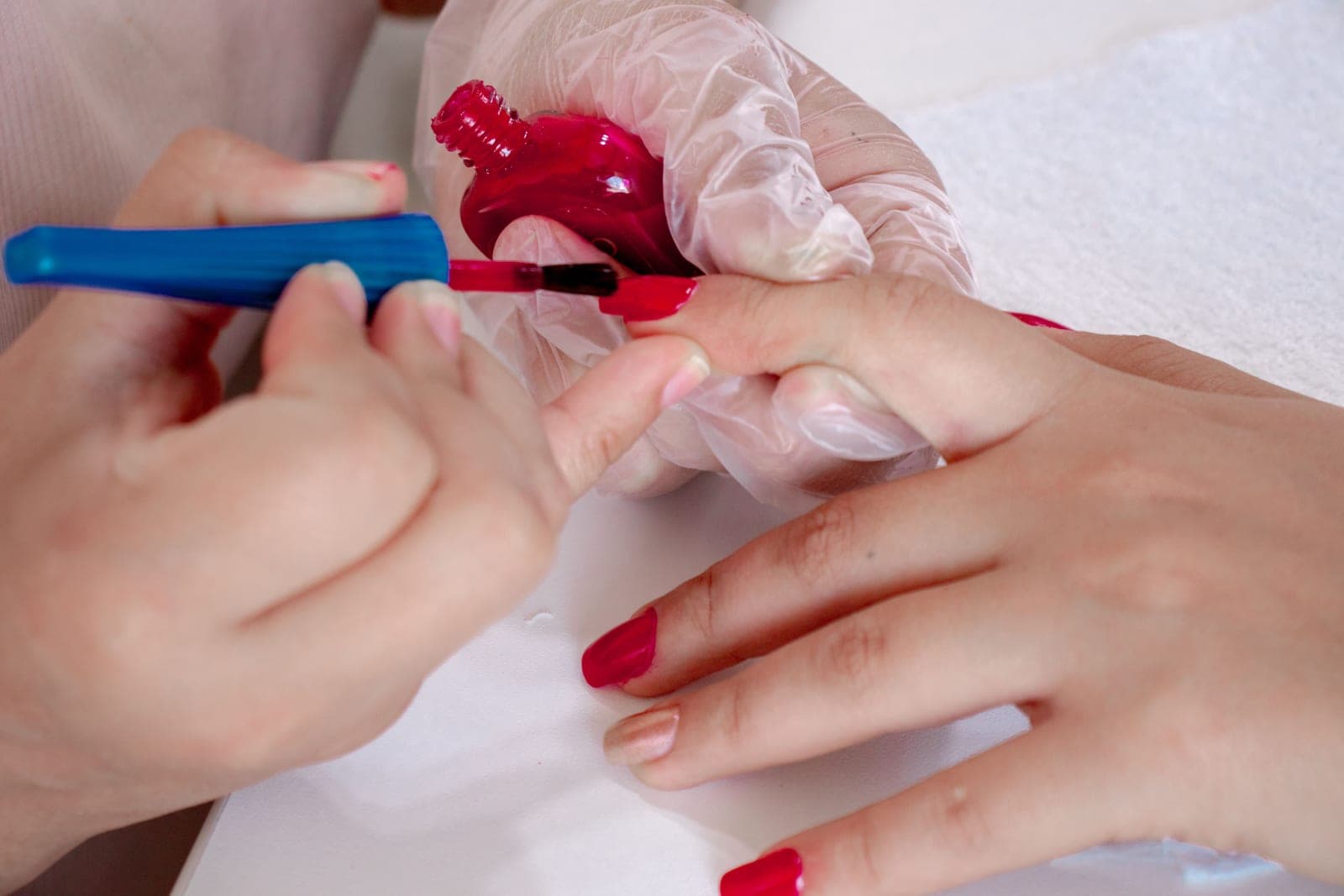
Pale skin is not one undertone
Most shade advice for pale skin fails for a single reason: it treats pale as the variable. Depth — how light or dark the skin is — barely affects which polish works. Undertone does nearly all of it, and pale skin comes in all of them.
The quickest test is the inside of your wrist in daylight. Blue or purple veins suggest a cool undertone. Green or olive suggests warm. If you genuinely cannot tell, you are probably neutral, which is the easiest case because almost everything works.
A second check that is useful specifically for pale skin: hold a piece of plain white paper next to the back of your hand. If your skin looks pink or slightly blue against it, you are cool. If it looks yellow or peachy, you are warm. If the hand looks noticeably red rather than pink, you have redness as well as pallor, which changes the advice again — covered below.
Which shades for which pale undertone
| Undertone | Reliable shades | Approach carefully | Why |
|---|---|---|---|
| Cool pale | Blue-based red, berry, plum, cool taupe, icy pink | Orange coral, warm yellow-brown | Warm shades fight the blue in the skin and read muddy |
| Warm pale | Coral, brick, tomato red, peach, warm nude, bronze | Blue-based purple, icy pastel | Cool shades look washed out against a yellow undertone |
| Neutral pale | True red, milky pink, mid-tone neutral, most things | Very little | The easiest case — a true red suits everyone |
| Pale with redness | Mid-tone neutral, soft nude, deep berry | Stark white, bright pink, anything very pale | High contrast against the hand draws attention to the red |
The single most useful bottle on pale skin of any undertone is a true red that is neither notably orange nor notably blue. It sits in the middle of the undertone argument and refuses to take a side, which is exactly why every brand builds its reputation on one.
The second most useful is a sheer milky pink, and for a practical reason rather than an aesthetic one: on pale skin the contrast between nail and skin is naturally low, so a sheer that only slightly shifts the nail looks groomed rather than done — and it hides an uneven free edge better than any opaque shade.
That second point is the one that inverts on deeper skin, where contrast is high and a sheer reads as a pale film rather than a tint. The best nail polish colors for dark skin runs the same undertone method against that opposite constraint.
The pale-skin problem nobody writes about: redness
Pale hands very often have visible redness — around the knuckles, at the base of the fingers, or generally. It is the most common reason a shade that looked right in the bottle looks wrong on the hand, and it is almost never mentioned in shade guides.
The mechanism is contrast. A very pale or very bright shade sitting a few millimeters from red skin makes the red read as redder, because the eye judges color relationally. The shades that handle it are mid-tone and slightly muted: a soft nude a shade or two deeper than your nail, a mid-tone neutral, or a deep berry that is dark enough to be its own statement rather than a comparison. What does not work is stark white, bright cool pink, or an icy pastel.
There is a second lever here that has nothing to do with color. Redness around the nail fold is often dryness rather than complexion, and it responds to daily oil within a couple of weeks. The habit and the picks are in best cuticle oils — and the reason it is worth doing regardless is in the AAD's healthy nail guidance.
Finish matters more on pale skin than on deeper skin
Because the nail-to-skin contrast is low to begin with, finish is doing more of the work on pale hands than it does elsewhere. Four finishes, and what each one does here:
- Cream. Fully opaque, no shimmer. The most flattering on pale skin at mid-tone depths, and the most demanding on application — every brush stroke shows if you flood the cuticle.
- Sheer or jelly. The pale-skin workhorse. It shifts the nail without creating a hard edge against the skin, and it forgives a wobbly cuticle line. It magnifies surface ridges, though.
- Shimmer. Reflective particles break up streaking, which makes it the most forgiving finish to apply. On pale skin a cool silver shimmer works where a warm gold one often does not.
- Matte. Flattens the nail, which reduces the contrast with the skin and reads softer. It also shows every fingerprint and needs a matte top coat.
The broader shade-selection logic — situation, nail length, and which colors hide mistakes — is in the nail polish color guide. This page is the pale-skin slice of it.
Staining shows more on pale nails
This is the practical reason a base coat is not optional here. The shades that flatter cool pale skin most — deep berry, plum, blue-based red — are also the most heavily pigmented, and pigment in direct contact with a bare nail plate migrates in and stains it yellow. On a pale nail that yellow is far more visible than it is on a deeper nail bed.
A base coat creates the barrier, and any base coat does it. ORLY Bonder is the pick here for a second reason as well: it is a rubberized resin that flexes with the nail, and the brand publishes a two-week adhesion claim, so it addresses peeling at the same time. It is explicitly not a ridge filler, which matters if ridges are your problem instead.
If a stain has already happened there is no quick fix, and buffing it out means removing nail plate that does not grow back sideways. Nails grow at roughly 3.5 mm a month, so a stained nail takes around three months to grow out. A sheer or nude hides it in the meantime. The full base coat comparison is in best nail polish base coats.
Which system to buy the shade in
A shade is only half a purchase. Once you know the family you want, the question is which long-wear system to find it in — and these are the three on this site, with their published figures rather than their marketing.
| System | Steps | Brand wear claim | Lamp | Shade range score |
|---|---|---|---|---|
| OPI Infinite Shine | 3 (base, lacquer, gloss top) | Up to 11 days | None | 9 |
| essie Gel Couture | 2 (color + Shiny Top Coat) | Up to 15 days, with a day-7 top coat | None | 9 |
| Sally Hansen Miracle Gel | 3 (prep, 2 color coats, top) | Not published in days | None | 10 |
| ORLY Bonder | 1 — base coat | Up to two weeks adhesion | None | n/a |
The honest reading of that table: essie's 15 days is the longest claim and it carries an asterisk the brand states itself, which is that you reapply top coat on day seven. OPI's 11 days has no asterisk. Sally Hansen publishes no figure at all, and we will not invent one — what it has instead is the widest shade availability and the lowest price, which on pale skin matters because finding the exact depth you need usually means trying a few.
Every pick in detail
The picks, reviewed
OPI Infinite Shine
Salon-grade shine you can remove in five minutesA three-step, pre-cured gel system that locks on like gel and comes off with ordinary remover.
- Steps
- 3 (base, lacquer, gloss top)
- Brand wear claim
- Up to 11 days
- Dry time
- Touch-dry 5 min, fully dry 20 min
What is good
- The brand's own framing — locks on like gel, unlocks like lacquer — is exactly the trade this system makes, and it makes it well
- Publishing both a touch-dry and a fully-dry time is more useful than a single vague number
- Chip, scratch and stain resistance without a cure step or a soak-off removal
- The three-step structure means the base and top coats also work as standalone products
What is not
- Three coats plus drying is slower than a two-step system, and you are buying three bottles not two
- Eleven days is four fewer than essie's claim, though OPI's figure carries no reapplication asterisk
Skip this ifSkip this if you want to be done in ten minutes. Twenty minutes to fully dry is twenty minutes of careful hands.
Product photo from Amazon, refreshed daily.
- Chip resistance(35%)
- 9
- Coverage in two coats(20%)
- 9
- Dry time(20%)
- 7
- Brush control(15%)
- 9
- Shade range(10%)
- 9
Specs from OPI — Infinite Shine education.
essie Gel Couture (Gel by essie)
Gel-length wear without owning a lampTwo steps, no lamp, and the longest published wear claim of any lamp-free system here — with an honest asterisk attached.
- Steps
- 2 (color + Shiny Top Coat)
- Brand wear claim
- Up to 15 days
- Lamp
- None required
What is good
- Fifteen days is longer than most salon gel manicures survive on fast-growing nails
- essie is explicit that the 15-day figure assumes you reapply top coat on day 7 — an unusually honest footnote in this category
- Two steps rather than three makes it genuinely faster than a gel routine, not just lamp-free
- Removes with ordinary polish remover, so there is no acetone soak and no filing
What is not
- The headline number requires a day-7 top coat reapplication; without it you are looking at a shorter wear
- The system only performs as claimed with its own top coat, so a generic top coat undercuts the point
Skip this ifSkip this if you will not go back and add a top coat mid-week. The claim is built around that step.
Product photo from Amazon, refreshed daily.
- Chip resistance(35%)
- 9
- Coverage in two coats(20%)
- 8
- Dry time(20%)
- 7
- Brush control(15%)
- 9
- Shade range(10%)
- 9
Specs from essie — longwear / Gel Couture.
Sally Hansen Miracle Gel
Longer wear on a drugstore budgetThe drugstore route to a gel-look manicure with no lamp — three steps, widely stocked, and cheap to replace.
- Steps
- 3 (prep, 2 color coats, top coat)
- Lamp
- None — brand states no UV light needed
- Brand wear claim
- Not published in days
What is good
- Stocked in essentially every drugstore and supermarket, so replacing a shade is trivial
- The two-color-coat-plus-top-coat method is spelled out on the brand's own page, including the five-minute wait between coats
- Cheapest long-wear system here by a wide margin
- Removes with ordinary polish remover
What is not
- Sally Hansen does not publish a wear figure in days for this line, so there is no number to hold it to — and we will not invent one
- The five-minute wait between color coats is not optional, and skipping it is the usual reason it chips early
Skip this ifSkip this if you want a published, comparable wear claim. essie and OPI both give one; this line does not.
Product photo from Amazon, refreshed daily.
- Chip resistance(35%)
- 7
- Coverage in two coats(20%)
- 8
- Dry time(20%)
- 6
- Brush control(15%)
- 8
- Shade range(10%)
- 10
Specs from Sally Hansen — Miracle Gel.
ORLY Bonder Rubberized Basecoat
Polish that peels off in sheets by day threeA rubberized resin base that grips color the way double-sided tape grips paper — the brand's own analogy, and an accurate one.
- Type
- Rubberized resin base coat
- Brand adhesion claim
- Up to two weeks
- Application
- One thin coat on clean dry nails
What is good
- The rubberized resin flexes with the nail instead of cracking, which is why polish over it peels less
- A two-week adhesion claim from a base coat is unusually specific
- One thin coat is all it asks for, so it adds barely any time to a manicure
- Works under regular polish, longwear systems and as a grip layer generally
What is not
- It is an adhesion base, not a ridge filler — it will not smooth an uneven nail plate
- Tacky by design, so dust and fibers stick to it if you leave it exposed too long
Skip this ifSkip this if your problem is ridges rather than peeling. A smoothing base coat is the right tool for that.
Product photo from Amazon, refreshed daily.
- Adhesion(35%)
- 10
- Stain protection(25%)
- 7
- Ridge filling(20%)
- 4
- Dry speed(20%)
- 8
Specs from ORLY — Bonder Rubberized Basecoat.
If you only buy three bottles
- A base coat. Non-negotiable on pale nails, because staining shows most there. One thin coat, every time.
- A red matched to your undertone. Blue-based if you are cool, brick or tomato if you are warm, a true red if you are neutral or unsure.
- A sheer milky pink. The shade that works on every pale hand, hides application mistakes, and reads groomed in any setting.
A fourth, if there is one: a cool taupe for cool undertones or a warm nude for warm ones. That is the whole wall narrowed to four bottles.
How we scored nail polish
We do not test these products, and we will not pretend we do. There is no lab here, no stopwatch and no drawer of samples. What we do instead is read every brand's published specification, compare the figures that actually decide an outcome, and weigh them for one specific reader: someone trying to get salon results at home without the salon bill.
So when a wear figure appears on this site it is the brand's claim, attributed to the brand. When a product has no published figure, we say that too rather than filling the gap. The scores below are our editorial judgment applied to those published specs — useful for ranking like against like, and not a measurement of anything. The full method is here.
The weights
- Chip resistance
- 35%
- Coverage in two coats
- 20%
- Dry time
- 20%
- Brush control
- 15%
- Shade range
- 10%
FAQ
Frequently asked questions
What nail polish colors look best on pale skin?
A blue-based true red, a sheer milky pink, a cool taupe and a deep berry suit cool pale skin; coral, brick red, peach and warm nude suit warm pale skin. A true red that is neither orange nor blue works on every undertone, which is why it is the most useful bottle to own.
What nail colors should pale skin avoid?
Nothing is forbidden, but two are harder to wear. Orange-based corals read sallow against a cool undertone, and stark white or very bright pastels exaggerate any redness in the hand. If your hands run red, stay mid-tone and slightly muted.
How do I know if my pale skin is warm or cool?
Look at the veins on the inside of your wrist in daylight: blue or purple suggests cool, green or olive suggests warm. As a second check, hold white paper against the back of your hand — skin that looks pink or blue is cool, skin that looks yellow or peachy is warm.
Does dark nail polish look bad on pale skin?
No — a deep berry or plum is one of the most flattering options on cool pale skin. What dark shades do is show every millimeter of regrowth and every chip, so a manicure that lasts physically for ten days can look untidy by day five.
Do I need a base coat with dark shades on pale nails?
Yes, and more so than on deeper nail beds. Heavily pigmented shades stain the nail plate yellow, and that yellow is far more visible on a pale nail. Any base coat creates the barrier; it takes one thin coat and about thirty seconds.
Keep reading
Related guides
- Nail polish color guide →
The full shade logic.
- Best base coats →
Stop the staining.
- Longest-lasting polish →
Published wear compared.
- Brands compared →
OPI vs essie vs Sally Hansen.
Sources
- —AAD — Healthy nail tips · aad.org
- —BioNumbers (Harvard) — Fingernail growth rate · bionumbers.hms.harvard.edu
- —OPI — Infinite Shine education · opi.com
- —essie — longwear / Gel Couture · essie.com
- —Sally Hansen — Miracle Gel · sallyhansen.com
- —ORLY — Bonder Rubberized Basecoat · orlybeauty.com