Comparison · Gel Nails
Builder gel vs hard gel
The names are used interchangeably and they should not be. One comes off in acetone; the other only comes off with a file.
Written by Janet H. · Owner, Janet Media Group
Published
Tip & Topcoat is reader-supported. Product links go through our affiliate resolver and we may earn a commission from qualifying purchases, at no extra cost to you. Prices come from Amazon's API, carry the date they were read, and change constantly — the button always opens the current price on Amazon.
Part of the gel nails hub.
The distinction, in one table
Here is the problem this page exists to solve: "builder gel" is a description of a job — building thickness and an apex — and not a description of a chemistry. "Hard gel" and "soak-off gel" are chemistries. A bottle labeled builder gel can be either one.
| Soak-off builder gel | Hard gel | |
|---|---|---|
| Removal | Acetone soak after filing the shine | Filed off entirely |
| Acetone penetrates it? | Yes — the polymer is porous | No |
| Flexibility | Flexible, moves with the nail | Rigid |
| Best at | Overlays, short-to-medium length | Long extensions |
| Sold as | Builder in a bottle, BIAB, soak-off builder | Hard gel, sculpting gel, builder |
| Right for a home user? | Yes | Only with real file skill |
The underlying reason is polymer structure. The industry's own reference describes soak-off gels as a porous type of gel that can be removed by soaking in acetone, as opposed to hard gels that can only be removed by filing them off. Acetone can get into the porous network and break it down; it cannot get into a dense, heavily crosslinked one. The chemistry of why gels cure the way they do is covered in NAILS Magazine's science of gels explainer.
How to tell which one a bottle is before you buy it
Four checks, in order of reliability. The first one answers it outright most of the time.
- Look for the word "soak-off" in the brand's own copy. Not in the Amazon title — on the brand's product page. A soak-off builder is a selling point and brands say so. One of the bottles on this page publishes a removal method of "soak-off" outright; that is the clarity to look for.
- Look for a published cure time. A brand that publishes 30 seconds full cure and 10 seconds flash is a brand that has tested its product and expects you to follow a method. Silence on cure time usually means silence on removal too.
- Check whether the removal instructions mention acetone at all. If the official removal routine is "file off", it is a hard gel regardless of what the front of the bottle says.
- Treat "extension gel" and "sculpting gel" as hard gel until proven otherwise. Those names are used for the products built to carry long lengths, and long lengths need rigidity.
Is hard gel actually stronger, and does it matter?
Yes, and mostly no.
Hard gel is more rigid, and rigidity is what a long extension needs: a long nail is a lever, and a flexible overlay on a long extension flexes at the stress point until something cracks. If you want length well past your fingertip and you want it to survive a month, hard gel is the correct material and a soft one is not.
But rigidity cuts the other way on your own nail. A rigid product bonded to a flexible nail plate means the plate can no longer flex independently — so when a real impact arrives, the force goes into the nail rather than being absorbed by the overlay. This is the mechanism behind the cracked natural nails people associate with hard enhancements, and it is why dermatologists generally prefer the flexible soak-off systems: the overlay gives before the nail does.
For the reader this site is written for — somebody who wants their own nails to look done and stay healthy, at a fraction of the salon price — a flexible soak-off builder at short to medium length is the right product and hard gel is overkill with a removal penalty attached.
What the four soak-off builders actually publish
These are each brand's own figures. Where a brand publishes nothing, the row says so.
| Bottle | Size | Cure published? | Removal published? | Score |
|---|---|---|---|---|
| Gelish Brush-On Builder | 15 mL | Yes — 30s full, 10s flash | Yes — soak-off | 8.6 |
| ORLY Builder In A Bottle | Six shades | UV/LED, no time given | Not published | 7.6 |
| Beetles 8-in-1 Clear | 0.51 oz x2 | Lamp required, no time | Not published | 6.9 |
| Beetles HEMA-Free Jelly Pink | 15 mL | Lamp required, no time | Not published | 6.6 |
One bottle on this list publishes everything and the rest publish a lamp requirement. That is the honest state of this category, and it is why the ranking on builder gel at home walks through the application, and the builder gel roundup weights published specification so heavily — a gel with no stated cure time is a gel you have to find the cure time for by experiment, and under-curing is its own problem.
The sensitivity question, which applies to both
HEMA is a common monomer in gel products and a well-documented contact allergen. It is not unique to either chemistry — both hard gels and soak-off builders may contain it — so this is a separate axis from the soak-off question, and it is worth checking if gel has ever made your skin itch or your nail sting under the lamp.
Two products on this site publish HEMA-free formulation: one builder gel in a tinted jelly pink, and the professional soft gel tip system, which states its Extend Gel and non-wipe top gel are both HEMA- and TPO-free. If you have reacted before, those are the places to start — and uncured gel on skin is the main exposure route, which makes careful application and a full cure part of the answer too.
Stinging under the lamp specifically is usually a thick-application problem rather than an allergy: thick gel cures exothermically and the heat spike is what you feel. Thinner coats, and a lamp with the right output for the product, fix it — the mechanism is set out in this industry explainer on matching lamp to product.
Picks
The soak-off builders worth buying
Four brush-on builders that come off in acetone rather than under a file — ranked on what each brand is willing to publish.
A structured overlay you can take off without a drill
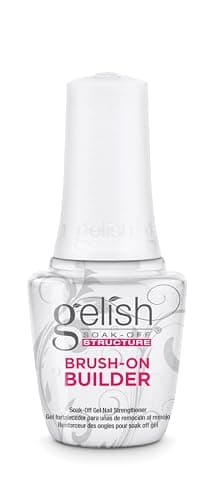
Gelish Brush-On Builder (Clear)
The one builder gel here that publishes everything: 30-second cure, 21-plus days, soak-off removal, no sidewall flooding.
- Bottle
- 15 mL (0.5 fl oz)
- Cure
- 30 seconds full cure, 10 seconds flash
Skip ifSkip this if you only want thicker-looking nails for one event. This is a product for someone building a repeatable three-week routine.
A nude overlay that disappears into the nail
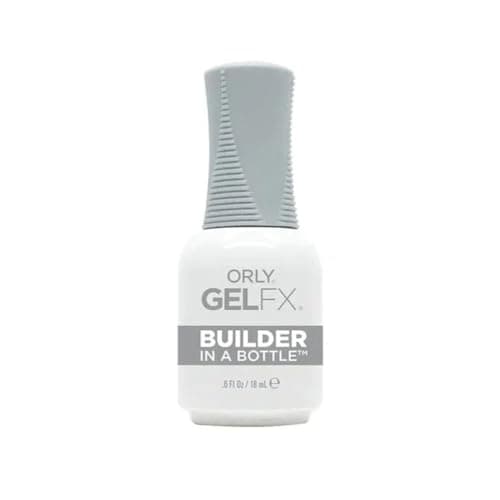
ORLY Builder In A Bottle
The brush-on builder most people have heard of, in six shades including a concealer-style nude that hides regrowth.
- Format
- Brush-on, self-leveling, fast-setting
- Shades
- Six, from Crystal Clear to Cool Taupe
Skip ifSkip this if you need a published cure time to trust a gel. Gelish's bottle tells you more about itself than this one does.
Trying builder gel before committing to a pro bottle
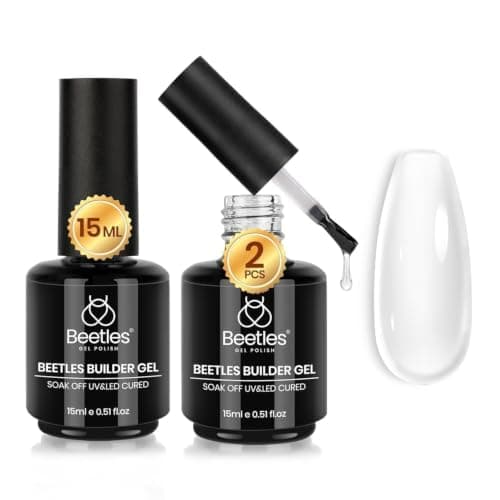
Beetles Builder Gel, 8-in-1 Clear
The cheapest honest way to find out whether you like building an apex at all, at roughly a third of the pro price.
- Bottle
- 0.51 oz per bottle, two in the retail pack
- Sold as
- 8-in-1 clear builder and strengthener
Skip ifSkip this if you want a published spec to work from. It is a cheap bottle that asks you to find the cure time by experiment.
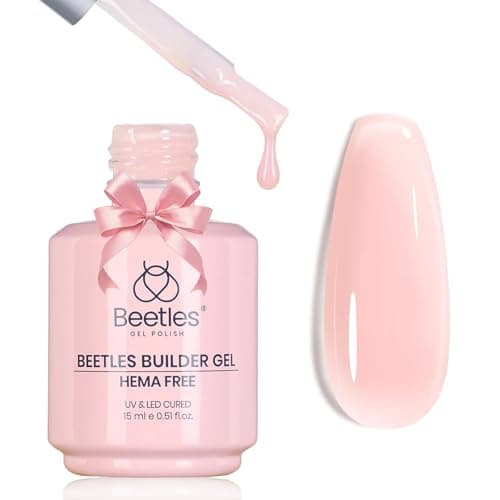
Sensitive skin, and hiding a regrowth line
Beetles Builder Gel, Jelly Pink (HEMA-Free)
A HEMA-free tinted builder — the version to buy if gel has ever made your skin itch or your nails sting under the lamp.
- Bottle
- 15 mL
- Formula
- HEMA-free, sold as 8-in-1
Skip ifSkip this if you want a clear finish. Jelly pink is pink, and it reads as pink over a pale nail.
FAQ
Frequently asked questions
Is builder gel the same as hard gel?
No. "Builder gel" describes the job — adding thickness and an apex — not the chemistry. Most bottles sold as builder gel are soak-off gels, but some are hard gels, which can only be removed by filing.
Does builder gel soak off?
The soak-off versions do, after you file the shine and most of the thickness away first. Gelish directs filing around 80% off and then soaking for about 25 minutes. Hard gel does not soak off at all.
Which is better for weak nails, builder gel or hard gel?
A soak-off builder, because the removal is a soak rather than a filing. Hard gel is also rigid, which stops the nail plate flexing independently and sends impact force into the nail instead of the overlay.
Is hard gel stronger than builder gel?
Yes — it is more rigid, which is what long extensions need. On your own nails at short to medium length that rigidity is a liability rather than a benefit, and the removal cost is real.
How do I know if my builder gel is soak-off?
Check the brand's own product page, not the marketplace title, for the word "soak-off" and for a published removal method. If the official removal instruction is "file off", it is a hard gel.
Can you put builder gel over hard gel?
You can, but it creates a layer you cannot soak off — acetone will not reach the hard gel underneath, so the whole structure has to be filed. Keep one system on the nail at a time.
Keep reading
Related guides
- The best builder gels →
Which bottle to buy.
- Builder gel vs acrylic →
The other comparison people mean.
- Gel-X vs acrylic →
If you want added length.
- The best manicure for weak nails →
Where soak-off matters most.
- Removing gel at home →
The soak method in full.
Sources
- —Nail Knowledge — soak-off gels · nailknowledge.org
- —NAILS Magazine — the science of gels · nailsmag.com
- —UV+EB Technology — matching the lamp to the product · uvebtech.com
- —AAD — Removing gel polish at home · aad.org
- —Gelish — Brush-On Builder, Clear · gelish.com
- —ORLY — Builder In A Bottle · orlybeauty.com
- —Beetles — Builder Gel for Nails, 8-in-1 Clear · beetlesgel.com
- —Beetles — Builder Gel for Nails, HEMA-Free Jelly Pink · beetlesgel.com