Guide · Guides
How long do nail drill bits last?
A bit does not break. It gets gradually worse at cutting and gradually better at generating heat, which is the part that matters.
Written by Janet H. · Owner, Janet Media Group
Published
Tip & Topcoat is reader-supported. Product links go through our affiliate resolver and we may earn a commission from qualifying purchases, at no extra cost to you. Prices come from Amazon's API, carry the date they were read, and change constantly — the button always opens the current price on Amazon.
Part of the guides hub.
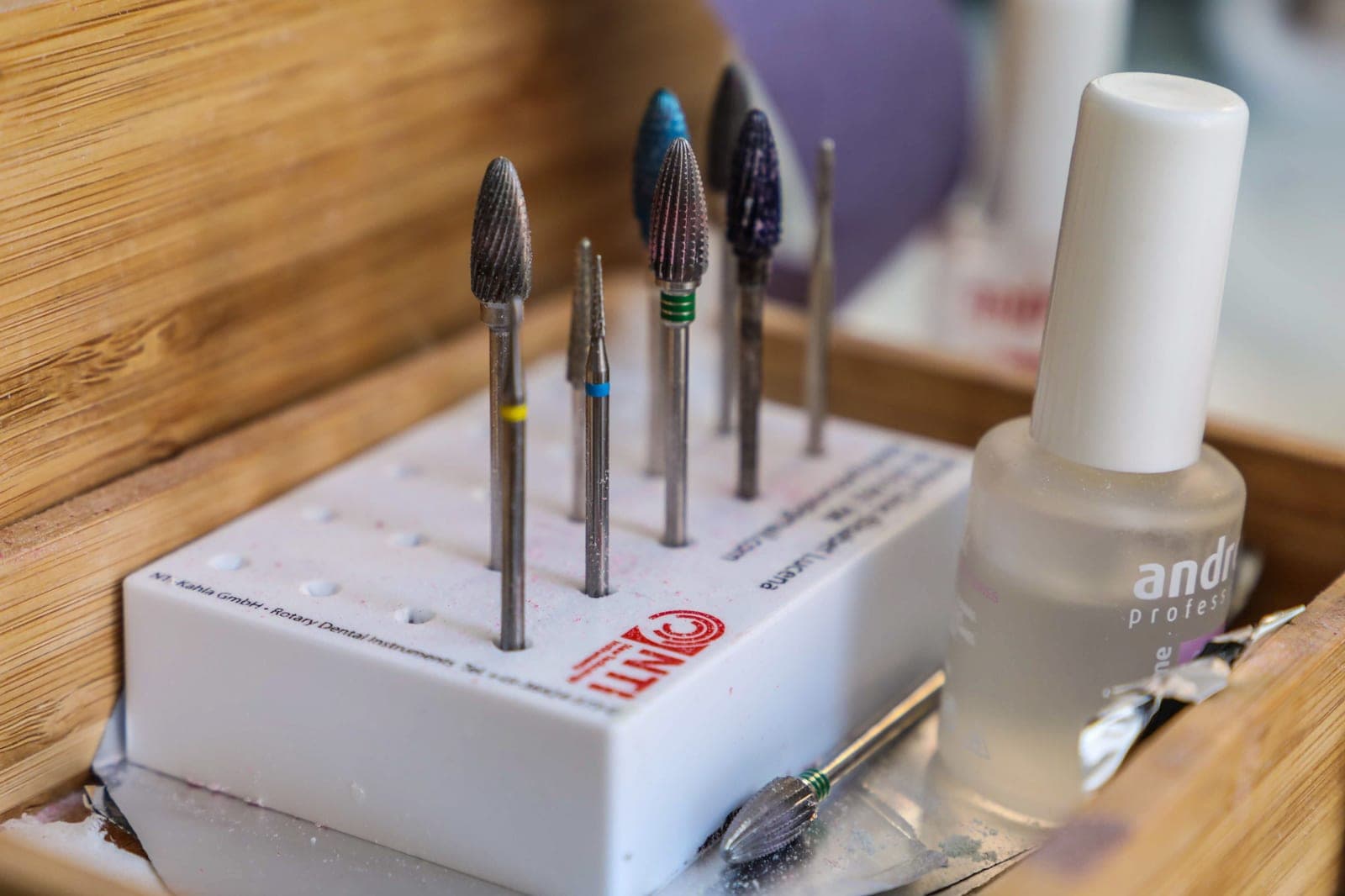
Why a blunt bit is a safety problem, not an inconvenience
A kitchen knife that has gone blunt is annoying. A nail drill bit that has gone blunt is something else, because of where the energy goes.
A sharp bit converts rotation into removed material. A dull bit converts the same rotation into friction, and friction is heat — heat that travels through a half-millimeter nail plate into the nail bed underneath. So the symptom of a worn bit is not that it stops working; it is that you start pressing harder and running faster to get the same result, and both of those are exactly the variables the professional guidance identifies as the causes of damage.
That is the whole reason this question deserves a page. People replace bits when they look worn. The right trigger is when they start behaving worn, and that comes much earlier.
What to expect, by material
Nobody publishes a bit lifespan in hours, and anyone who quotes you one is guessing. What can be said honestly is how each material fails, which is more useful anyway.
| Material | How it wears | What ends it | Typical home use |
|---|---|---|---|
| Ceramic | Flutes round over gradually; cuts cooler throughout | Chipping from a drop onto a hard floor | Months of regular removals |
| Carbide | Cutting edges dull; clogs less than you expect | Edges round over, then it only generates heat | Months; survives abuse ceramic does not |
| Diamond (plated) | Grit particles shed from the plating | Bald patches — the plating is a coating, not solid | Shortest life of the three |
| Sanding bands | Abrasive wears through in minutes of use | Single use, by design | One nail set, sometimes one nail |
Two points worth drawing out. Diamond bits are usually plated — the abrasive is bonded to a steel core — so when the plating wears through there is nothing underneath. A diamond bit with smooth patches is finished, however good it looks elsewhere.
And sanding bands are consumables, not bits. They are meant to be thrown away after a set, and reusing one is both a hygiene problem and a heat problem. If your kit came with a drum mandrel and a bag of bands, the bands are the thing you are expected to keep buying.
Ceramic's one real weakness is impact: the Makartt ceramic safety set is the better choice for gel and dip because it runs cooler and does not clog, and it will chip if you drop it on tile where carbide would shrug it off. That is a storage problem rather than a product problem.
The four signs a bit is done
- It stops cutting at your usual speed. You find yourself turning the dial up to get the result you got last month. This is the first and most reliable sign, and it is the one people rationalize away.
- You start pressing. If the bit needs pressure to remove material, it is not removing material — it is grinding. Pressure is the variable that pushes heat into the nail bed.
- Warmth arrives sooner. A bit that used to let you work for twenty seconds before the fingertip warmed now does it in five. That is friction replacing cutting.
- It will not clean out. Gel and dust packed into the flutes that does not come out with a brush and a soak means the flutes themselves have rounded over, and there is nothing left to pack into.
Visible damage is a fifth sign, but a late one: chips in a ceramic edge, bald patches on a diamond plating, or any wobble when the bit is seated. A wobble can also mean a worn collet rather than a worn bit, which is covered in are nail drill bits universal.
What actually makes a bit last longer
Five habits, and the first two do nearly all of the work.
- Run it slower. Heat is what degrades a cutting edge, and speed generates heat. Working at the lowest effective speed extends bit life and protects the nail at the same time.
- Do not press. Let the bit cut. Pressure adds friction, friction adds heat, and heat rounds the edge.
- Clean it after every use, not every few. Cured gel in the flutes bakes harder each time it heats, and the brush that would have cleared it on day one will not on day ten.
- Use the right bit for the job. A fine bit used to remove bulk product wears out doing work it was not built for. The grit-to-task mapping is in the drill bit grit guide.
- Store them so they cannot knock together. A bit holder, not a drawer. Ceramic chips, diamond plating scrapes, and both happen in a drawer rather than in use.
The machine matters here too, in one specific way: a drill whose speed sags under load makes a bit grab and stall, and a stalling bit heats up fast. Corded power holds its speed as a consequence of being corded, which is part of the argument in cordless vs corded, and controllable low speed is why certain machines make it into the natural-nail roundup.
Replacement and hygiene are separate questions
A bit that is still sharp still needs disinfecting between users, and a bit that has been disinfected is not therefore still sharp. These get conflated constantly.
If a bit is only ever used on your own hands, the hygiene bar is cleaning and a disinfectant soak. If it is used on anyone else, it is a different standard, and the general nail hygiene principles plus proper disinfection apply — a nail drill bit contacts the nail plate and sometimes skin.
Sanding bands are the exception that resolves itself: they are single-use consumables, so the hygiene question and the wear question have the same answer. Throw them away after a set.
Picks
What to replace a worn bit with
A ceramic safety set in the standard 3/32 inch shank, and the drill whose low-speed control makes a bit last longer in the first place.
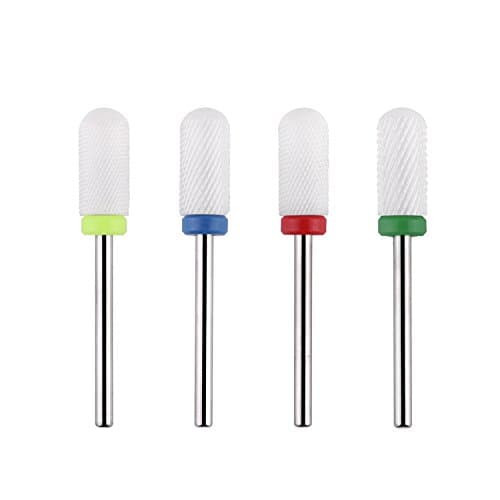
Taking gel and dip off without touching the skin
Makartt Ceramic Safety Nail Drill Bit Set
Ceramic safety bits in the standard 3/32 in shank — the rounded top is what keeps the bit off your cuticle.
- Shank
- 3/32 in (standard)
- Type
- Ceramic, safety (rounded) top
Skip ifSkip this if you are removing thick acrylic every week. Carbide cuts bulk faster and survives more abuse.
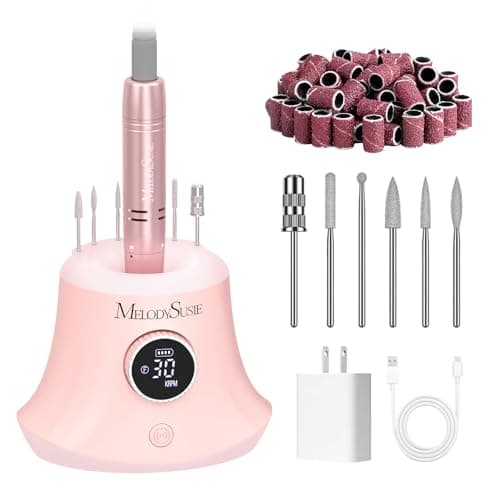
A first drill you will not immediately hurt yourself with
MelodySusie SC320G Rechargeable Nail Drill
Cordless, one-button forward/reverse, and a dial that genuinely starts near zero — the combination beginners need.
- Speed
- 0–30,000 RPM, dial
- Power
- 4000 mAh, 8–12 h per charge
Skip ifSkip this if you want a pedal so your free hand can steady the finger. The corded Scarlet has one.
FAQ
Frequently asked questions
How long do nail drill bits last?
Months of regular home use for ceramic and carbide, less for plated diamond, and a single set for sanding bands. No brand publishes a lifespan in hours, and the useful trigger is behavior rather than time: replace a bit when it needs more speed or more pressure than it used to.
Do nail drill bits get dull?
Yes, gradually. Carbide edges round over, ceramic flutes smooth out, and plated diamond sheds its abrasive. The symptom is not that the bit stops working — it is that it starts generating heat instead of removing material.
Can you sharpen nail drill bits?
Not usefully. The flute geometry on carbide would need re-cutting on a proper grinder and the diameter would change; ceramic chips when ground; plated diamond has nothing underneath the abrasive. Cleaning restores a surprising amount of performance, and that is what people usually mean.
How do I know when to replace a drill bit?
When you have to raise the speed or press harder to get your usual result, when the fingertip warms up sooner than it used to, or when the flutes will not clean out. Visible chips and bald patches are later signs.
Can you clean nail drill bits with alcohol?
Alcohol removes oils and some residue, but it is not a substitute for brushing debris out of the flutes or for a proper disinfectant where one is needed. The full routine is in cleaning and sanitizing drill bits.
Keep reading
Related guides
- Cleaning drill bits →
The routine that extends life.
- Are drill bits universal? →
Fit and collets.
- Best drill bits →
What to replace with.
- Colors and grit →
Right bit, right job.
Sources
- —NAILS Magazine — 5 things you should know about e-files · nailsmag.com
- —Nail Knowledge — How to clean and disinfect nail files · nailknowledge.org
- —Hytoos — Nail drill bit color and grit chart · hytoos.com
- —AAD — Healthy nail tips · aad.org
- —Makartt — nail drill bits · makartt.com
- —MelodySusie — SC320G · melodysusie.com