Guide · Guides
Why your nail polish keeps peeling off
Peeling in sheets and chipping at the tip are different failures with different causes. This page is about the first one.
Written by Janet H. · Owner, Janet Media Group
Published
Tip & Topcoat is reader-supported. Product links go through our affiliate resolver and we may earn a commission from qualifying purchases, at no extra cost to you. Prices come from Amazon's API, carry the date they were read, and change constantly — the button always opens the current price on Amazon.
Part of the guides hub.
Peeling and chipping are not the same failure
Get this distinction right first, because the fixes are different and applying the wrong one wastes a month.
Peeling is the polish lifting away in a sheet or a large flake, usually starting at the cuticle end or a sidewall, often with the layer coming off intact. The polish cured fine; it never bonded. This is an adhesion failure and the fix is prep plus a base coat.
Chipping is small losses at the free edge, where the polish has worn or been knocked off the tip. The bond is fine; the edge is unprotected. The fix is capping the free edge and a harder-wearing top coat — covered in chip-resistant polish.
A third pattern worth naming: if your nail is peeling in layers at the tip rather than the polish, that is a nail problem rather than a manicure problem, and it is diagnosed in why nails peel and split. Polish on a nail whose surface layers are lifting will peel off with them no matter what you do.
Cause 1: oil or moisture on the nail (most common)
Polish needs a clean, dry, slightly matte surface to grip. A nail plate is naturally none of those — it carries sebum from your skin, residue from hand cream, and whatever oil you used last night.
Water is the second half of the problem and the more surprising one. A nail plate absorbs water and swells. Paint it while it is swollen and the polish sets to a nail that is about to shrink, which breaks the bond from underneath. This is why a manicure applied straight out of a bath or after a long soak reliably peels within two days — the traditional soak-first manicure is working against itself.
The fix. Do any soaking and cuticle work first, then wait fifteen minutes for the plate to dry out. Wipe every nail with polish remover or alcohol immediately before the base coat, even if the nail looks bare, and do not touch the nails with your fingertips afterwards. Skip cuticle oil on the night before a manicure; go back to it the day after.
Cause 2: no base coat, or the wrong kind
A base coat is not a formality and this is the one it actually solves. A rubberized or bonding base forms a flexible grip layer between the plate and the color — one brand describes its own as working like double-sided tape, with claimed adhesion up to two weeks.
The "flexible" part is the mechanism. Your nail flexes constantly. A rigid layer bonded to a flexing surface cracks, and a crack is where a peel starts. A rubberized base moves with the nail instead.
Base coats do three different jobs, though, and buying the wrong one is a real failure mode: adhesion, stain protection and ridge filling. If polish peels off in sheets, you need an adhesion base, not a ridge filler. The three jobs are separated out in the base coat roundup.
Cause 3: coats too thick, or not dry between them
Regular polish dries by solvent evaporation from the surface down. A thick coat forms a dry skin over a soft interior, and that interior keeps outgassing solvent for hours — so the layer stays soft, slides under pressure and lifts as a unit.
Two thin coats dry fully and bond to each other. One thick coat does neither, and it is also the main cause of the bubbling people blame on the polish.
The fix. Wipe the brush on the neck of the bottle until it carries a film rather than a bead. Two thin color coats, two minutes between them, and a genuine wait before the top coat. One system on this site publishes touch-dry at five minutes and fully dry at twenty — treat figures like that as the floor, not a target to beat.
Cause 4: the free edge was never capped
Capping means running the brush along the very tip of the nail — the thin front face of the free edge — with every layer: base, color and top coat.
Skip it and the tip is a raw exposed seam. Water gets in along it, works under the polish, and what started as a chip at the tip propagates backwards as a peel. This is the mechanism that converts a chip into a lifted sheet, and it is why capping shows up on every durability list.
The fix. After each layer, swipe the brush across the free edge before you move to the next nail. It adds ten seconds per hand. Do it with the base coat too, so the whole sandwich is sealed at the edge rather than just the top layer.
Cause 5: the nail surface itself is lifting
If your nail plate is peeling in layers at the tip, polish is being applied to a surface that is already coming apart — and it leaves with the layer it is stuck to. No base coat fixes this, because the failure is beneath the base coat.
The most common cause is mechanical: a coarse emery board sawed back and forth across the free edge works the keratin layers apart. The fix is an etched glass file, worked from the sidewall toward the center in one direction, on a dry nail. It is the single highest-return tool swap in nail care and the reasoning is in the tool roundup.
The second cause is a genuinely soft, peeling nail, which wants a protein treatment rather than a hardener — and a hardener here makes it worse. The bend test that separates the two is in hardener versus strengthener.
And if you have recently had gel off, the surface may simply be damaged from removal. That is its own recovery project: repairing nails after gel.
Cause 6: what you do in the first 24 hours
Regular polish is not fully hard when it is touch-dry. It continues to harden for several hours, and the things people do in that window account for a surprising share of early peeling.
- Hot water. Showers, washing up, a bath. Heat softens a fresh film and swells the nail underneath it. Wait a few hours, and wear gloves for the first day of washing up.
- Hand sanitizer. Alcohol attacks a fresh polish film directly. It is the single most underrated manicure killer, because people use it dozens of times a day without noticing.
- Oil and heavy hand cream, straight away. Oil on top is fine the next day and genuinely good for the nail — but applied to a film that is still hardening, it softens the surface.
- Picking at it. Once a corner lifts, the whole sheet follows. And peeling polish off takes the top layer of your nail with it, which sets up the next failure. Remove it properly instead.
The routine that stops it, in order
Everything above, as a sequence. It adds about five minutes to a manicure and it is the difference between three days and ten.
- Shape and tidy first, dry second. Clip, file with glass sidewall-to-center, push cuticles back after softening — never cut them, which the AAD advises against in its artificial nail guidance and which applies just as much to your own kitchen table. Then wait fifteen minutes.
- Wipe every nail with remover. Even bare ones. Let them air-dry; do not blow on them.
- One thin coat of a rubberized adhesion base. Cap the edge. Let it go tacky, not dry.
- Two thin color coats. Cap the edge on each. Two minutes between.
- Top coat, capping the edge. Then genuinely wait — twenty minutes before you trust them with anything.
- Gloves and no sanitizer for the first day. Oil from the next morning onward, every day, which keeps the plate flexible so the whole sandwich flexes with it.
- Refresh the top coat mid-week. A fresh layer on day four or five reseals the edge and is the trick behind the longest published wear claims.
The same routine, written as a durability guide rather than a troubleshooting one, is in making nail polish last longer. And if polish simply will not hold on your nails whatever you do, a long-wear or gel system may suit you better — compared honestly in gel versus regular polish.
Picks
What actually fixes peeling
A rubberized bonding base coat, a top coat that seals the free edge, a long-wear system that grips, and the file that stops the tip layers separating.
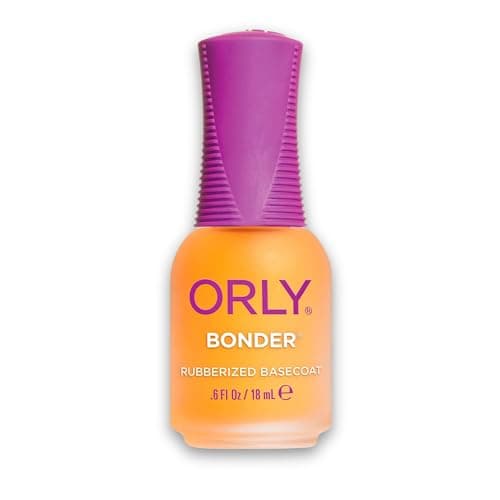
Polish that peels off in sheets by day three
ORLY Bonder Rubberized Basecoat
A rubberized resin base that grips color the way double-sided tape grips paper — the brand's own analogy, and an accurate one.
- Type
- Rubberized resin base coat
- Brand adhesion claim
- Up to two weeks
Skip ifSkip this if your problem is ridges rather than peeling. A smoothing base coat is the right tool for that.
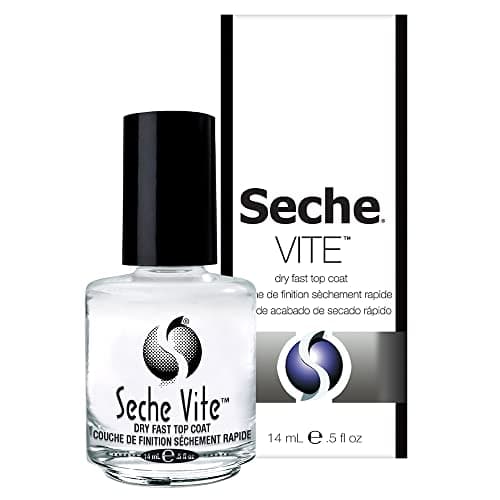
Making an ordinary polish manicure survive the week
Seche Seche Vite Dry Fast Top Coat
The one top coat that bonds through the color to the base coat, turning three separate layers into a single shell.
- Size
- 0.5 fl oz
- Method
- Applied over WET polish
Skip ifSkip this if you like to paint one nail at a time over an evening. This has to go on while the color is still wet.
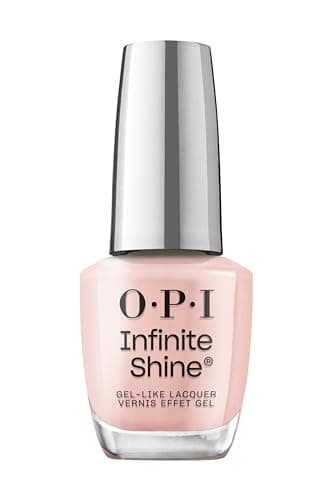
Salon-grade shine you can remove in five minutes
OPI Infinite Shine
A three-step, pre-cured gel system that locks on like gel and comes off with ordinary remover.
- Steps
- 3 (base, lacquer, gloss top)
- Brand wear claim
- Up to 11 days
Skip ifSkip this if you want to be done in ten minutes. Twenty minutes to fully dry is twenty minutes of careful hands.
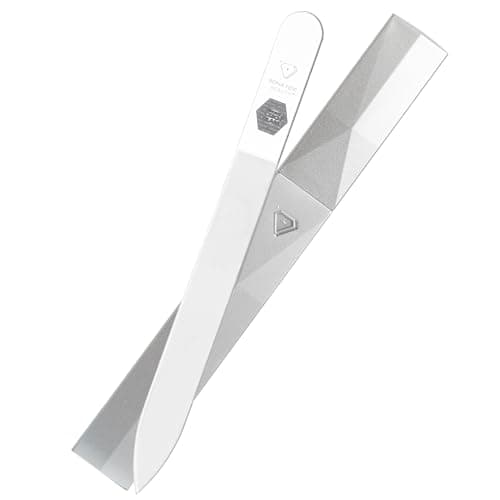
Anyone whose nails split or peel at the tip
Bona Fide Beauty Czech Glass Nail File
The one tool swap that changes peeling nails: an etched glass surface that seals the free edge instead of shredding it.
- Material
- Tempered Bohemian Czech glass, handmade
- Grit
- Etched into the glass, not sprayed on
Skip ifSkip this if you need to remove a lot of length regularly. A file is for shaping; a clipper takes the length.
FAQ
Frequently asked questions
Why does my nail polish peel off in sheets?
It never bonded to the nail. The usual cause is oil or moisture on the plate when you applied it — including water absorbed during a pre-manicure soak. Wipe each nail with remover, let it dry, and use a rubberized bonding base coat.
How do I stop my nail polish from peeling?
Dry the nail properly and wipe it with remover, apply one thin coat of an adhesion base coat while it is still slightly tacky, keep color coats thin, and cap the free edge with every layer. Then keep hot water and sanitizer off it for a day.
Should I soak my nails before painting them?
Not immediately before. A soaked nail plate is swollen with water, so polish sets onto a nail that is about to shrink and the bond breaks from underneath. Do the soaking and cuticle work first, then wait fifteen minutes.
Why does polish peel but not chip?
Because those are different failures. Peeling in sheets is an adhesion problem at the nail surface; chipping at the tip is an unprotected free edge. Peeling without chipping points squarely at prep and the base coat.
Does hand sanitizer ruin nail polish?
It genuinely shortens a manicure. Alcohol attacks the polish film directly, and because people use sanitizer many times a day without thinking about it, it is one of the most underrated causes of early failure.
Is peeling polish a sign of unhealthy nails?
Sometimes. If the polish lifts with a thin layer of nail attached, the nail plate's surface layers are separating — usually from a coarse emery board, sometimes from gel removal. Switch to a glass file and treat the nail first.
Keep reading
Related guides
- Making polish last longer →
The same routine, positively framed.
- The best base coats →
The adhesion fix.
- Chip-resistant polish →
If it chips, not peels.
- Why nails peel and split →
When it is the nail, not the polish.
- Choosing a shade →
Nudes hide what is left.
Sources
- —AAD — Reducing artificial nail damage · aad.org
- —AAD — 11 tips for healthy nails · aad.org
- —ORLY — Bonder Rubberized Basecoat · orlybeauty.com
- —Seche — Vite Dry Fast Top Coat · seche.com
- —OPI — Infinite Shine education · opi.com
- —Bona Fide Beauty — Czech Glass Nail File in Hard Case · bonafidebeauty.com