Guide · Guides
Nail health signs, and what they actually mean
Most nail changes are harmless. A few are the body saying something, and the honest way to tell them apart is a published list rather than a chart on social media.
Written by Janet H. · Owner, Janet Media Group
Published
Tip & Topcoat is reader-supported. Product links go through our affiliate resolver and we may earn a commission from qualifying purchases, at no extra cost to you. Prices come from Amazon's API, carry the date they were read, and change constantly — the button always opens the current price on Amazon.
Part of the guides hub.

What nails can and cannot tell you
Nails grow slowly and they grow from a single place, so anything that interrupts the nail matrix for a while leaves a record you can see weeks later. That is why nail changes get treated as a window into general health, and it is why the subject attracts so much nonsense.
The honest position is narrow. A nail change is a sign that something happened, not a diagnosis of what. The same ridge can follow a fever, an injury or nothing identifiable. The AAD's own framing is worth quoting because it is more careful than anything you will read on a chart: nail changes do not always mean disease, but it is important to see a board-certified dermatologist if you notice any changes.
This page does two things with that. First it reproduces the AAD's list, with the association the AAD itself names, so you can look up what you are seeing against a published source rather than a social post. Then it separates out the changes that a home manicure routine causes — which is a surprisingly large share of them, and the only part of this subject where buying something helps.
The twelve nail changes a dermatologist should examine
This is the AAD's list, in its own order, with the associations it names. Treat the right-hand column as possibilities a clinician would consider, not as answers.
| What you see | What the AAD says it may indicate |
|---|---|
| A new or changing dark streak under a nail | Possibly melanoma. The AAD says a new or changing dark streak means it is time to see a dermatologist for a skin cancer check, while noting not every streak is melanoma |
| A nail lifting off the nail bed (onycholysis) | Often fungal infection, psoriasis, or injury — including an aggressive manicure or cleaning under the nail with a sharp object. White discoloration may appear |
| Redness and swelling around a nail (paronychia) | Likely an infection; early cases may respond to soaks and antibiotics, while an open sore needs more treatment |
| A greenish-black nail | Usually a bacterial nail infection, which tends to get worse without treatment |
| Pitted nails — small dents in the surface | Can be linked to psoriasis, atopic dermatitis or alopecia areata; the AAD says it could be a sign of a disease affecting the whole body |
| Yellow, thickened nails that seem to stop growing | May point to lung disease or rheumatoid arthritis, or a serious nail infection — though red polish without a base coat and smoking also yellow nails |
| Deep grooves running across the nail (Beau lines) | Nail growth slowed or stopped for a time: fever, injury, chemotherapy or major stress. With no obvious cause, see a dermatologist or primary care doctor |
| Thick, overgrown nails (ram's horn nails) | Can run in families, or be associated with psoriasis, ichthyosis or circulation problems; trimming may need a podiatrist or dermatologist |
| Thin, spoon-shaped nails (koilonychia) | May indicate iron deficiency, which can come from poor nutrition, stomach or intestinal problems, celiac disease or high altitude |
| Grooves and ridges on the thumbnails (washboard nails) | Usually from picking at or pushing back the cuticles, often without realizing it |
| Curved nails with swollen fingertips (clubbing) | Can be harmless and run in families, but may signal disease of the lungs, heart, liver, or stomach and intestine |
| Color changes | See the color table below — the AAD lists a specific association for each |
The color table, as the AAD publishes it
Color is where nail charts go furthest off the rails, so this is worth having in the AAD's own terms and nobody else's.
| Nail color | What the AAD associates it with |
|---|---|
| Blue nails | Not enough oxygen in the bloodstream |
| White nails | Liver disease, diabetes |
| Pale nails | Anemia |
| Half pink, half white nails | Kidney disease |
| Yellow nails | Lung disease, nail infection |
| Dusky red half-moons | Possibly lupus, heart disease, alopecia areata, arthritis or dermatomyositis |
| Blue half-moons | Possibly a sign of poisoning |
Two practical notes that keep people out of this table unnecessarily. Yellowing from dark polish worn without a base coat is extremely common and has nothing to do with the list above — the AAD names it in the same breath as the clinical possibilities, and the fix is a base coat and a break. And a nail that looks white where it has lifted away from the bed is describing the lift, not a liver.
What is normal, and routinely mistaken for a problem
Three things show up constantly in nail-health searches and are not on any published list of changes worth examining.
The site's own page on the last of those is why nails peel and split, which separates the mechanical causes from the ones a product cannot reach.
The nail changes your own routine caused
This is the part of the subject where you have real leverage, and it maps onto the AAD's list more directly than people expect.
A lifting nail. The AAD names injury from an aggressive manicure, and cleaning under the nail with a sharp object, among the causes of onycholysis. Translated into a routine: stop digging under the free edge with a metal tool, and stop letting anyone else do it either.
Washboard ridges on the thumbs. The AAD attributes these to picking at or pushing back the cuticles, often without realizing it. The habit is usually one thumbnail working on the other. Cuticle oil helps less because it hydrates and more because it gives the hands something to do — see the best cuticle oils.
Yellowing. Red polish without a base coat, per the AAD's own wording. The fix is a base coat every time, and the shade-by-shade staining argument is in how to pick a shade that suits you.
Thinning and brittleness after artificial nails. Not on the AAD's twelve-item list, but covered in its guidance on reducing artificial nail damage, which is explicit about buffing the natural nail. The recovery routine is repairing nails after gel, and the hardener-versus- strengthener question is here.
One product-side note worth knowing: the FDA's guidance on nail care products says that using formaldehyde- containing nail hardeners often may make nails brittle and more likely to break or peel. A hardener is a short-term tool, not a maintenance product.
When to stop reading and see someone
The AAD's advice is to see a board-certified dermatologist for any nail change, which is a higher bar than most people apply. If you are triaging, these are the ones where waiting costs something.
- A new or changing dark streak under one nail. The AAD routes this to a skin cancer check. It is the single reason to read this page today rather than next month.
- Redness, swelling or an open sore around a nail. Likely infection, and the AAD notes an open sore needs more extensive treatment than soaks.
- A greenish-black nail. The AAD says a bacterial nail infection tends to get worse without treatment.
- Deep grooves across the nail with no obvious cause. The AAD suggests a dermatologist or primary care doctor.
- Any nail change at all, if you have diabetes, neuropathy or poor circulation. Foot nails in particular become a clinical matter rather than a cosmetic one — the APMA's pedicure guidance is the baseline, and tools for ingrown and thick toenails says where home care stops.
What a home routine genuinely controls
Three things, and they are unglamorous: moisture, how you shorten the nail, and how you shape the edge. The AAD's healthy nail tips cover the first two; its trimming guidance covers trimming after a shower, when the plate is softer, and cutting toenails straight across.
Nothing you apply speeds up growth from the matrix, and this site has said so on how to grow your nails faster since launch. What products change is breakage — a nail that does not snap keeps the length it already grew, which looks identical to growing faster and is the only version of it available.
If you want the whole routine rather than the reasoning, start with nail care basics and a nail care routine you will keep up. If a nail is already failing rather than merely unimpressive, nail strengtheners explains what a treatment can and cannot target.
Picks
What a home routine can actually change
None of these treats a condition and none of them is a substitute for a dermatologist. They address the three things a home routine genuinely controls: hydration, how the nail is shortened, and how the free edge is shaped.
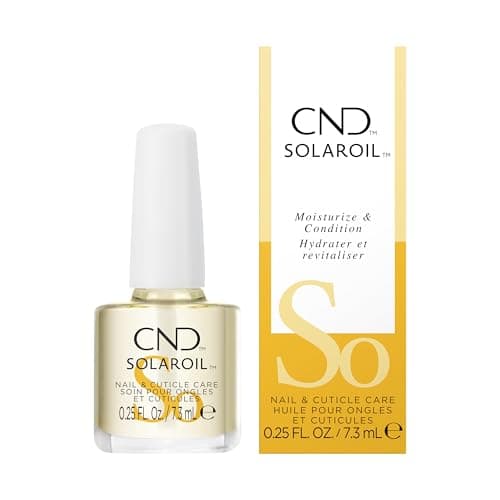
The one product to buy if you buy only one
CND SolarOil Nail & Cuticle Care
Jojoba-led, which is the reason it sinks in rather than sitting on top — and the reason it is the salon default.
- Oils
- Jojoba, vitamin E, rice bran, sweet almond
- Use
- Daily, top and underside of the nail
Skip ifSkip this if you will not use it daily. A cuticle oil in a drawer is money spent on nothing.
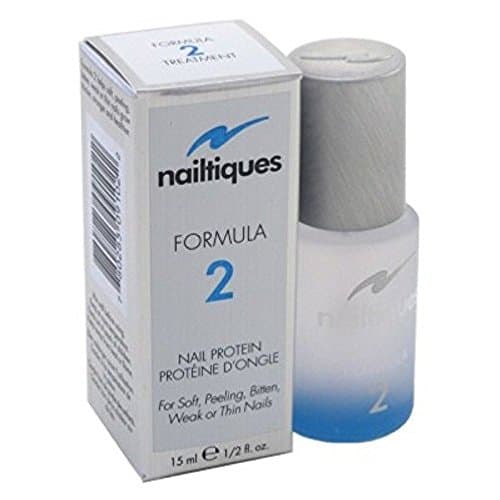
Nails that peel in layers rather than snapping
Nailtiques Nail Protein Formula 2
Protein and calcium aimed specifically at soft, peeling, bitten nails — a different problem from brittle ones.
- Formula
- Protein + calcium
- For
- Soft, peeling, bitten, weak or thin nails
Skip ifSkip this if your nails are already hard and snapping. Formula 2 is for soft nails, and using it on hard ones makes things worse.
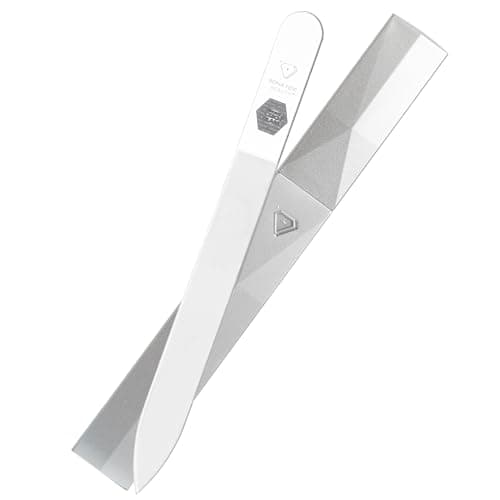
Anyone whose nails split or peel at the tip
Bona Fide Beauty Czech Glass Nail File
The one tool swap that changes peeling nails: an etched glass surface that seals the free edge instead of shredding it.
- Material
- Tempered Bohemian Czech glass, handmade
- Grit
- Etched into the glass, not sprayed on
Skip ifSkip this if you need to remove a lot of length regularly. A file is for shaping; a clipper takes the length.
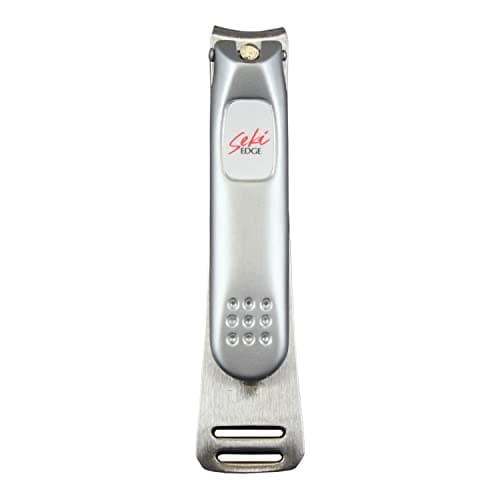
Fingernails that split or peel after every trim
Seki Edge Stainless Steel Fingernail Clipper SS-106
A 10 mm Japanese jaw that shears the nail in one squeeze instead of folding it — the clearest upgrade in this whole category.
- Jaw width
- 10 mm
- Max jaw opening
- 2 mm
Skip ifSkip this if you are shopping for toenails. The 10 mm jaw is sized for fingers; the SS-107 is the toenail version of the same tool.
FAQ
Frequently asked questions
What do nail health signs actually mean?
They mean something interrupted the nail or is affecting it now — not which thing. The AAD publishes twelve changes it says a dermatologist should examine, with the associations it considers for each, and is explicit that nail changes do not always mean disease. A nail sign narrows the question; it does not answer it.
Are white spots on nails a calcium deficiency?
That association is folklore, not published guidance: small white marks do not appear on the AAD's list of nail changes worth examining, and the AAD does not attribute them to calcium. A large or spreading white area, or white where the nail has lifted from the bed, is a different observation and does belong on that list.
Do vertical ridges on nails mean something is wrong?
Lengthwise ridges are common and get more visible with age. The ridging the AAD flags is different: deep grooves running across the nail (Beau lines), which follow an interruption in growth, and washboard ridges on the thumbs, which come from picking at or pushing back the cuticles. A ridge-filling base coat changes the look, not the cause.
Can nail products fix a nail health problem?
They can fix the mechanical causes — dryness, a dull clipper, a coarse file, polish worn without a base coat, cuticle pushing. They cannot treat an infection, a skin condition or anything systemic, and a hardener used long-term may make matters worse: the FDA notes formaldehyde-containing hardeners used often may make nails brittle and more likely to break or peel.
When should I see a dermatologist about my nails?
The AAD's own answer is: for any nail change. If you are prioritizing, a new or changing dark streak under a nail goes first — that is a skin cancer check — followed by redness, swelling or an open sore around a nail, a greenish-black nail, and deep grooves across the nail with no obvious cause.
Keep reading
Related guides
- Why nails peel and split →
The mechanical causes, separated from the rest.
- Nail care basics →
Five habits and four tools.
- Best nail strengtheners →
What a treatment can actually target.
- Tools for ingrown and thick toenails →
Where home care stops, on feet.
Sources
- —AAD — 12 nail changes a dermatologist should examine · aad.org
- —AAD — Healthy nail tips · aad.org
- —AAD — How to trim nails · aad.org
- —AAD — Reduce artificial nail damage · aad.org
- —AAD — Prevent another nail infection · aad.org
- —APMA — Pedicure tips · apma.org
- —FDA — Nail care products · fda.gov
- —CND — SolarOil · lovecnd.com
- —Nailtiques Formula 2 — directions for use · imagebeauty.com
- —Bona Fide Beauty — Czech Glass Nail File in Hard Case · bonafidebeauty.com
- —Jatai — Seki Edge SS-106 specifications · jatai.net