Guide · Guides
How to get nail polish out of clothes and carpet
Everything depends on one question you have to answer before you touch it: what is the fabric made of?
Written by Janet H. · Owner, Janet Media Group
Published
Tip & Topcoat is reader-supported. Product links go through our affiliate resolver and we may earn a commission from qualifying purchases, at no extra cost to you. Prices come from Amazon's API, carry the date they were read, and change constantly — the button always opens the current price on Amazon.
Part of the guides hub.
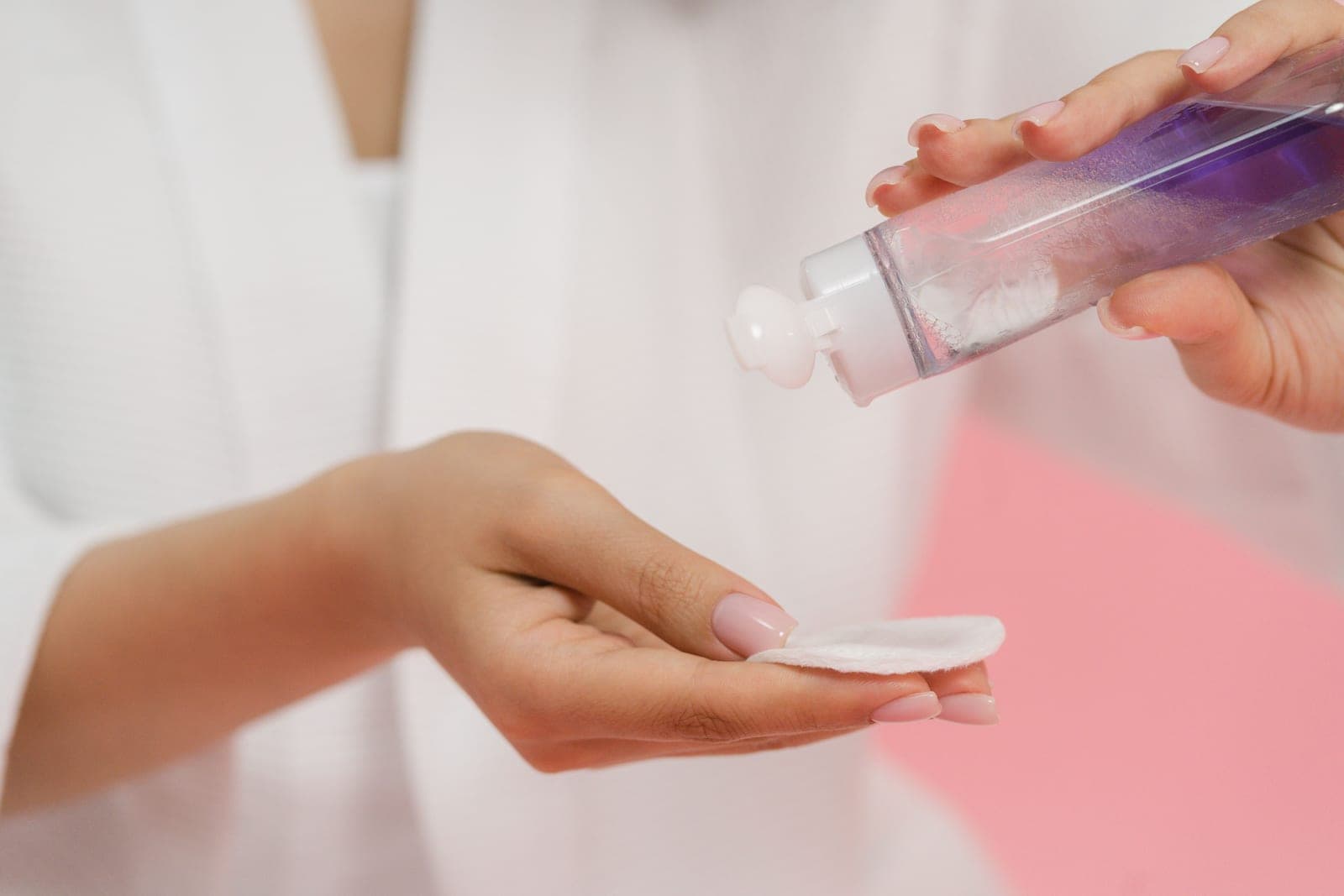
Check the fabric before you touch the stain
Acetone is the thing that removes nail polish, and acetone also dissolves certain synthetic fibers completely. Using it on the wrong fabric does not stain the garment — it makes a hole in it.
| Fabric | Acetone | What to use |
|---|---|---|
| Cotton, linen, denim | Safe to test | Acetone remover, blotted from behind |
| Polyester, nylon | Usually safe, test first | Acetone remover, short contact |
| Wool, silk | No | Non-acetone remover or professional cleaning |
| Acetate, triacetate, modacrylic | Never | Professional cleaning only |
| Anything with sequins or beading | Never | Professional cleaning only |
| Carpet (most synthetics) | Test in a hidden spot | Blot with remover; never rub |
If the care label is missing or the garment is expensive, stop and take it to a cleaner. Tell them what the stain is — nail polish is a known category and a professional will handle it with a solvent chosen for the fiber.
The method for clothes
- Scrape off anything still wet or raised. A blunt edge — a spoon, a card — and work toward the center of the spill so you do not spread it.
- Lay the garment face down on paper towels. This is the step people skip and it is the most important one. You are going to push the stain out of the back of the fabric and into the towel, not through the fabric and deeper in.
- Dab remover onto the back of the stain. Not soaked. A cloth or cotton pad, dampened, pressed and lifted repeatedly.
- Change the towel underneath every few blots. Otherwise you are pressing dissolved polish back into the fibers from below.
- Rinse with cold water, then launder normally. Cold. Heat sets what is left.
- Air dry and check before it goes in a dryer. A dryer will set any remaining pigment permanently. If the stain is still visible, repeat first.
For wool, silk, or anything you are nervous about, a non-acetone remover is the gentler first attempt. It is slower and less effective on cured polish, but it will not destroy a fiber that acetone would.
The method for carpet and upholstery
Carpet is harder than clothing for one reason: you cannot get behind it. Everything has to come out the front, which makes blotting discipline the whole game.
- Test in a hidden spot. Inside a closet, under a sofa. Dab remover, wait a minute, check for color change or fiber damage.
- Scrape the surface polish off. Gently, before it keys into the pile.
- Blot with a remover-dampened white cloth. White, so you can see what is lifting and so no dye transfers. Press, hold, lift. Move to a clean part of the cloth constantly.
- Never rub. Rubbing spreads the stain outward and pushes pigment to the base of the pile where you cannot reach it.
- Rinse with a cloth and cold water, then blot dry. Leaving solvent in carpet backing is its own problem.
Polish on skin and cuticles
The easy one. Polish on skin does not need solving carefully — it needs a tidy-up tool.
A small flat brush dipped in remover, drawn along the cuticle line, cleans a flooded edge in seconds and makes an amateur manicure look professional. A cotton bud works but is clumsier.
Polish on the skin around the nail will also wear off within a day or two on its own, so unless you are photographing your hands, time solves it. What is worth doing properly is the prevention: a thin layer of petroleum jelly or liquid latex along the skin before you paint makes the overspill peel straight off.
Gel polish on skin is a different matter — cured gel on the cuticle does not wear off and it is a sensitization risk rather than a cosmetic one. That is covered in gel polish and sensitive skin.
Preventing the spill in the first place
Almost every polish-on-fabric incident has the same cause: the manicure was not dry and the person thought it was.
Polish is touch-dry in minutes but not fully hardened for hours, and the bed-sheet smudge is the classic version. A fast-dry top coat compresses that window substantially — Seche publishes a formula that penetrates to the base coat and forms one durable layer — and the full timeline is in how long nail polish takes to dry.
Second: paint over a surface you do not mind ruining. A tea towel on a table costs nothing. Third: put the bottle on a flat surface, never on an arm of a sofa, never on a bed.
Picks
What to keep within reach
A non-acetone remover is the safer first attempt on fabric and the gentler one on skin. A fast-dry top coat is the prevention: most spills happen to a manicure that was still wet.
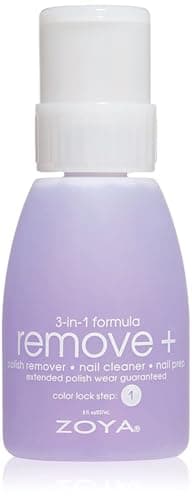
Removing polish and prepping for the next coat in one step
Zoya Remove+
Remover, nail prep and conditioner in one bottle — and, contrary to what half the internet says, it does contain acetone.
- Size
- 8 fl oz flipper bottle
- Function
- Remover + prep + conditioner
Skip ifSkip this if you are specifically avoiding acetone — the formula contains it, whatever the listings imply.
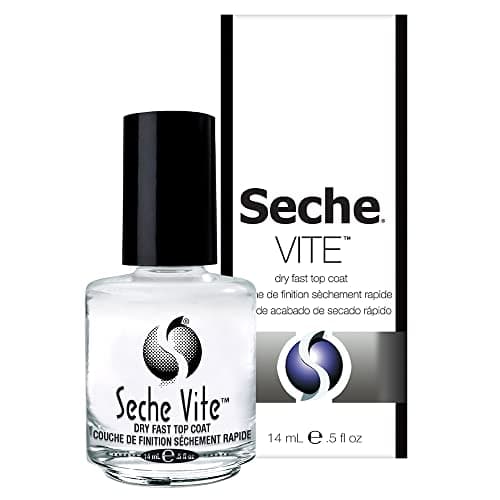
Making an ordinary polish manicure survive the week
Seche Seche Vite Dry Fast Top Coat
The one top coat that bonds through the color to the base coat, turning three separate layers into a single shell.
- Size
- 0.5 fl oz
- Method
- Applied over WET polish
Skip ifSkip this if you like to paint one nail at a time over an evening. This has to go on while the color is still wet.
FAQ
Frequently asked questions
How do you get nail polish out of clothes?
Check the fabric first — acetone destroys acetate, triacetate and modacrylic. On cotton, linen, denim or polyester, lay the garment face down on paper towels, dab acetone remover onto the back of the stain, change the towel underneath frequently, then rinse in cold water and launder. Air dry and check before using a dryer.
Does nail polish come out of clothes permanently?
Often, if you treat it before it sets and before any heat touches it. The two things that make a polish stain permanent are a hot wash or dryer cycle, and rubbing the stain, which grinds pigment into the weave.
How do you get nail polish out of carpet?
Test remover in a hidden spot, scrape off surface polish, then blot with a white cloth dampened with remover — press, hold, lift, and move to a clean part of the cloth each time. Never rub. Rinse with cold water and blot dry. Ventilate the room.
Can you use acetone on all fabrics?
No. Acetone dissolves acetate, triacetate and modacrylic fibers outright, and will damage anything with sequins or plastic beading. Use a non-acetone remover on wool and silk, and send anything valuable or unlabeled to a professional cleaner.
How do you get nail polish off your skin?
A small flat brush dipped in remover, drawn along the cuticle line, is the fastest tidy-up. Polish on skin also wears off within a day or two by itself. To avoid it entirely, run a thin layer of petroleum jelly along the skin before painting so the overspill peels off.
Keep reading
Related guides
- Best nail polish removers →
Acetone and non-acetone.
- Drying polish faster →
The spill is usually a wet-polish spill.
- At-home manicure routine →
Doing it tidily.
- Best top coats →
Fast-dry shortens the risk window.
Sources
- —Zoya — Remove+ nail polish remover · zoya.artofbeauty.com
- —Seche — Vite Dry Fast Top Coat · seche.com