Roundup · Nail Drills
The best nail drill setup under $100
A drill on its own is half a purchase. Machine, safe bits and dust control — the three parts of a setup that will not hurt you, all inside one budget.
Written by Janet H. · Owner, Janet Media Group
Published
Tip & Topcoat is reader-supported. Product links go through our affiliate resolver and we may earn a commission from qualifying purchases, at no extra cost to you. Prices come from Amazon's API, carry the date they were read, and change constantly — the button always opens the current price on Amazon.
Part of the nail drills hub.
The picks, compared
Row 1 is our pick · click any row for the full review
| # | Pick | Best for | Cost basis | Price |
|---|---|---|---|---|
| 01 | 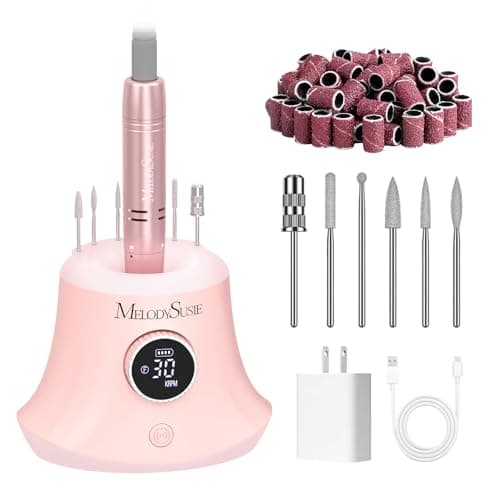 MelodySusie SC320G Rechargeable Nail Drill Cordless, one-button forward/reverse, and a dial that genuinely starts near zero — the combination beginners need. 0–30,000 RPM, dial | A first drill you will not immediately hurt yourself with | One-off, then per removal across years | |
| 02 | 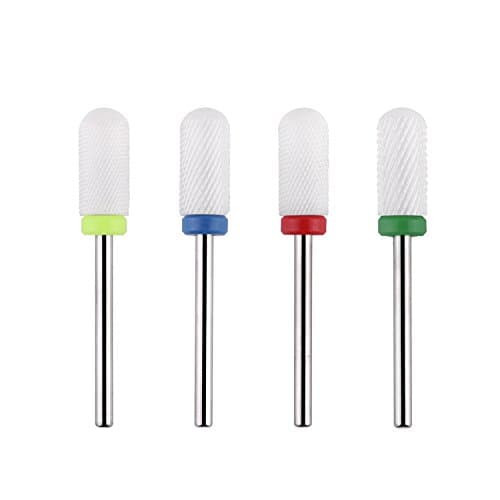 Makartt Ceramic Safety Nail Drill Bit Set Ceramic safety bits in the standard 3/32 in shank — the rounded top is what keeps the bit off your cuticle. 3/32 in (standard) | Taking gel and dip off without touching the skin | Per removal, a set lasts many removals | |
| 03 | 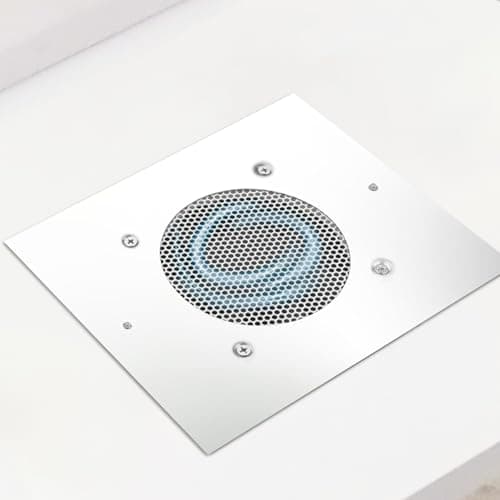 BLUETOP Table-Embedded Nail Dust Collector The cheapest way to find out whether you will use one at all, and the only built-in here: it is designed to sit flush in a desk rather than on top of it. Table-embedded / built-in desktop | Testing the idea cheaply, or a permanent desk install | One-off, needs a desk cut-out | |
| 04 | 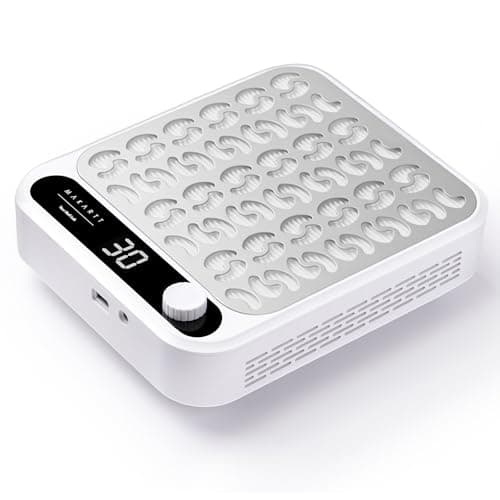 Makartt Nail Dust Collector 4200 RPM The one with a readout. Adjustable speed to a published 4,200 RPM and a digital display, so the setting you liked last time is a number rather than a guess. Adjustable to 4,200 RPM (listing) | Someone who wants a repeatable setting rather than a dial with no markings | One-off, no consumables | |
| 05 | 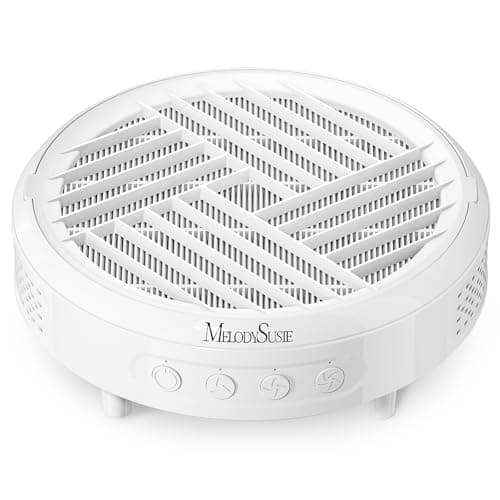 MelodySusie Portable Nail Dust Collector HPro Three suction modes and a reusable filter at a fraction of the Kiara Sky price. The sensible default for someone doing their own nails. 3,800 RPM (listing) | A home user who files gel or builder gel every two or three weeks | One-off, no consumables |
Ranked on a published rubric from each brand's own specs and the pattern of what buyers consistently report. We have not tested these products and do not claim to have.
A drill is three purchases, not one
Almost every bad experience with a home nail drill comes from buying one third of a setup. The machine is the part people shop for; the bits are what actually touch the nail, and the dust is what you breathe for the next hour. All three sit comfortably inside a hundred dollars, and skipping two of them is how people end up with a burnt nail bed and a dusty kitchen table.
| Part | What it decides | The specification that matters |
|---|---|---|
| The machine | Control at low speed, heat and vibration | A dial that starts near zero; forward/reverse; stated RPM range |
| The bits | Whether you remove product or nail plate | Ceramic safety bits with a rounded, non-cutting tip |
| Dust control | What you breathe and what lands on everything | Suction at the hand, not across the room |
The order of importance is not the order of price. Safe bits are the cheapest part and the one that most directly prevents damage — the bits roundup and the grit guide are the two pages to read before you buy any of this.
What a hundred dollars should not be spent on
Top speed. Thirty-five thousand RPM is a specification that sells machines and teaches nobody. The useful range for home work is the bottom third of any of these dials, and a machine that can be held steadily at low revolutions is worth far more than one with a big number on the box. The drill roundup makes this argument in full and the beginners page is where to start if this is your first machine.
Bit variety. A fifty-piece bit set is mostly shapes you will never fit to a nail. Two or three safety bits and a pair of sanding bands cover almost all home work.
Professional torque. The belt-clip machines salons use are built for eight-hour days and are priced accordingly. They are a legitimate buy-once purchase and they are not a hundred-dollar one.
The dust question nobody budgets for
Filing cured gel, builder gel or acrylic produces a fine dust that does not settle quickly. At a salon that is managed with extraction built into the table; at home it is usually managed by opening a window, which is not management.
The useful specification is where the suction is, not how loud the motor is. A collector that sits under your hand catches dust at the source; one that sits across the desk mostly moves air. All three collectors on this page are inside the budget alongside a machine and bits, which is the whole point of ranking them together — the dust collector roundup ranks the category on its own, including the professional units that sit well above this line.
If you only ever use a drill for removal rather than for shaping, the dust load is much lower and a collector is a nice-to-have. If you are refining builder gel or acrylic, it is not. Drilling gel off safely and drills for acrylic removal are the two pages that set out which kind of user you are.
Every pick in detail
The picks, reviewed
MelodySusie SC320G Rechargeable Nail Drill
A first drill you will not immediately hurt yourself withCordless, one-button forward/reverse, and a dial that genuinely starts near zero — the combination beginners need.
- Speed
- 0–30,000 RPM, dial
- Power
- 4000 mAh, 8–12 h per charge
- Controls
- One-button power / forward-reverse / pause
First, and the machine to build the setup around. Cordless, a published zero-to-thirty-thousand RPM dial that genuinely starts near zero, one-button forward/reverse and a battery rated for eight to twelve hours per charge. Low-speed control is what lets a beginner learn without burning a nail bed, and this is the cheapest machine in our registry that offers it properly. Against it: it is not a professional-torque machine and it will not replace a belt-clip unit for heavy acrylic work. Best for a first drill you will not immediately hurt yourself with.
What is good
- A dial that starts at zero rather than at a preset low speed is the single most important beginner feature — you can creep up on the right speed
- Forward/reverse on the same button matters because left-handed and right-handed use need opposite rotation to avoid catching the skin
- Type-C charging with 8–12 hours of stated runtime means it is never tethered to a socket while you work
- No cord dragging across the desk, which is where most wobble comes from
What is not
- A battery is one more thing to fail; a corded machine has no such failure mode
- No foot pedal, so both hands are occupied while you work
Skip this ifSkip this if you want a pedal so your free hand can steady the finger. The corded Scarlet has one.
Product photo from Amazon, refreshed daily.
- Control at low RPM(30%)
- 9
- Heat + vibration(25%)
- 8
- Forward/reverse + handling(20%)
- 10
- Bit compatibility(15%)
- 8
- Value(10%)
- 8
Specs from MelodySusie — SC320G.
Makartt Ceramic Safety Nail Drill Bit Set
Taking gel and dip off without touching the skinCeramic safety bits in the standard 3/32 in shank — the rounded top is what keeps the bit off your cuticle.
- Shank
- 3/32 in (standard)
- Type
- Ceramic, safety (rounded) top
- Rated for
- Gel polish, extension gel, dip powder
Second, and the most important cheap thing on this page. Ceramic safety bits have a rounded, non-cutting tip, which means the bit removes product and stops at skin rather than catching it. Ceramic also runs cooler than carbide at the same speed, which matters because heat is what a beginner feels before they see any damage. It ranks second only because the machine has to exist first. Best for taking gel and dip off without touching the skin.
What is good
- A safety bit has a smooth rounded top, so the moment it touches skin it skates instead of cutting — the single most useful feature on a home bit
- Ceramic runs cooler than carbide at the same speed and does not clog the way metal does on gel
- 3/32 in is the universal home and salon shank size, so these fit essentially any drill here
- Sold in sets that span coarse to fine, which is the grit ladder you actually need
What is not
- Ceramic chips if you drop it on a hard floor — carbide survives that, ceramic often does not
- Bit sets vary between listings from the same brand, so check the grits included before buying
Skip this ifSkip this if you are removing thick acrylic every week. Carbide cuts bulk faster and survives more abuse.
Product photo from Amazon, refreshed daily.
- Grit range covered(30%)
- 8
- Safety bit included(25%)
- 10
- Shank fit(20%)
- 10
- Material + lifespan(15%)
- 7
- Value(10%)
- 8
Specs from Makartt — nail drill bits.
BLUETOP Table-Embedded Nail Dust Collector
Testing the idea cheaply, or a permanent desk installThe cheapest way to find out whether you will use one at all, and the only built-in here: it is designed to sit flush in a desk rather than on top of it.
- Mounting
- Table-embedded / built-in desktop
- Noise claim
- Low noise (no figure published)
- Fan speed
- Not published
Third and the budget pick: the cheapest way in our registry to stop filing dust into the air at your table. It is a table-embedded design, so it sits under the hand where the dust is actually made rather than across the desk, and it leaves plenty of this budget for the machine and bits. It ranks third because it is the least powerful collector here and the installation is a commitment. Best for testing the idea cheaply, or a permanent desk install.
What is good
- A fraction of the price of the mid-range units, which makes it the honest entry point rather than a compromise you regret
- Built-in mounting puts the intake level with your hands instead of beside them, which is the right geometry for catching dust as it leaves the nail
- Flush installation frees the desk surface entirely — nothing to move when you want the table back
- The listing claims quiet operation, and a low-powered fan is at least consistent with that
What is not
- BLUETOP publishes no fan speed, no airflow, no filter specification and no decibel figure despite making a noise claim
- Built-in means cutting or routing a desk, so it is not a reversible purchase and it is not portable
- At this price the filter is a screen rather than a filtration stage: expect it to stop filings and very little else
- No disposable filter option published, so the fine fraction has nowhere to go but back into the room
Skip this ifSkip this if you do your nails at the kitchen table. It is designed to be installed into a surface, and there is nothing to install it into.
Product photo from Amazon, refreshed daily.
- Filtration(30%)
- 4
- Suction at the nail(25%)
- 6
- Noise and footprint(20%)
- 9
- Filter running cost(15%)
- 8
- Build and value(10%)
- 7
Specs from BLUETOP table-embedded dust collector — Amazon listing.
Makartt Nail Dust Collector 4200 RPM
Someone who wants a repeatable setting rather than a dial with no markingsThe one with a readout. Adjustable speed to a published 4,200 RPM and a digital display, so the setting you liked last time is a number rather than a guess.
- Fan speed
- Adjustable to 4,200 RPM (listing)
- Display
- Digital speed readout
- Filter
- Reusable
Fourth, and the one to buy if you want a setting you can repeat. Makartt publishes a 4200 RPM figure and a marked control, which sounds trivial until you have used a collector with an unmarked dial and no idea what you set last time. Still comfortably inside the budget alongside a machine and bits. It ranks fourth because it costs more than the BLUETOP for a benefit that matters most to regular users. Best for someone who wants a repeatable setting rather than a dial with no markings.
What is good
- The published 4,200 RPM is the highest figure among the portable units here, and the speed is adjustable rather than stepped
- A digital display turns a vague dial position into a number you can set again next time — genuinely useful once you learn what your own filing needs
- Reusable filter, so no disposable papers to run out of mid-manicure
- Compact enough for a dining table, and the listing is explicit that it is intended for home as well as salon use
What is not
- Makartt publishes RPM and little else: no airflow, no decibel figure, no filtration standard and no dimensions on the listing
- A faster fan is not the same as better capture — without an airflow rating the headline number is unverifiable
- No HEPA stage, so like the MelodySusie it is better at visible filings than at the fine fraction
- A digital display is one more thing to fail on a unit that lives in a dusty environment
Skip this ifSkip this if you want the quietest possible unit. Nobody in this category publishes a decibel rating, and the highest published fan speed is the worst bet on that front.
Product photo from Amazon, refreshed daily.
- Filtration(30%)
- 6
- Suction at the nail(25%)
- 8
- Noise and footprint(20%)
- 7
- Filter running cost(15%)
- 9
- Build and value(10%)
- 8
Specs from Makartt nail dust collector — Amazon listing specifications.
MelodySusie Portable Nail Dust Collector HPro
A home user who files gel or builder gel every two or three weeksThree suction modes and a reusable filter at a fraction of the Kiara Sky price. The sensible default for someone doing their own nails.
- Fan speed
- 3,800 RPM (listing)
- Suction modes
- 3
- Filter
- Reusable, no disposable papers
Fifth, and the most capable collector that still leaves room in this budget for a machine and bits — though only just. It is the portable unit rather than a desk install, which suits a table you also eat at. It ranks last here on budget arithmetic rather than on quality: paired with the machine and the bits above it takes the setup close to the line. The dust collector roundup ranks it properly against the professional units. Best for a home user who files gel or builder gel every two or three weeks.
What is good
- Three suction modes rather than two, which is the difference between a setting that is too weak and one that drags at the cuticle
- The filter is reusable and washable, so there is no consumable to reorder — the running cost is zero until the filter itself wears out
- Light enough to pick up and put away, which is the single biggest predictor of whether a collector actually gets used
- Published as a portable unit rather than a built-in, so it does not need a hole cut in a desk
What is not
- 3,800 RPM is a fan-speed figure, not an airflow figure, and MelodySusie publishes no CFM, no pressure and no decibel rating
- No HEPA claim anywhere in the published copy — a reusable mesh filter catches visible filings far better than it catches the fine fraction
- Retailer guidance suggests replacing the filter every three to four months, which makes the reusable claim less absolute than it reads
- Easy to confuse with the brand's HProA mini, a different unit listed at 6,000 RPM with disposable filter papers
Skip this ifSkip this if you file acrylic or hard gel regularly. Those produce the fine dust a mesh filter is worst at, and that is where a HEPA stage earns its money.
Product photo from Amazon, refreshed daily.
- Filtration(30%)
- 6
- Suction at the nail(25%)
- 8
- Noise and footprint(20%)
- 9
- Filter running cost(15%)
- 9
- Build and value(10%)
- 8
Specs from MelodySusie HPro — Amazon listing specifications.
How to spend the hundred
- Machine first, but not the most expensive one. Low-speed control and forward/reverse matter more than peak RPM.
- Ceramic safety bits second. Cheap, and the single biggest protection against damaging a nail plate.
- Dust control third. Buy it now if you file gel or acrylic; later if you only do removal.
- Sanding bands as the consumable. They blunt, and a blunt band generates heat — see how long drill bits last.
- Keep the bits clean. Cleaning and sanitizing bits is free and matters more than the price of the set.
When to spend more than this
Buy above this budget when you are working on other people, when you are doing acrylic removal several times a week, or when heat build-up over long sessions is your actual complaint. Those are torque and bearing problems and they are solved by professional machines, which the main drill roundup covers.
For thick toenails specifically, torque matters more than speed and the answer is a different machine — that page explains why.
How we scored nail drills
We do not test these products, and we will not pretend we do. There is no lab here, no stopwatch and no drawer of samples. What we do instead is read every brand's published specification, compare the figures that actually decide an outcome, and weigh them for one specific reader: someone trying to get salon results at home without the salon bill.
So when a wear figure appears on this site it is the brand's claim, attributed to the brand. When a product has no published figure, we say that too rather than filling the gap. The scores below are our editorial judgment applied to those published specs — useful for ranking like against like, and not a measurement of anything. The full method is here.
The weights
- Control at low RPM
- 30%
- Heat + vibration
- 25%
- Forward/reverse + handling
- 20%
- Bit compatibility
- 15%
- Value
- 10%
FAQ
Frequently asked questions
What is the best nail drill under $100?
The MelodySusie SC320G. It is cordless, it has one-button forward/reverse, and its dial genuinely starts near zero — low-speed control is the specification that decides whether a beginner can use a drill safely, and peak RPM is not.
Can you buy a complete nail drill setup for under $100?
Yes. A cordless machine, a set of ceramic safety bits and an entry-level dust collector all fit inside that budget together. What does not fit is a professional belt-clip machine or a salon-grade extraction unit.
Do I need a dust collector at home?
If you file cured gel, builder gel or acrylic, yes — that dust is fine and slow to settle. If you only use the drill to break the top coat before a soak-off, the dust load is much lower and a collector can wait.
Are ceramic bits better than carbide?
For home use, generally yes: ceramic runs cooler at the same speed and safety-tip versions are designed not to cut skin. Carbide removes product faster and is less forgiving. Our bits roundup and grit guide set out which bit does which job.
Is a cheap nail drill safe?
Safety comes from control and technique rather than price. A machine with a dial that starts near zero, used with safety bits and kept moving, is safe. The same machine held still on one spot at high speed is not — the AAD's guidance on artificial nails is clear that filing the natural plate is what thins it.
Keep reading
Related guides
- Best nail drills →
The machines ranked with no price ceiling.
- Best nail drills for beginners →
If this is your first machine.
- Best nail drill bits →
The cheapest part and the one that protects your nails.
- Are nail drills safe? →
The technique rules that matter more than the machine.
Sources
- —AAD — How to reduce damage from artificial nails · aad.org
- —FDA — Nail care products · fda.gov
- —MelodySusie — SC320G · melodysusie.com
- —Makartt — nail drill bits · makartt.com
- —BLUETOP table-embedded dust collector — Amazon listing · amazon.com
- —Makartt nail dust collector — Amazon listing specifications · amazon.com
- —MelodySusie HPro — Amazon listing specifications · amazon.com